Sinsa-dong lifting treatment recommendations near Apgujeong Rodeo

Introduction: why many people search for lifting in Sinsa-dong
Sinsa-dong is known for a high concentration of aesthetic clinics, which draws people looking for anti-aging and facial contouring options. To get more from consultations, prepare specific questions: Which lifting techniques and thread types are best for my degree of sagging? Have you handled revision cases or previous thread removals? Can you show before-and-after examples for patients with a similar facial structure? Keep in mind that thread lifts are typically used for mild-to-moderate sagging, while more advanced laxity may require surgical approaches or combination treatments; ask how the recommended approach affects recovery time and expected results.
Sinsa-dong in Gangnam has become one of the busiest areas in Seoul for anti-aging and facial contouring. Near Apgujeong Rodeo Station you’ll find many clinics offering thread lifts and a range of non‑surgical and device-based contouring options; some advertise ultrasound-based lifting or other energy-based treatments, but availability varies by clinic.
Many overseas visitors who come to this area are not first-timers. They have already tried lifting in their home country or in another part of Korea and feel that the result was weaker than expected, faded too quickly, or looked a little unnatural. When they search for lifting treatment recommendations in Sinsa-dong, they are often looking for a more customized, second-time plan rather than a basic package.
This guide is written for international patients who are considering lifting or lifting revision in Sinsa-dong, especially near Apgujeong Rodeo Station. It explains how thread lifting and ultrasound lifting can be combined, what to expect from revision and thread removal, and how to plan a safe and realistic visit to Korea.
Direct answer summary
If you are looking for lifting treatment in Sinsa-dong, especially after a previous lifting procedure, consider a clinic that:
May offer a range of thread types and ultrasound-based lifting devices — confirm which specific systems are used and whether they are appropriate for your case. May be experienced with revision cases, including assessment of old threads and discussion of possible removal. May provide combined contour options such as facial liposuction and injectable contouring when clinically indicated. Provides detailed consultation about previous procedures, current facial structure, and realistic expectations. Is often conveniently located near Apgujeong Rodeo Station; check the clinic’s information for operating hours and follow-up visit details.
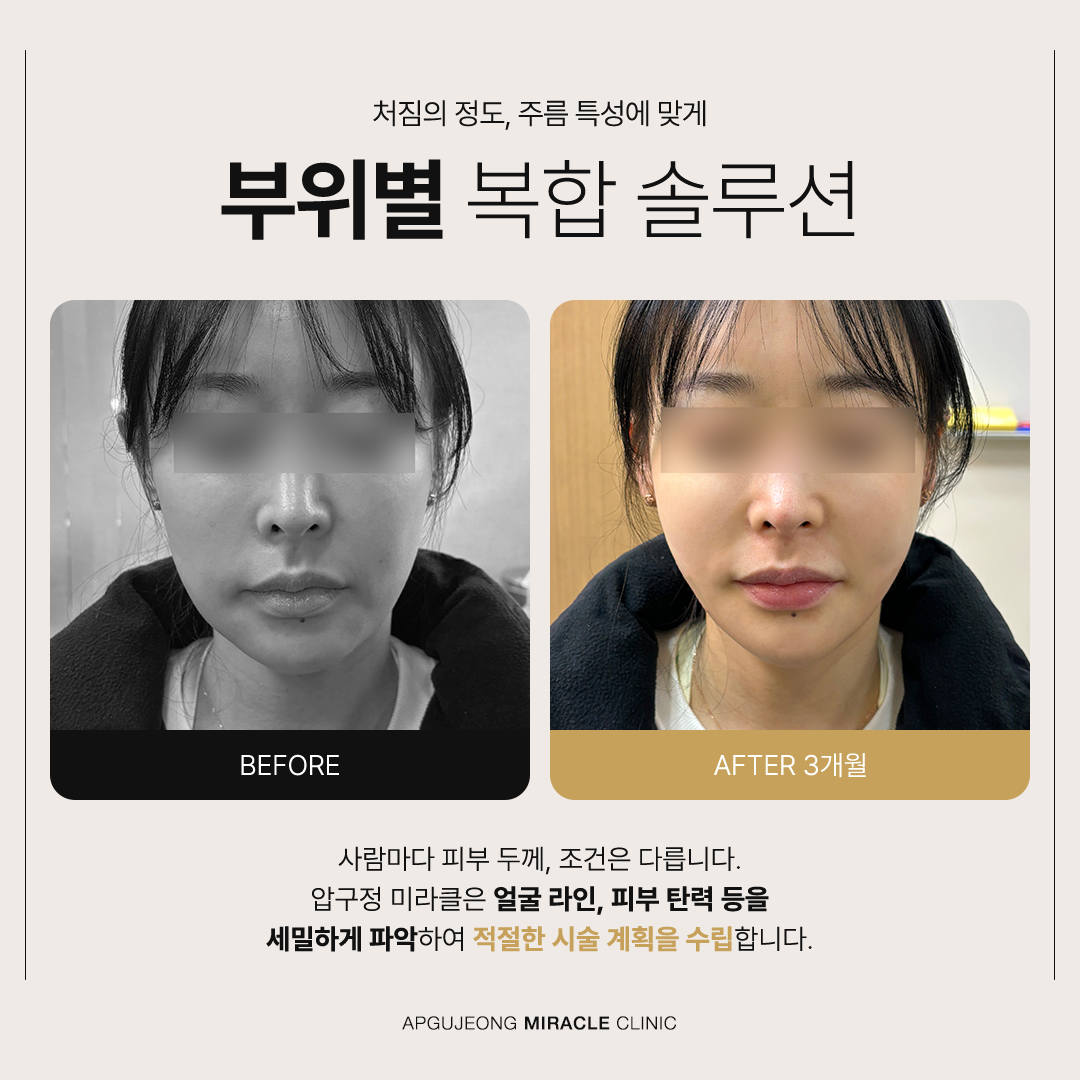
Understanding common lifting concerns in Sinsa-dong
In their 30s to 50s, many people begin to notice sagging around the jawline, deepening nasolabial folds, marionette lines around the mouth corners, and drooping cheeks. These changes can be subtle at first but become more visible in photos or under bright lighting.
For people who have already had lifting, the concerns are often more specific:
The change was minimal, so friends did not notice any difference.
One side of the face looks slightly higher or tighter than the other.
There is an unnatural pulling effect when smiling or talking.
The effect seemed good for a short time but faded quickly.
Another frequent worry is whether it is safe to add more threads or more energy-based lifting on a face that has already been treated. Patients may wonder if additional lifting will make their face look stiff, over-pulled, or too thin, or if old threads will interfere with new ones.
In Sinsa-dong, where many clinics focus on appearance-related procedures, these questions are very common. This is why a detailed review of your previous history and a flexible lifting plan are important.
Why a wide lifting lineup matters
Lifting is not a single, fixed procedure. The ideal method depends on several factors:
Skin thickness: Thicker skin may need stronger lifting threads or deeper energy delivery, while thinner skin may require gentler options.
Fat volume: Heavier lower-face fat can drag the jawline down, while very slim faces may look hollow if lifted too aggressively.
Degree and pattern of sagging: Some people mainly have jowls, others have drooping cheeks, and some have both.
Thread lifting options can include different designs, such as barbed threads that hook into the tissue, cone-type threads that anchor more gradually, or more elastic threads that move with facial expressions. A clinic with several thread systems can choose the type and placement pattern that best suits your tissue and previous procedures.
Energy-based lifting, such as Ulthera-type ultrasound, Shurink, and Doublo, works differently. These devices deliver focused energy to deeper layers, aiming to tighten the supporting structures under the skin. They are often used to:
Improve mild to moderate laxity.
Enhance the result of threads by tightening the foundation layer.
Maintain lifting results over time with periodic sessions.
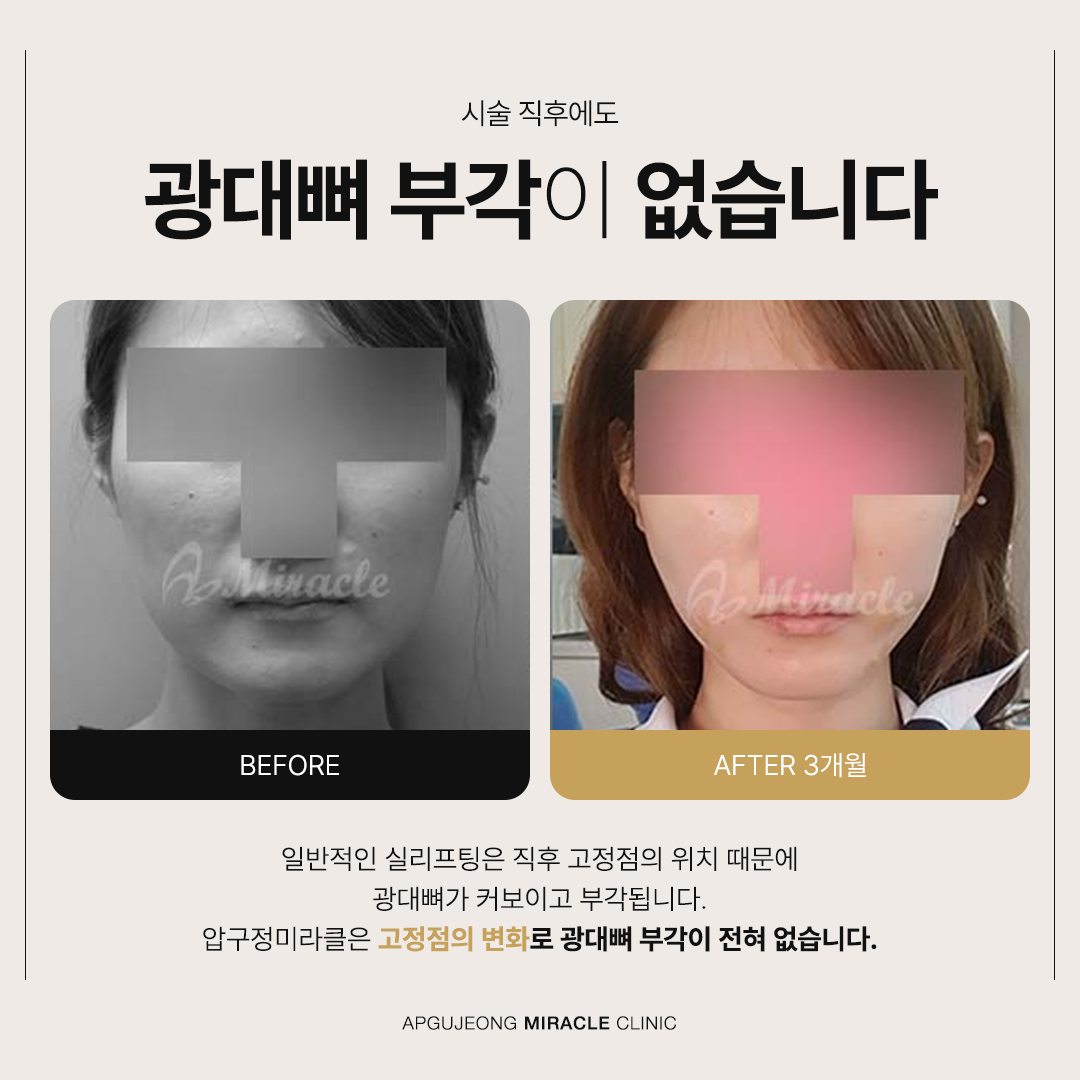
When a clinic offers both multiple thread systems and several ultrasound devices in one place, it can create a tailored plan instead of forcing every patient into a single package. For example:
A patient with mild sagging and thin skin might benefit more from ultrasound lifting plus a small number of fine threads.
A patient with heavier jowls and thicker skin might need stronger barbed threads along the jawline, combined with ultrasound lifting for the midface.
A patient with volume loss in the cheeks might need lifting plus contour injections to restore balance, rather than lifting alone.
In some cases, facial liposuction can be added to remove excess fat under the chin or along the jawline, followed by lifting to refine the contour. By managing both the soft tissue volume and the lifting vector, the clinic can aim for a more defined but still natural-looking lower face.
Revision and thread removal: how a specialized clinic approaches it
Revision lifting is different from first-time lifting. A typical revision case may include:
Threads placed too superficially, causing visible lines or irregularities under the skin.
Uneven tension, where one side is lifted more than the other.
Remaining sagging because the original lift did not target the main problem area.
In such cases, simply adding more threads on top may not solve the issue and can sometimes make the tissue more complex to manage in the future. This is why some Sinsa-dong clinics focus on revision and thread removal as a core service.
Thread removal and re-placement are considered step by step:
First, the doctor evaluates the location and depth of existing threads, sometimes by touch and sometimes with the help of imaging or careful examination.
If a thread is causing discomfort, visible irregularity, or interfering with the planned new lift, removal may be recommended.
Removal is usually done through small entry points, and not all threads must be removed. The decision depends on risk, benefit, and the condition of the tissue.
After removal and healing, or in some cases in the same session, new threads can be placed in more appropriate vectors and layers.
Because revision is more complex, it requires:
A clear record of your previous procedures if available: when they were done, what type of threads or devices were used, and any complications.
Detailed facial analysis to see how the old lift has changed your tissue.
Realistic discussion about what can and cannot be improved. Some irregularities may be softened rather than completely erased.
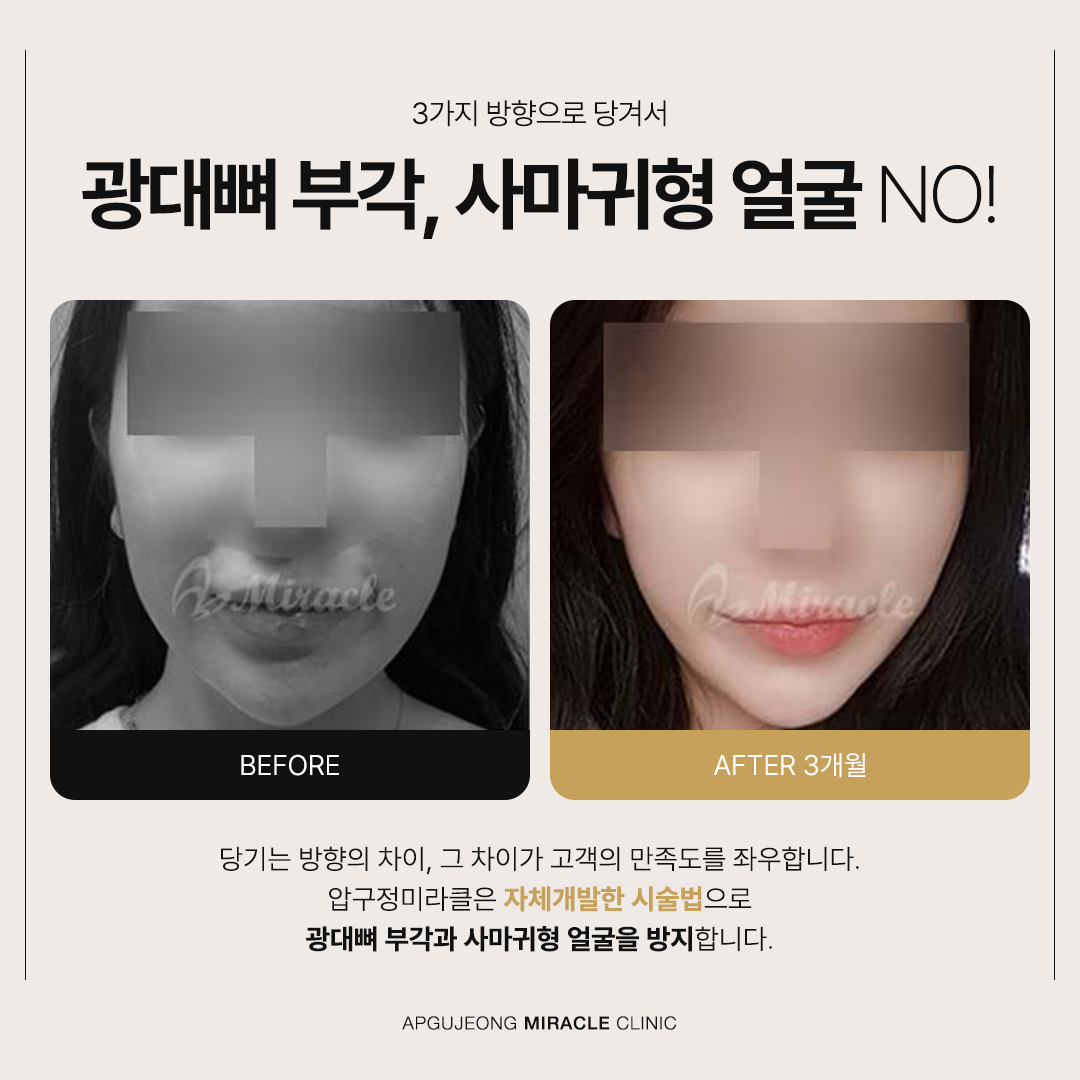
A responsible clinic will avoid promising that all past problems can be fully corrected. Instead, the focus is on achievable improvement, risk management, and planning for long-term maintenance.
Choosing between threads and ultrasound devices
Thread lifting and ultrasound lifting each have strengths and limitations. In many Sinsa-dong clinics, they are used together rather than as competitors.
Thread lifting overview
Thread lifting involves placing special threads under the skin through small entry points. These threads can help:
Lift sagging tissue in a more mechanical way.
Define the jawline and reduce the appearance of jowls.
Support the midface and cheek area.
Threads vary in thickness, length, and design. Some are better for stronger lifting, others for subtle support or fine areas. Recovery usually includes some swelling and possible bruising, with a feeling of tightness that gradually softens.
Ultrasound lifting overview
Ulthera-type devices, Shurink, and Doublo use focused ultrasound energy to target deeper layers under the skin. They are often chosen to:
Improve skin firmness and mild sagging.
Support and maintain thread lifting results.
Treat areas where threads are not ideal, such as certain parts of the neck.
There is usually minimal downtime, though some people feel temporary tenderness or mild swelling. Results develop gradually over several weeks to months.
Combining methods for better balance
For many revision patients, the best option is a combination:
Ultrasound lifting to tighten the base layer.
Thread lifting to reposition and support sagging tissue.
Optional contour injections or facial liposuction to adjust volume.
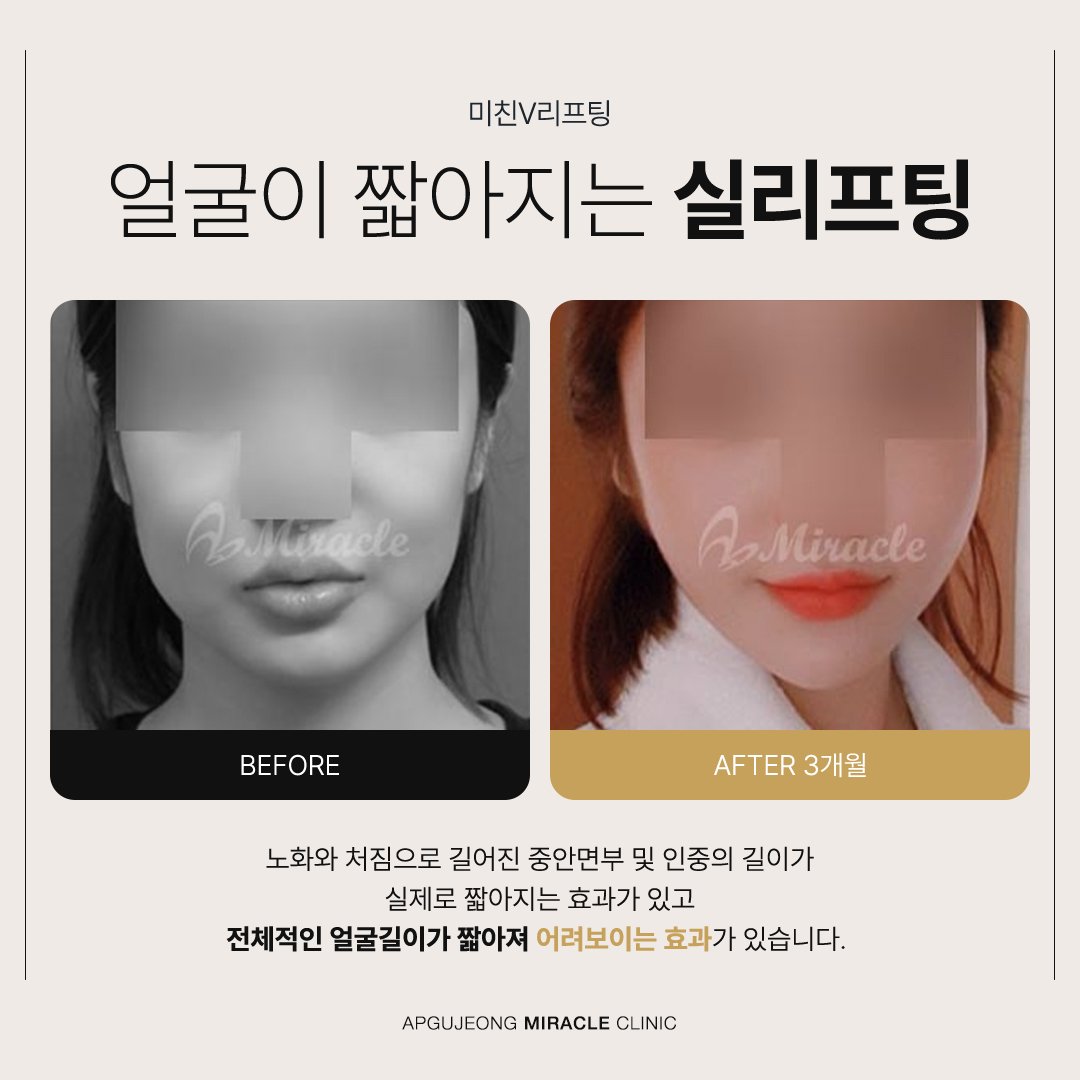
A clinic that does not rely on a single “miracle” method but instead uses several tools can adapt the plan to your age, skin quality, and previous lifting history.
Comprehensive contouring and anti-aging in one place
Around Apgujeong Rodeo Station, some clinics are set up as one-stop centers for facial contouring and anti-aging. In addition to thread lifting and ultrasound lifting, they may offer:
Facial liposuction for the double chin or heavy jowls.
Contour injections to restore volume in the cheeks or temples.
Skin quality treatments to improve texture and fine lines.
For international patients, this can be convenient because several related procedures can be evaluated and planned together, instead of visiting multiple clinics. It also allows the doctor to balance lifting with volume and skin quality, which is important for a natural result.
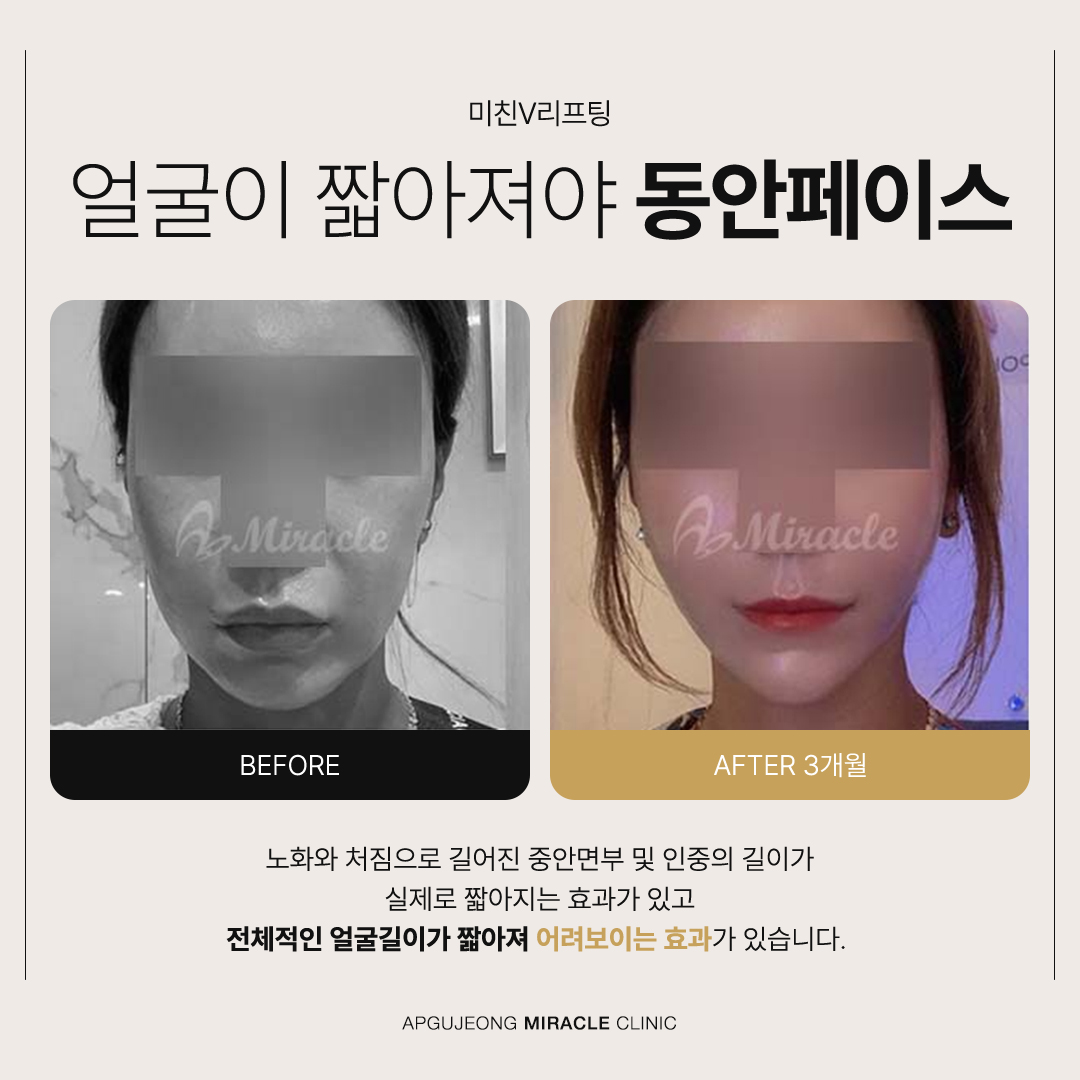
Some clinics maintain a photo and video gallery of real cases. These materials can help you understand the style and typical range of improvements. However, they should be viewed as reference examples only, not as a guarantee that your face will look the same.
The clinic described in this guide is presented as an example of an outpatient practice you might encounter in Sinsa-dong near Apgujeong Rodeo Station. Such clinics may focus on thread lifting and lifting revision, including assessment of prior threads and discussion of removal and retreatment options, and may offer additional choices such as ultrasound-based lifting, facial liposuction, or contour injections depending on the case. If international experience or language support is important to you, ask directly about the medical director’s background, any international collaborations, or media appearances and request verifiable information during your consultation.
Consultation and planning process for overseas patients
For international patients, a structured consultation process is essential. A typical approach includes:
1) Medical and procedure history review
You will be asked about:
Previous lifting procedures: thread type if known, devices used (for example, Ulthera-type, Shurink, Doublo), and dates.
Any complications: pain, infection, visible threads, or strong asymmetry.
General health, medications, allergies, and any history of keloid or problematic scarring.
If you have records or photos from your previous procedures, they are very helpful. Bringing them to the consultation, or sending them in advance, can improve the accuracy of planning.
2) Face-to-face analysis
During an in-person visit, the doctor will usually:
Check skin laxity in different areas: cheeks, jawline, neck.
Evaluate fat distribution: double chin, jowls, midface volume.
Observe facial balance from the front and side.
This analysis helps determine where lifting will be most effective and whether additional volume adjustment or fat reduction is recommended.
3) Selecting methods and combinations
Based on your goals and findings, the clinic may suggest:
One or more types of threads, placed in specific vectors.
Ultrasound lifting (Ulthera-type, Shurink, or Doublo) as a main treatment or as a complement.
Additional options such as facial liposuction or contour injections if needed.
The clinic should explain why each method is chosen, and how they interact. For example, ultrasound may be done before or after threads depending on the plan.
4) Explanation of expectations and side effects
Before deciding, you should receive a clear explanation of:
Expected degree of improvement, not as a promise but as a typical range.
How long the effect usually lasts and when maintenance might be needed.
Downtime: swelling, bruising, tightness, and how long they may last.
Possible side effects such as temporary asymmetry, discomfort, or rare complications.
A clinic that handles many revision cases will also discuss the specific risks of working in tissue that has been treated before.
Who may consider lifting or lifting revision in Sinsa-dong
You may consider visiting Sinsa-dong for lifting if:
You are in your 30s to 50s and notice sagging in the jawline, nasolabial folds, marionette lines, or cheeks.
You have had thread lifting, HIFU, or other lifting elsewhere and feel the effect was weak, short-lived, or aesthetically unsatisfying.
You are worried about adding more procedures on top of previous ones and want a careful, revision-focused assessment.
You prefer to combine lifting with contouring, such as facial liposuction or contour injections, in one coordinated plan.
People with serious medical conditions, very thin or very thick skin, or unrealistic expectations may need extra caution or may be advised to avoid certain procedures. A direct consultation is always needed to confirm suitability.
Online consultation and pre-visit preparation
Before traveling to Korea, it is wise to arrange an online consultation. To make this efficient, prepare the following:

Clear front and side photos of your face and neck in good lighting, without filters.
A short summary of your previous procedures: dates, clinic locations, and any known thread or device names.
Information about any past complications or ongoing symptoms.
Your main concerns and goals: for example, “jowls and marionette lines” or “asymmetry after previous threads.”
During the online consultation, you can ask:
Whether thread removal might be needed.
Which lifting methods are likely to be recommended.
How many visits are expected and how much time is needed between steps.
What kind of aftercare and follow-up are recommended for overseas patients.
Expected Korea visit timeline
For international patients planning a visit to Sinsa-dong, a common schedule might look like this:
Day 1: In-person consultation and detailed facial analysis. If the plan is clear and both sides agree, some procedures may be done on the same day, depending on safety and preparation.
Day 2–3: Early follow-up check if threads or facial liposuction were performed. Swelling and bruising are usually most visible in the first few days.
Day 4–7: Gradual reduction of swelling. Many patients feel comfortable going out with light makeup during this period, but this varies by individual and by procedure.
Day 7–14: Additional follow-up before returning home, especially important for revision cases or combined treatments.
If your schedule is tight, discuss this clearly during the online consultation so the clinic can advise whether your plan is realistic.
Safety, expectations, and aftercare
Lifting results are not permanent. Aging continues, and gravity, lifestyle, and genetics all play a role. Most patients will need maintenance treatments over time, such as repeat ultrasound lifting or additional threads after a certain period.
Typical side effects and downtime can include:
Swelling and bruising around the treated areas.
Temporary discomfort, tightness, or tenderness.
Short-term asymmetry due to swelling or tissue adjustment.
More serious complications are less common but possible, which is why careful technique and follow-up monitoring are important, especially in revision cases.
Aftercare usually involves:
Avoiding strong facial massage or heavy pressure on the treated areas for a period recommended by the clinic.
Sleeping with the head slightly elevated in the early days to reduce swelling.
Attending scheduled follow-up visits so the doctor can check healing and address any concerns.
Practical information for visiting a Sinsa-dong clinic
The clinic described here is located in Sinsa-dong, Gangnam-gu, on the 5th floor of a building near Apgujeong Rodeo Station exit 5 on the Suin–Bundang Line. This makes it convenient for office workers and residents in Gangnam, as well as international visitors staying in nearby hotels.
Typical operating hours are on weekdays and Saturdays, with closure on Sundays and public holidays. Exact hours, appointment availability, and contact details can change, so it is important to confirm them on the official website or by phone before your visit.
Checklist for choosing a lifting clinic in Sinsa-dong
When comparing clinics around Sinsa-dong and Apgujeong Rodeo, consider the following points:
Does the clinic offer multiple thread systems and several ultrasound devices, or only one main method?
Is there clear experience with revision and thread removal, not just first-time lifting?
Do they provide realistic explanations about results, duration, and possible side effects?
Is there a structured process for online consultation and follow-up for overseas patients?
Is the location convenient for repeated visits during your stay in Korea?
Before your consultation, it can help to write down questions such as:
- How many threads are planned, and in which areas?
- Which ultrasound device is recommended for my skin and why?
- What level of swelling or downtime should I expect for my specific plan?
- How will follow-up be managed after I return to my home country?
Having this checklist ready will make your consultation more productive and help you feel more confident about your decision.
Frequently asked questions
What is the difference between thread lifting and ultrasound lifting?
Thread lifting uses physical threads placed under the skin to lift and support sagging tissue, giving a more immediate mechanical effect. Ultrasound lifting, such as Ulthera-type, Shurink, or Doublo, uses focused energy to heat deeper layers and stimulate tightening over time. Many patients in Sinsa-dong receive a combination of both, tailored to their skin and degree of sagging.
Is it safe to have lifting again after a previous procedure?
In many cases, additional lifting is possible, but it requires careful assessment of your previous treatments and current tissue condition. Old threads, scar tissue, and changes in fat distribution must be considered before adding new threads or more energy. A revision-focused clinic will check these factors and explain both the potential benefits and the risks, rather than simply repeating the same procedure.

How long do lifting results usually last?
The duration of lifting results varies widely by individual, method, and lifestyle. Thread lifting effects may gradually soften over one to several years, while ultrasound lifting is often repeated at intervals to maintain firmness. Because aging continues, most people will need maintenance, and this should be discussed clearly during consultation so you can plan realistically.
How much time should I plan for a lifting trip to Korea?
For international patients, it is generally recommended to stay at least one week, and preferably up to two weeks, especially for revision or combined procedures. This allows time for consultation, treatment, and at least one or two follow-up visits. If your schedule is shorter, discuss this in advance so the clinic can advise whether your goals and safety can still be respected.
Soft call to action
If you are considering lifting or lifting revision in Sinsa-dong and want a plan that takes your previous procedures and current facial structure into account, an online consultation is a practical first step. By sharing your photos, history, and goals in advance, you can receive a more personalized outline of options before you book your trip.
When you are ready, contact the clinic near Apgujeong Rodeo Station to arrange an online consultation, confirm operating hours, and plan a visit schedule that fits your needs. Taking time for detailed consultation and realistic planning will help you make the most of your lifting experience in Korea.





댓글
댓글 쓰기