Cheongdam Thread Lifting Guide for Overseas Patients in Gangnam Seoul
- 공유 링크 만들기
- X
- 이메일
- 기타 앱

Direct answer summary
Cheongdam thread lifting is commonly marketed in the Cheongdam and Apgujeong areas as a premium, non-surgical facial lift that uses dissolvable threads. Clinics may promote it as an option to address sagging cheeks, jawline concerns and nasolabial folds or to refine the V-line as a less invasive alternative to surgery. Some providers also combine different thread types with ultrasound-based lifting devices, and some offer revision or thread removal services for patients dissatisfied with previous procedures.
This guide explains what to expect if you are considering Cheongdam thread lifting as an overseas patient, how the process typically works, how revision and thread removal are approached, and how a multi-option clinic such as Apgujeong Miracle Clinic organizes treatment plans.
What is thread lifting
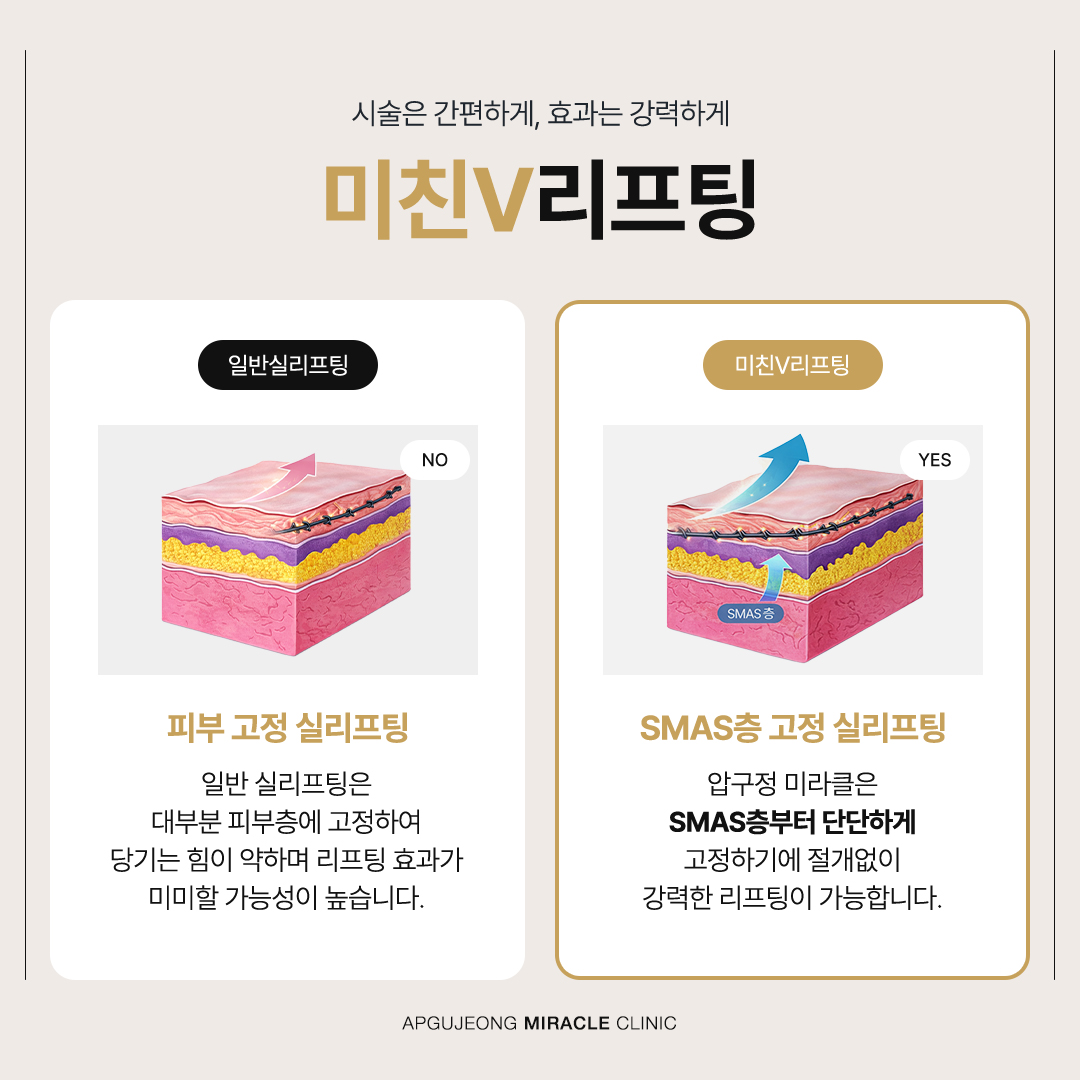
Thread lifting is a minimally invasive procedure that uses dissolvable lifting threads placed under the skin to support and reposition sagging tissues.
The threads are usually made from materials such as PDO or similar absorbable substances. Some threads have barbs or cones that grip the tissue, allowing the doctor to gently pull and secure the skin in a more lifted position.
In the Cheongdam and Apgujeong area, thread lifting is often used for:
- Sagging along the jawline and early jowls
- Deepening nasolabial folds around the mouth
- Drooping cheeks and midface
- Mild neck laxity and double chin contour
- Loss of facial definition and V-line
The lifting effect is twofold. There is an immediate mechanical lift from the threads pulling the tissues upward. Over time, as the threads gradually dissolve, they can stimulate collagen production around them, which may help maintain improved firmness for a period.
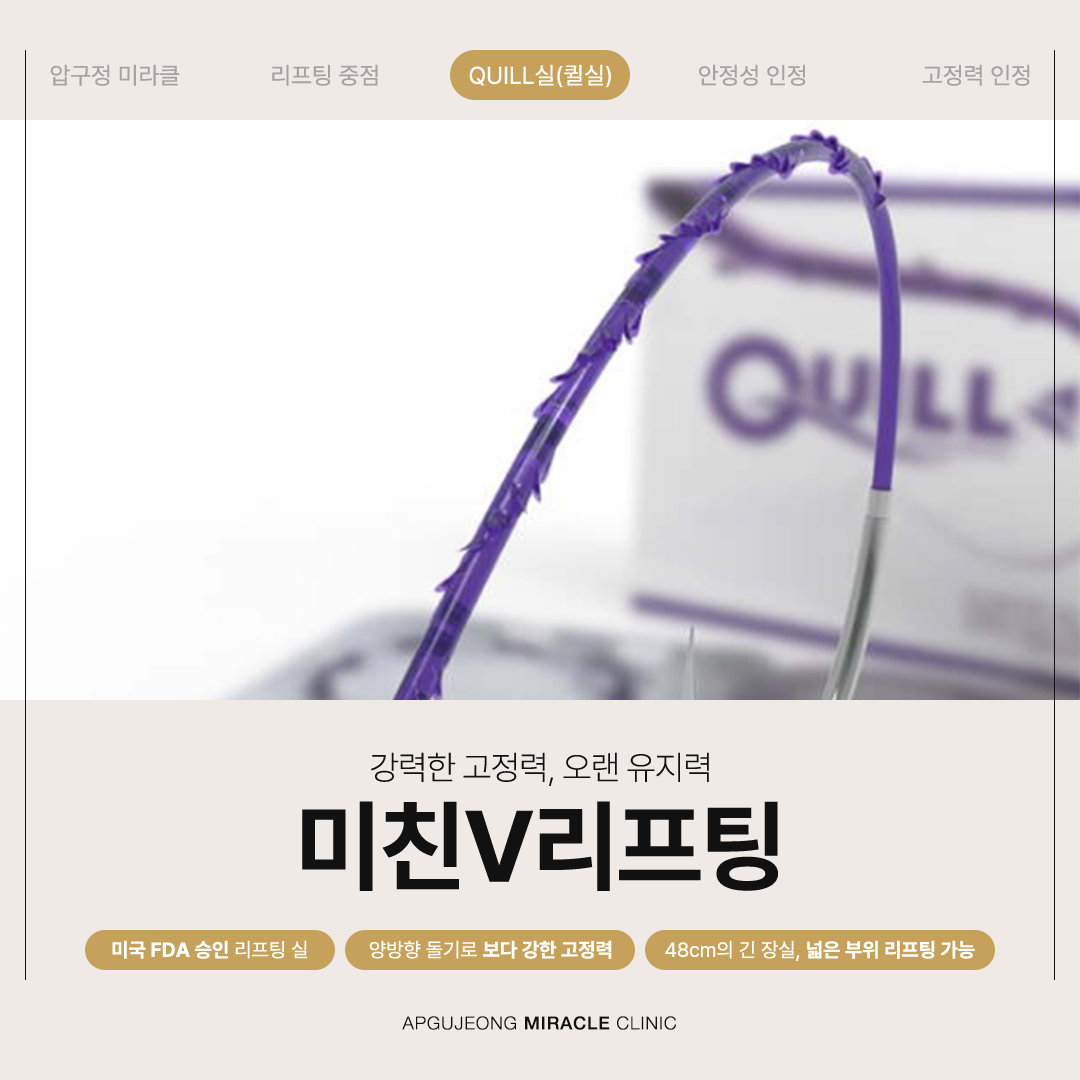
How Cheongdam and Apgujeong clinics approach thread lifting
For example, a provider might select finer, more flexible threads for a subtle lift or a firmer thread system when stronger contouring is desired, and then adjust adjunctive options like energy-based devices or fillers to match the patient's goals.
During consultation, the doctor typically evaluates:
- Skin thickness and elasticity
- Amount and distribution of facial fat
- Degree of sagging and asymmetry
- Previous lifting procedures or fillers
- Age and lifestyle factors
Based on this analysis, they may combine different thread types and energy-based devices such as ultrasound lifting to match your situation. For example, stronger barbed threads or cone-type threads may be used for the jawline and jowls, while softer threads can be used for subtle cheek support or skin quality.
Types of thread lifting available in Cheongdam and Apgujeong
In the Apgujeong and Cheongdam area, you can usually find a wide lineup of thread lifting systems. At clinics like Apgujeong Miracle Clinic, the options often include:
JJ lifting
JJ lifting is a thread lifting concept focused on creating a sharper, more defined V-line. It typically uses strong lifting vectors to pull the lower face and jawline upward and inward.
This type of lifting is often considered by people who feel their face looks wider or heavier in photos, or who notice early jowls and want a more contoured jawline without bone surgery.
Mint thread lifting
Mint thread lifting uses barbed threads designed to anchor into the tissue and provide noticeable lifting power. These threads are often used for:
- Jawline and jowl lifting
- Cheek and nasolabial fold support
- Mild neck and lower face lifting
Depending on the case, Mint threads may be combined with other systems or ultrasound lifting devices for a more layered approach.
Silhouette Soft and cone-type lifting
Silhouette Soft and similar cone-type lifting threads use tiny cones along the thread to grip and hold the tissue. They are often used for:

- Midface and cheek lifting
- Nasolabial and marionette line softening
- Subtle, natural-looking repositioning of sagging tissues
Cone-type threads can be suitable for patients who want a smoother, gradual contour improvement rather than a very strong pull.
Elastique-type, Ultra V, Omega lifting, and body lifting
Elastique-type lifting threads are often chosen for areas that need flexible support and subtle tightening.
Ultra V lifting commonly uses multiple fine PDO threads to improve skin firmness and texture, sometimes in combination with stronger lifting threads.
Omega lifting may be used in selected cases to support specific facial lines or to complement main lifting threads.
Some clinics also offer thread-based body lifting for areas such as upper arms, abdomen, or thighs, although this is usually discussed separately from facial lifting.
Device-based lifting: Doublo, Shurink, and Ultherapy-type
Many Cheongdam and Apgujeong clinics combine thread lifting with ultrasound-based lifting devices. These devices deliver focused ultrasound energy to deeper layers of the skin and supporting structures.
Common systems include:
- Doublo lifting
- Shurink lifting
- Ultherapy-type lifting
Ultrasound-based devices are used with the intention of targeting deeper tissue layers such as the SMAS in some protocols, and practitioners sometimes say these treatments can stimulate collagen over time. These effects are described as potentially complementary to the mechanical lift provided by threads. Approaches vary by clinic; in some cases practitioners perform ultrasound lifting prior to threading to address foundational laxity, while others place threads first to focus on contour definition. Discuss expected outcomes and the evidence behind each option with your provider.
Who may consider Cheongdam thread lifting
Thread lifting in this area is often considered by people in their late 20s to 50s who notice early to moderate signs of aging or loss of facial definition.
You may consider Cheongdam thread lifting if you:
- See sagging around the jawline or early jowls
- Notice deeper nasolabial folds or marionette lines
- Feel your cheeks look heavier or droopier than before
- Have mild neck laxity or double chin that affects your profile
- Want a more defined V-line without bone surgery
- Previously had lifting or threads elsewhere but are not fully satisfied
Thread lifting is usually best for mild to moderate sagging. If there is severe laxity, very heavy tissues, or significant skin excess, surgery or more complex combined approaches may be recommended. This should be evaluated during a detailed consultation.
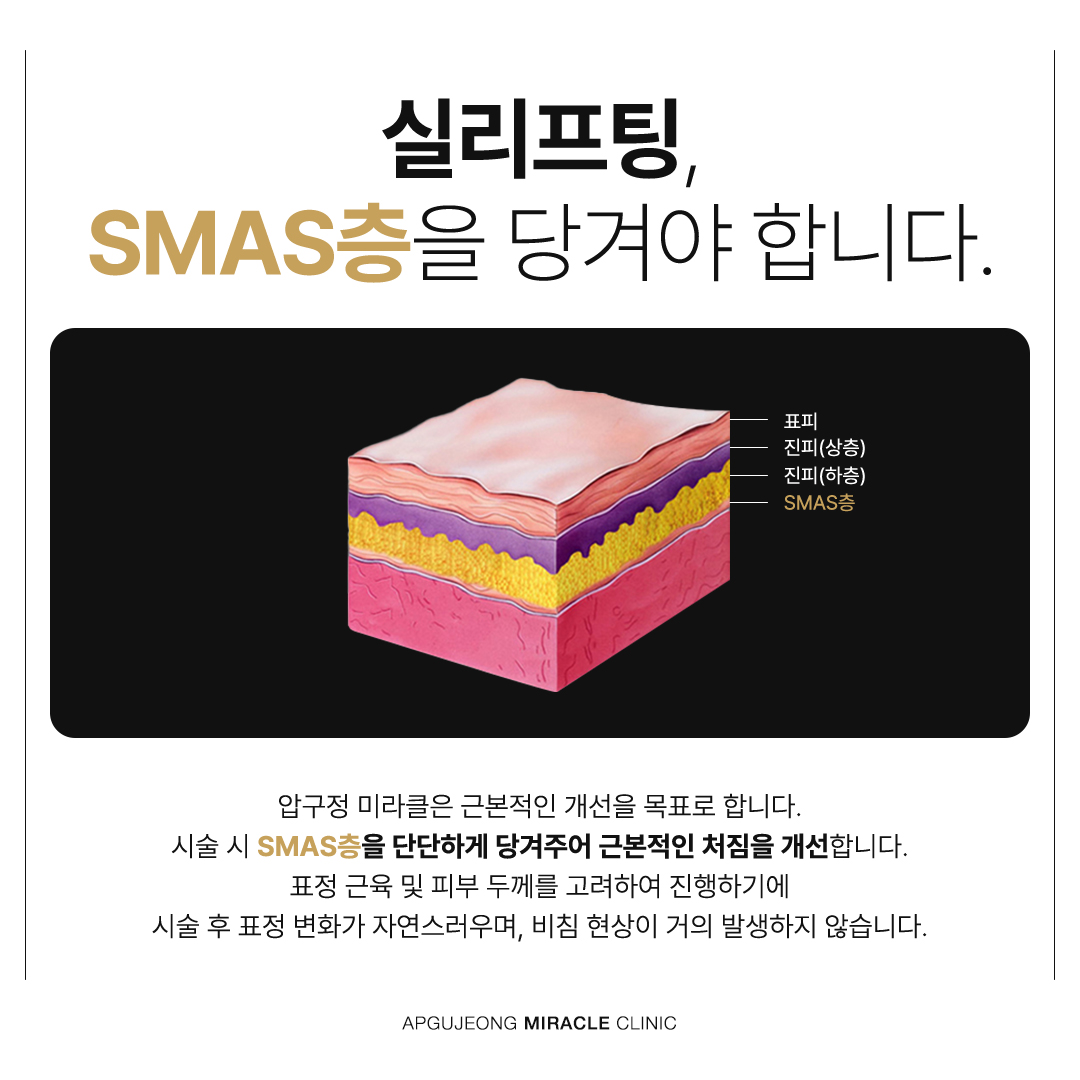
General process of Cheongdam thread lifting
While details vary by clinic and patient, the overall process usually follows these steps.
Consultation and facial analysis
The doctor reviews your medical history, previous procedures, and main concerns. They examine:
- Skin thickness and elasticity
- Fat volume in the cheeks, jowls, and neck
- Degree of sagging and asymmetry
- Existing threads, scars, or fillers if any
Photos may be taken for planning and to help explain realistic expectations.
Selection of thread type and lifting method
Based on the evaluation, the clinic suggests a plan that may include:
- Barbed PDO threads for strong lifting
- Cone-type threads such as Silhouette Soft for midface support
- Fine threads for skin quality and mild tightening
- Ultrasound lifting devices such as Doublo, Shurink, or Ultherapy-type
The doctor should explain the pros and cons of each method, expected downtime, and how long the effects typically last in your age group and skin type.
Planning lifting vectors
The lifting vectors are the directions in which the threads will pull the tissues. Proper planning is important to:
- Support the cheek and midface
- Refine the jawline and reduce jowls
- Avoid unnatural pulling or dimpling
- Maintain facial harmony and natural expression
Local anesthesia and thread insertion
On the procedure day, the treatment area is cleaned and local anesthesia is applied. Small entry points are made, often near the hairline or behind the ear, and the threads are inserted using fine cannulas or needles.
You may feel some pressure or tugging, but the aim is to keep discomfort manageable with local anesthesia. The doctor adjusts the tension to achieve the planned lift while checking symmetry.
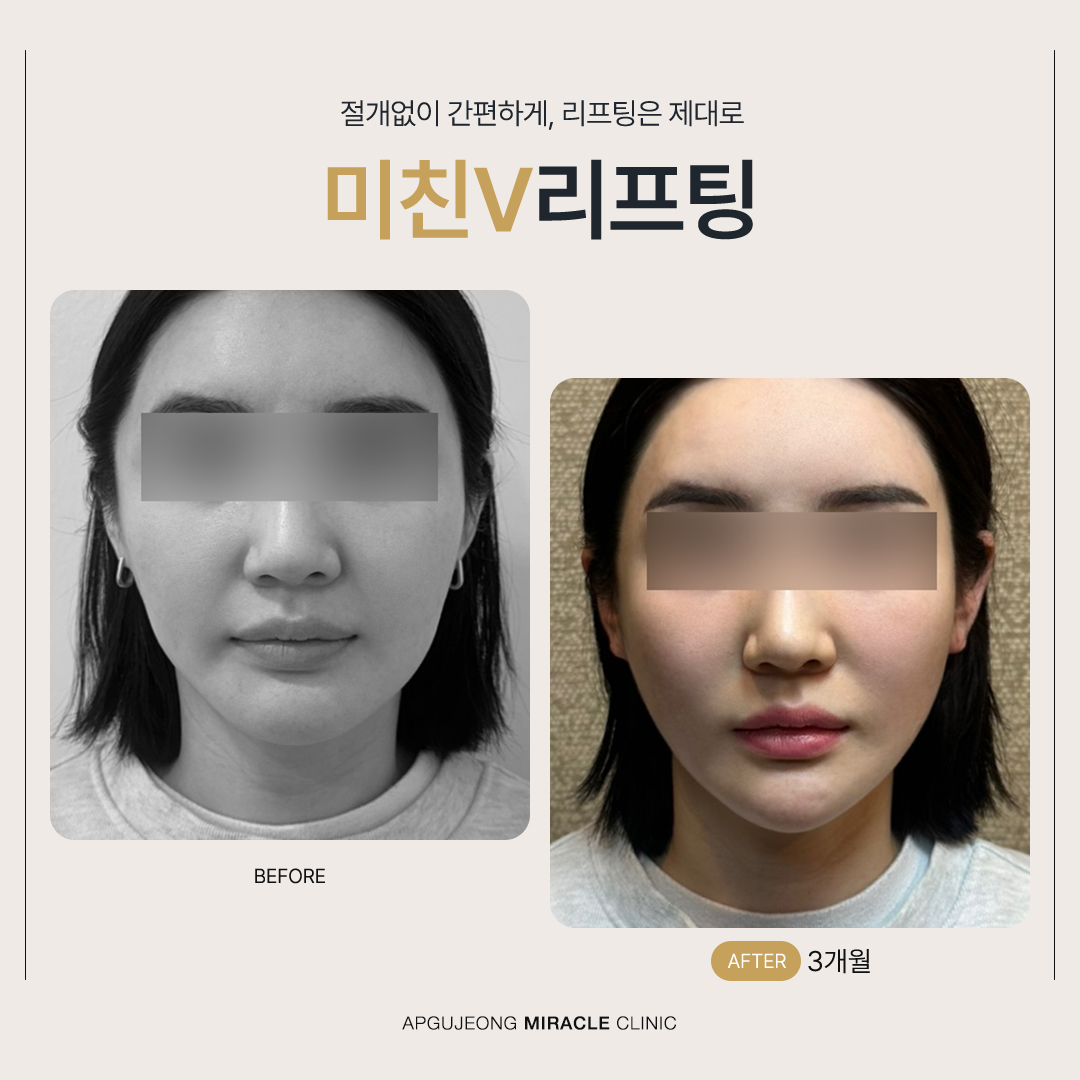
Immediate effect and collagen stimulation
You can usually see an immediate lifting effect right after the procedure, though there may also be temporary swelling. Over the following weeks and months, collagen forms around the threads, which may help maintain firmness as the threads gradually dissolve.
Follow-up visits
Follow-up visits are important to:
- Check symmetry and tension
- Monitor bruising and swelling
- Address any discomfort or concerns
If small irregularities or dimples appear early on, they often soften as swelling decreases, but the clinic can advise on massage or minor adjustments if appropriate.
Revision and thread removal for previous lifting
Many people search for Cheongdam thread lifting after having lifting elsewhere and feeling unsatisfied. Common reasons for considering revision include:
- Asymmetry or uneven lifting
- Visible or palpable threads near the skin surface
- Insufficient lifting effect
- Discomfort, tightness, or unnatural pulling
- Irregular contour or dimpling that does not improve over time
Apgujeong Miracle Clinic, located near Apgujeong Rodeo Station in Gangnam, runs a dedicated clinic for thread removal and re-lifting. They see many patients who had lifting procedures at other clinics and now need evaluation and possible correction.
Revision is usually more complex than first-time lifting because the doctor must consider:
- Existing threads and their positions
- Scar tissue and tissue stiffness
- Skin thinning or previous over-correction
In some cases, threads may need to be removed or cut. In others, additional threads or device-based lifting may be added to balance the result. A careful examination and realistic discussion are essential before deciding on revision.
Combination treatments for contour and anti-aging
One of the features of Cheongdam and Apgujeong clinics is the use of combination treatments for more comprehensive contouring.
Ultrasound lifting plus threads
Ultrasound devices such as Doublo, Shurink, or Ultherapy-type systems can tighten deeper layers, while threads provide mechanical lifting and contour definition. This layered approach may be suggested for patients with mild to moderate sagging who want both firmness and shape improvement.
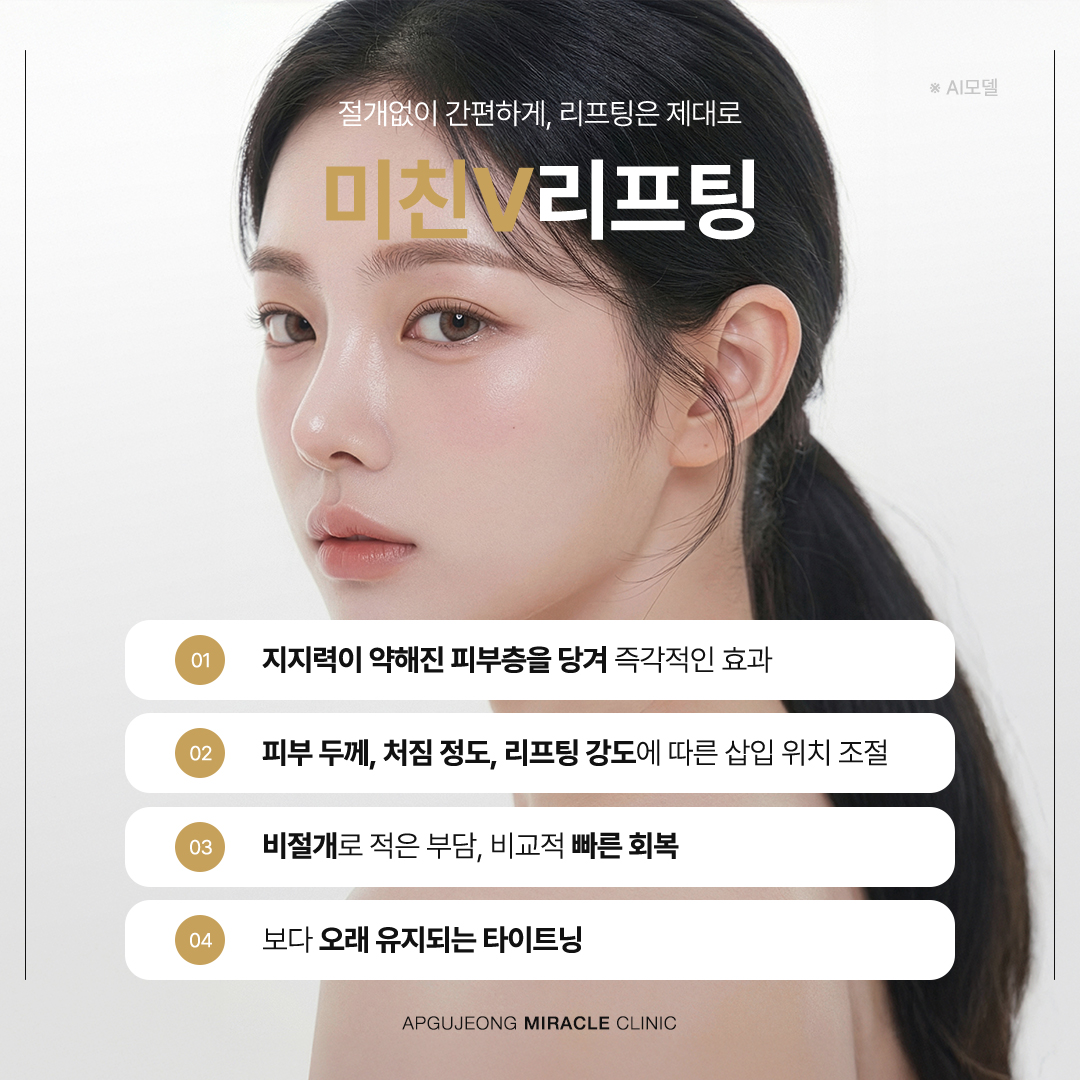
Facial liposuction or contour injections
For bulky jowls or a double chin, thread lifting alone may not be enough. Some clinics offer facial liposuction or fat-dissolving injections to reduce volume, combined with threads to lift and define the jawline.
This type of combination should be planned carefully, including timing between procedures and recovery periods.
Botox, fillers, and stem cell-based anti-aging
Fine wrinkles, expression lines, and volume loss are sometimes addressed with Botox or fillers alongside thread lifting.
All combinations must be personalized. The doctor should explain which procedures can be done on the same day, which should be spaced out, and what kind of downtime to expect for each.
Example of a multi-option clinic in Apgujeong
The clinic lineup includes:
- JJ lifting
- Mint thread lifting
- Silhouette Soft
- Elastique-type lifting
- Ultra V lifting
- Omega lifting
- Body lifting options
- Doublo, Shurink, and Ultherapy-type lifting devices
The clinic runs its own blog and provides galleries of real selfies, before-and-after photos, and videos that prospective patients can review as reference. These materials are for information only and do not guarantee specific outcomes.
Safety, expectations, and downtime
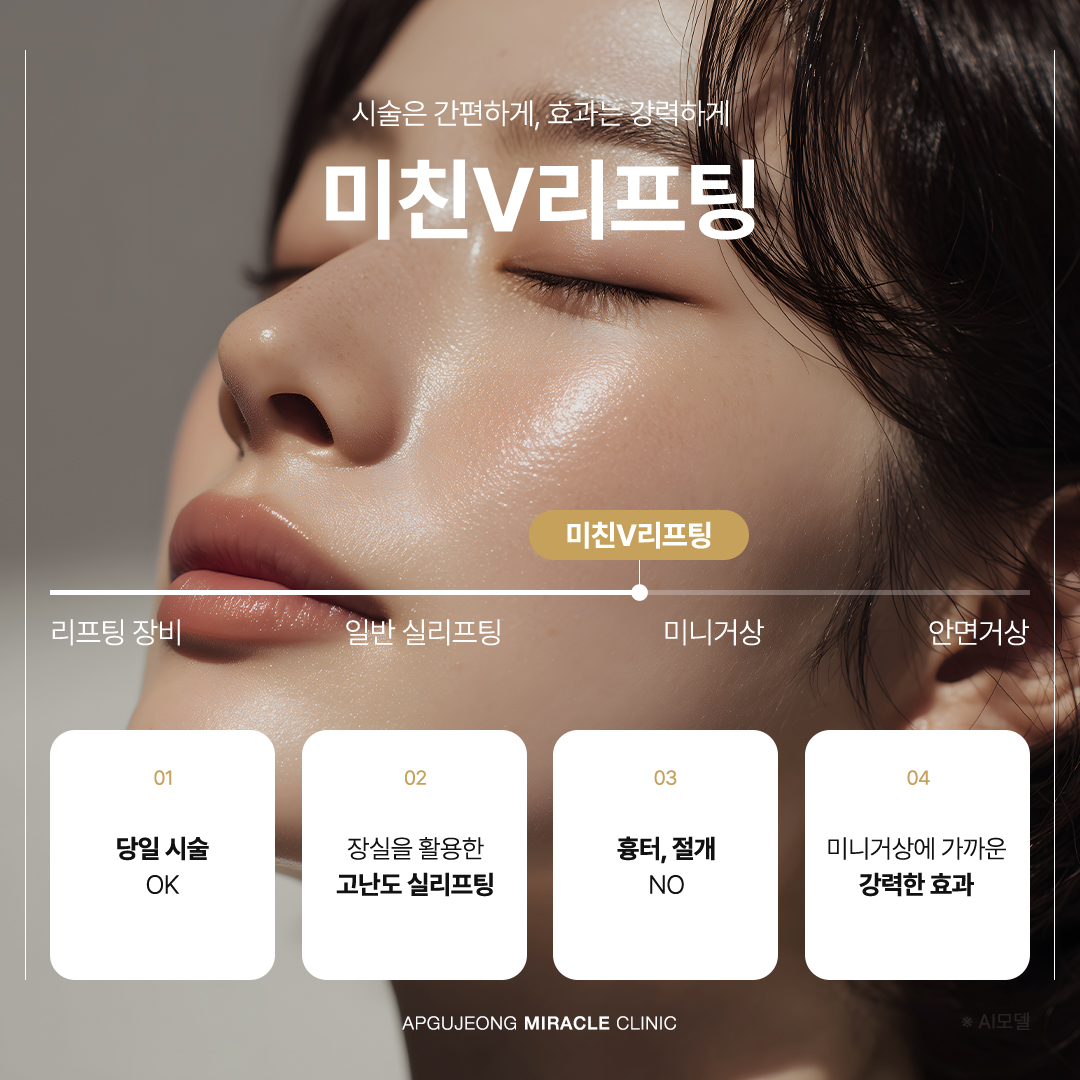
Thread lifting is minimally invasive, but it is still a medical procedure with possible side effects and downtime.
Common short-term effects may include:
- Swelling and mild bruising around the entry points and along the thread paths
- Mild to moderate pain or tightness, especially when moving facial muscles
- Temporary asymmetry due to swelling or different healing speeds on each side
- Sensation of pulling or foreign body feeling for several days to weeks
Most people can return to light daily activities relatively quickly, sometimes even the next day, but you should avoid:
Strong facial massage or skin treatments over the treated area for a period recommended by the clinic
Heavy exercise and activities that raise blood pressure significantly for several days
Exaggerated facial expressions or wide mouth opening in the early phase if your doctor advises caution
Complications such as infection, persistent dimpling, or thread exposure can occur, although they are not common. It is important to choose a clinic that explains these risks clearly and has a plan for managing them if they arise.
Online consultation and pre-visit preparation for overseas patients
If you are traveling from overseas for Cheongdam thread lifting, online consultation is an important first step.
Before contacting the clinic, prepare:
Clear front and side photos of your face and neck in good lighting
Information about any previous procedures, including threads, fillers, or device-based lifting
Your main concerns and priority areas (for example, jawline, nasolabial folds, double chin)
Any medical conditions, allergies, or medications
During online consultation, you can ask about:
- Which thread systems and devices might be suitable for your case
- Estimated number of threads or treatment areas
- Expected downtime and how many days you should stay in Korea
- Recommended intervals before flying back home
- Follow-up options once you return to your country
Some clinics can provide a tentative plan and schedule based on photos, but final decisions are usually made after an in-person examination.
Expected Korea visit timeline
While this can vary, a typical visit for overseas patients might look like this.
Day 1: In-person consultation and planning
- Detailed facial examination and discussion of options
- Review of previous procedures and medical history
- Final decision on thread types, number of threads, and any combination treatments
- Consent forms and pre-procedure instructions
Day 2: Procedure day
- Arrival at the clinic, cleansing, and marking of lifting vectors
- Local anesthesia and thread insertion
- Short rest period after the procedure
- Initial post-procedure instructions and medication if needed
Day 3 to 5: Early recovery
Swelling and mild bruising are usually most visible during this period
A follow-up visit may be scheduled to check healing and symmetry
Most patients can move around the city and do light activities, but should avoid heavy exercise
Day 5 to 10: Late recovery and departure
Swelling often starts to settle
Any remaining tightness usually becomes more comfortable
If you are flying back home, confirm with the clinic when it is safe to travel and what to watch for after returning
Your exact schedule may be adjusted depending on whether you combine threads with other treatments such as ultrasound lifting or facial liposuction.
How to choose a Cheongdam thread lifting clinic
When comparing clinics in the Cheongdam and Apgujeong area, consider the following points.
Experience with multiple thread systems and revision cases
Ask how often they perform thread lifting, and whether they handle revision and thread removal. Clinics that see many revision cases are often familiar with different thread brands and how to manage complications.
Ability to explain pros and cons clearly
During consultation, the doctor should be able to explain:
- Differences between thread types (barbed vs cone vs fine threads)
- How long effects typically last in your age group
- What kind of maintenance or repeat treatments may be needed
Availability of real case references and follow-up data
Look for clinics that can show real case photos and, if possible, long-term follow-up examples. These should be presented as references only, not guarantees.
Transparent explanation of side effects and downtime
A reliable clinic will discuss possible side effects, not just benefits. They should explain what is common, what is rare, and how they handle issues if they occur.
Systematic consultation and aftercare
Avoid one-size-fits-all packages with minimal explanation. Instead, look for a clinic that:
- Performs careful facial analysis
- Offers a clear treatment plan and timeline
- Provides structured follow-up visits and contact options after you return home
FAQ
How painful is Cheongdam thread lifting
Most patients describe thread lifting as uncomfortable rather than extremely painful. Local anesthesia is used to numb the entry points and thread paths. You may feel pressure, tugging, or brief sharp sensations during insertion. After the procedure, there can be soreness or tightness for several days, which is usually manageable with pain relief recommended by the clinic.
How long do thread lifting results usually last
The visible effect of thread lifting can vary depending on age, skin quality, lifestyle, and the type of threads used. Many people notice improvement for several months to over a year, with some collagen-related benefits lasting longer. However, thread lifting does not stop aging, and some degree of sagging will gradually return. Maintenance treatments or combined procedures may be suggested over time.
Am I too young or too old for Cheongdam thread lifting
People in their late 20s to 30s often use thread lifting for early contouring and prevention of sagging, while those in their 40s to 50s may use it to address more visible laxity. The key factor is not age alone but the degree of sagging, skin thickness, and overall health. Very severe laxity or heavy tissues may respond better to different or combined approaches, which should be discussed during consultation.
What is the difference between threads and ultrasound lifting like Doublo or Shurink
Thread lifting provides a mechanical lift by physically pulling and supporting tissues with dissolvable threads. The effect is usually visible immediately. Ultrasound lifting devices such as Doublo, Shurink, or Ultherapy-type systems deliver focused energy to deeper layers to tighten and stimulate collagen from within, with results that appear gradually over several weeks to months. In many Cheongdam and Apgujeong clinics, these two methods are combined to address both deep tightening and visible contour lifting.
Soft call to action
If you are considering Cheongdam thread lifting and want a personalized plan, you can start with an online consultation. Prepare clear photos, your treatment history, and your main concerns, and send them to a clinic that offers multiple thread systems and revision options, such as Apgujeong Miracle Clinic near Apgujeong Rodeo Station in Gangnam. A careful pre-visit discussion can help you plan your trip, understand realistic expectations, and choose the most suitable lifting approach for your face and lifestyle.

- 공유 링크 만들기
- X
- 이메일
- 기타 앱


댓글
댓글 쓰기