Cheongdam-dong lifting dermatology clinic guide for overseas patients
- 공유 링크 만들기
- X
- 이메일
- 기타 앱

If you are looking for a lifting-focused dermatology or aesthetic clinic in the Cheongdam-dong and Apgujeong Rodeo area, treatments generally fall into two categories: thread lifting and device-based lifting (for example, ultrasound- or radiofrequency-based devices). Thread lifting is often selected by patients seeking visible contour improvement of the jawline, cheeks, and nasolabial folds with relatively short downtime.
Some clinics also focus on re-treatment and thread removal for patients who already had lifting elsewhere and are not satisfied with the result.
This guide explains what thread lifting is, who may consider it, how it compares with ultrasound device lifting, what to check before choosing a Cheongdam-dong lifting clinic, and how international patients can plan their visit to Korea.
Overview of thread lifting in Cheongdam-dong
Thread lifting is a minimally invasive procedure where absorbable threads are inserted under the skin to lift sagging tissues and stimulate collagen. In Cheongdam-dong and nearby Apgujeong Rodeo, many clinics have developed strong experience with different thread systems and combination lifting plans.
The basic idea is simple: barbed or cone-shaped threads are placed along specific vectors under the skin. The tiny barbs or cones anchor into the tissue and provide a mechanical lifting effect, while the thread material gradually stimulates collagen production as it dissolves over time. This can improve early jowls, drooping cheeks, and deepening nasolabial folds.
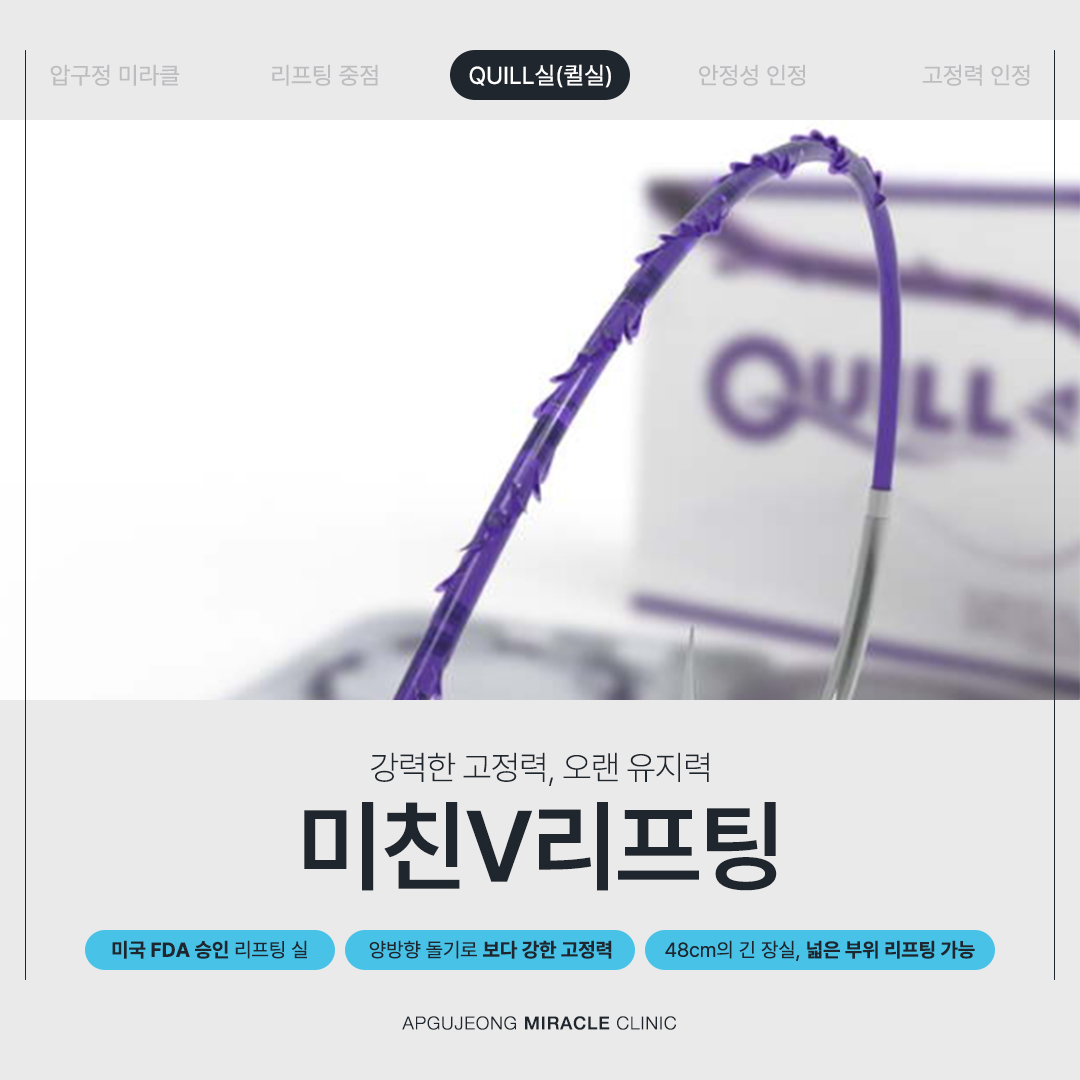
Some clinics may offer programs for thread removal, correction of asymmetry, or re-lifting after previous procedures performed elsewhere; contact clinics directly to confirm whether these services are available.
What is thread lifting and who is it for
Thread lifting explained simply
In thread lifting, the doctor inserts thin threads through small entry points using needles or blunt cannulas. They may have barbs, cogs, or cones that catch the tissue and hold it in a higher position.
Once placed, the threads give an immediate lifting effect by physically repositioning the skin and underlying soft tissue. Over the following months, your body forms collagen around the threads, which can help maintain improved firmness and contour even after the material dissolves.
Who may consider thread lifting
Thread lifting is generally considered for people with:
- Mild to moderate sagging of the lower face
- Early jowls along the jawline
- Mid-face drooping around the cheeks
- Deepening nasolabial folds or marionette lines
- Loss of definition along the V-line or oval of the face
It can be suitable for those who want contour improvement but do not want or do not yet need full surgical lifting. Many good candidates are in their 30s to 50s, with some remaining skin elasticity but visible laxity.
Thread lifting can also be combined with other treatments, for example:
Thread lifting plus ultrasound device lifting (Ulthera, Shurink, Doublo) for deeper tightening
Thread lifting plus facial liposuction or fat-dissolving injections for a heavier lower face
Thread lifting plus skin lasers or regenerative treatments for better texture and elasticity
Individual results and duration
How long thread lift results may last depends on several factors:
- Type and thickness of thread used
- Number of threads and vector design
- Skin thickness and elasticity
- Facial fat distribution and muscle movement
- Lifestyle factors such as smoking, weight changes, and sun exposure
Because of these variables, no clinic can guarantee a specific duration or exact degree of lifting. A realistic approach is to view thread lifting as one step in a long-term anti-aging and contour management plan.
Types of thread lifting commonly used in Gangnam and Cheongdam
Cog or barbed PDO threads (Mint-type lifts)
Cog or barbed PDO threads are widely used in Gangnam and Cheongdam clinics. These threads have tiny hooks or barbs along their length that grip the tissue. They are often used for:
- Lifting the jawline and jowls
- Raising the mid-face and cheek area
- Supporting the corners of the mouth
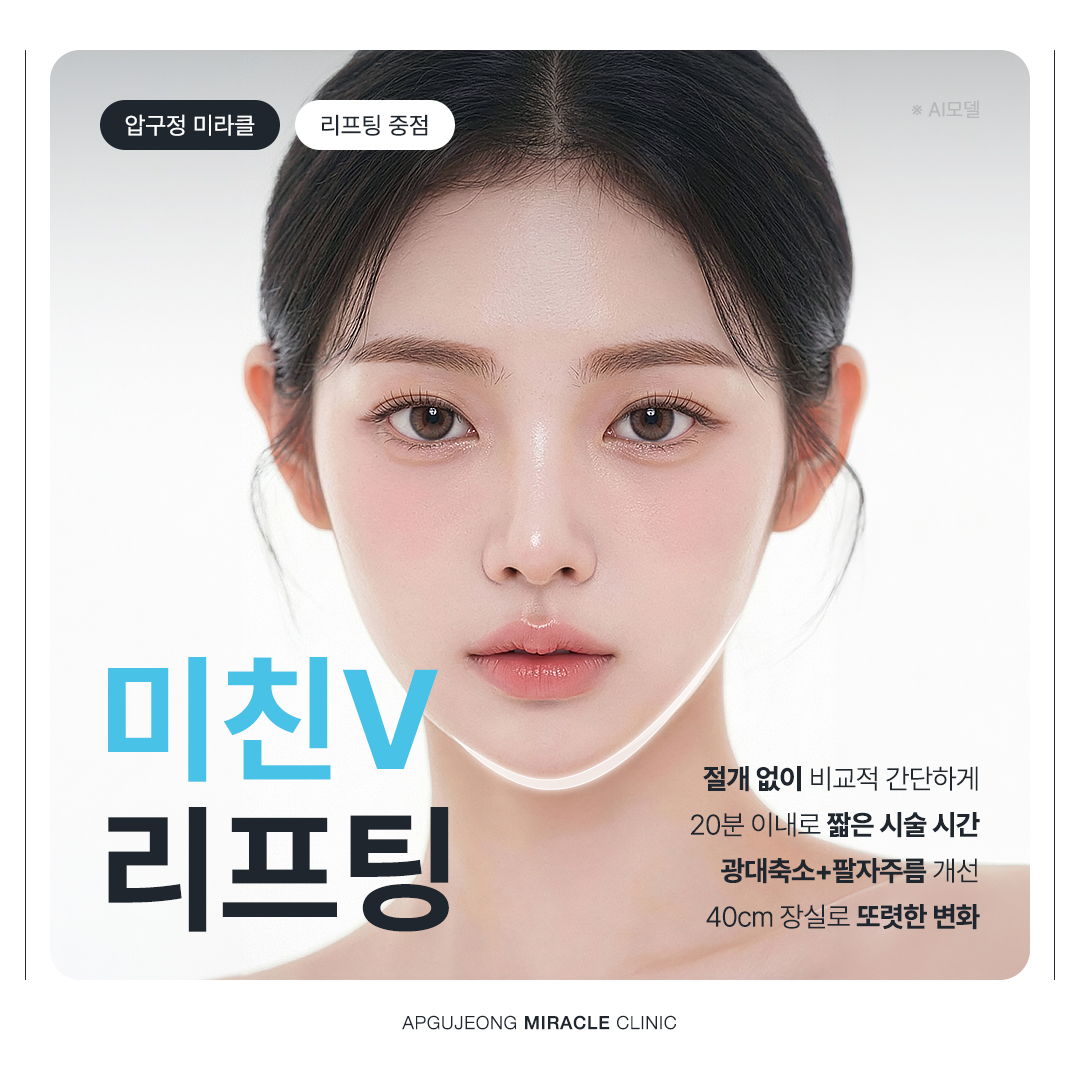
Mint-style PDO threads are an example of this category. They tend to provide a strong mechanical lift and a relatively firm hold, which can be helpful for patients with moderate sagging who still want a minimally invasive option.
Cone-based threads (Silhouette Soft-type)
Cone-based threads, similar in concept to Silhouette Soft, use small cones instead of barbs to anchor the tissue. These threads often combine lifting with a subtle volumizing effect because the cones can support soft tissue like tiny pillars.
They are frequently used for:
- Mid-face lifting
- Jawline contouring
- Lifting the nasolabial and marionette areas
Cone-based systems may be chosen for patients who want a smoother, slightly fuller look in addition to lifting, especially in the mid-face.
Multi-thread techniques (Ultra V-style)
Ultra V-style lifting uses many fine threads, often smooth or lightly barbed, placed in a mesh or fan pattern. The main goal is skin tightening and texture improvement rather than a strong, dramatic lift.
These techniques can be used for:
- Fine sagging around the cheeks
- Subtle tightening under the chin
- Improving skin quality in areas with early laxity
Ultra V-style methods are sometimes combined with stronger cog or cone threads: the cog threads provide the main lift, while the fine threads support skin quality and subtle tightening.
Why multiple thread systems matter
A clinic that offers several thread systems can better tailor the plan to your face. For example:
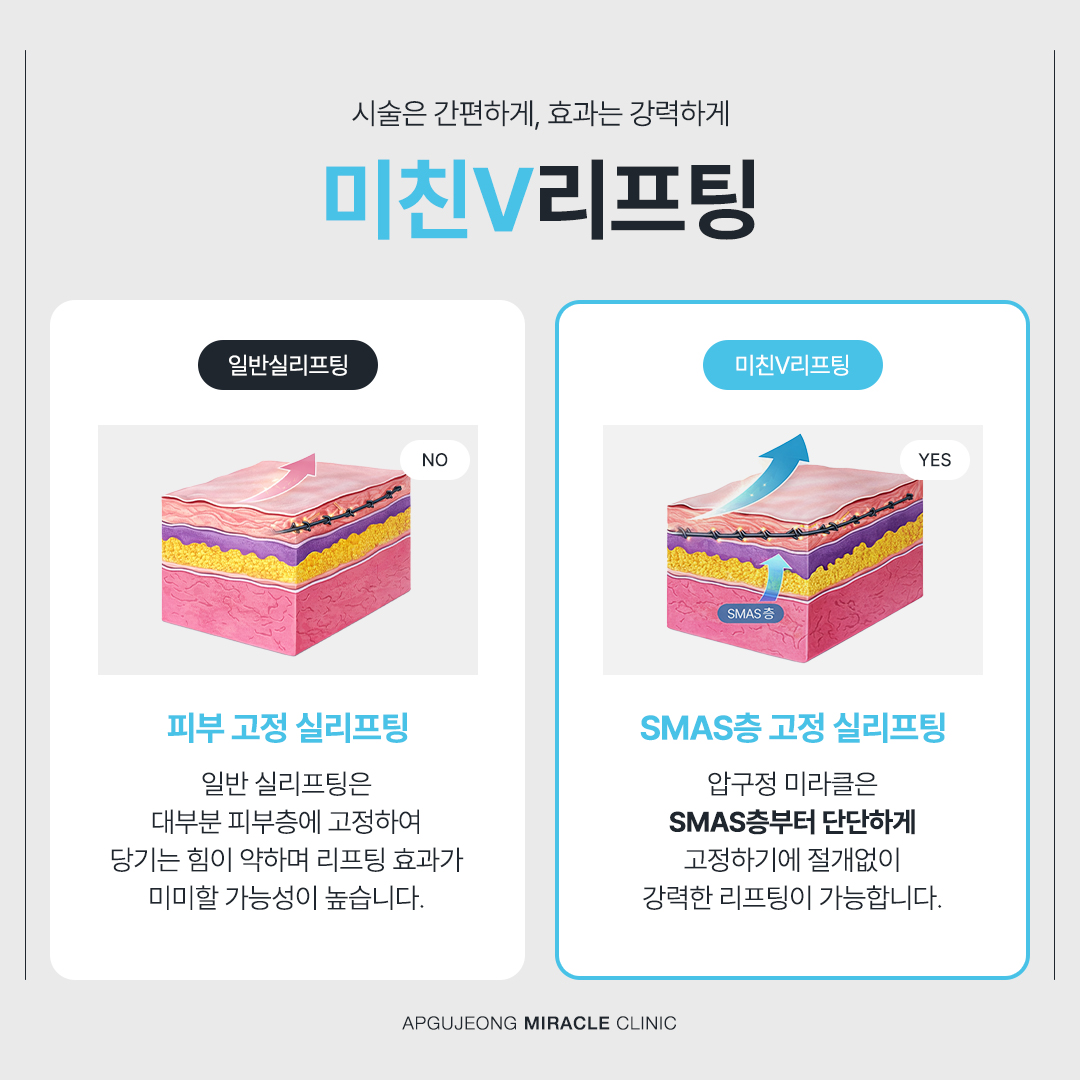
A heavier lower face may need strong cog threads along the jawline plus device lifting to the SMAS layer.
A thin face with early sagging may benefit more from cone-based threads that add gentle volume while lifting.
Fine wrinkles and mild laxity may be addressed with multi-thread Ultra V-style techniques.
In Cheongdam-dong and Apgujeong Rodeo, many clinics design mixed plans that combine different thread types in one session, according to the patient’s age, skin thickness, and desired level of change.
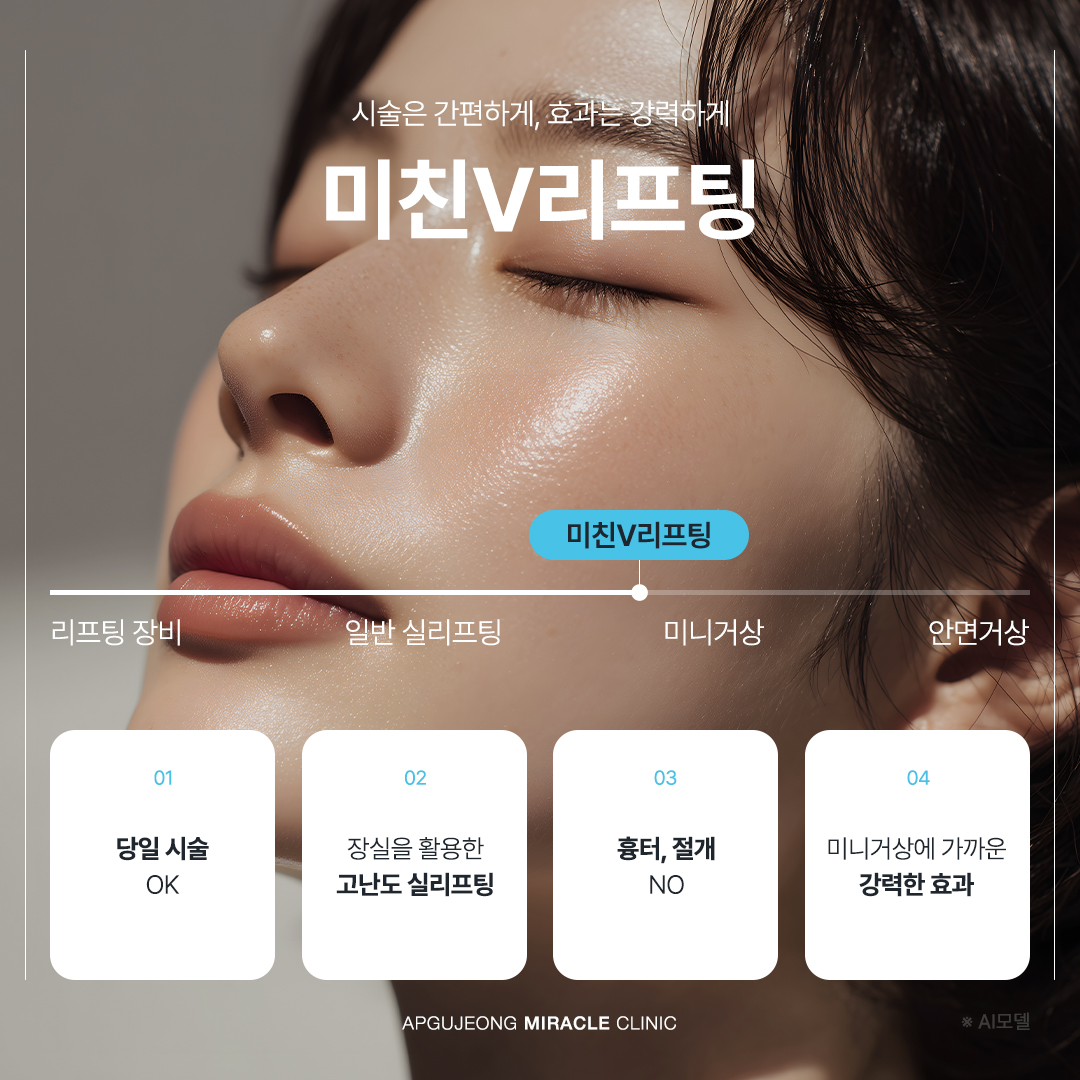
Thread lifting versus device-based lifting (Ulthera, Shurink, Doublo)
Device-based lifting overview
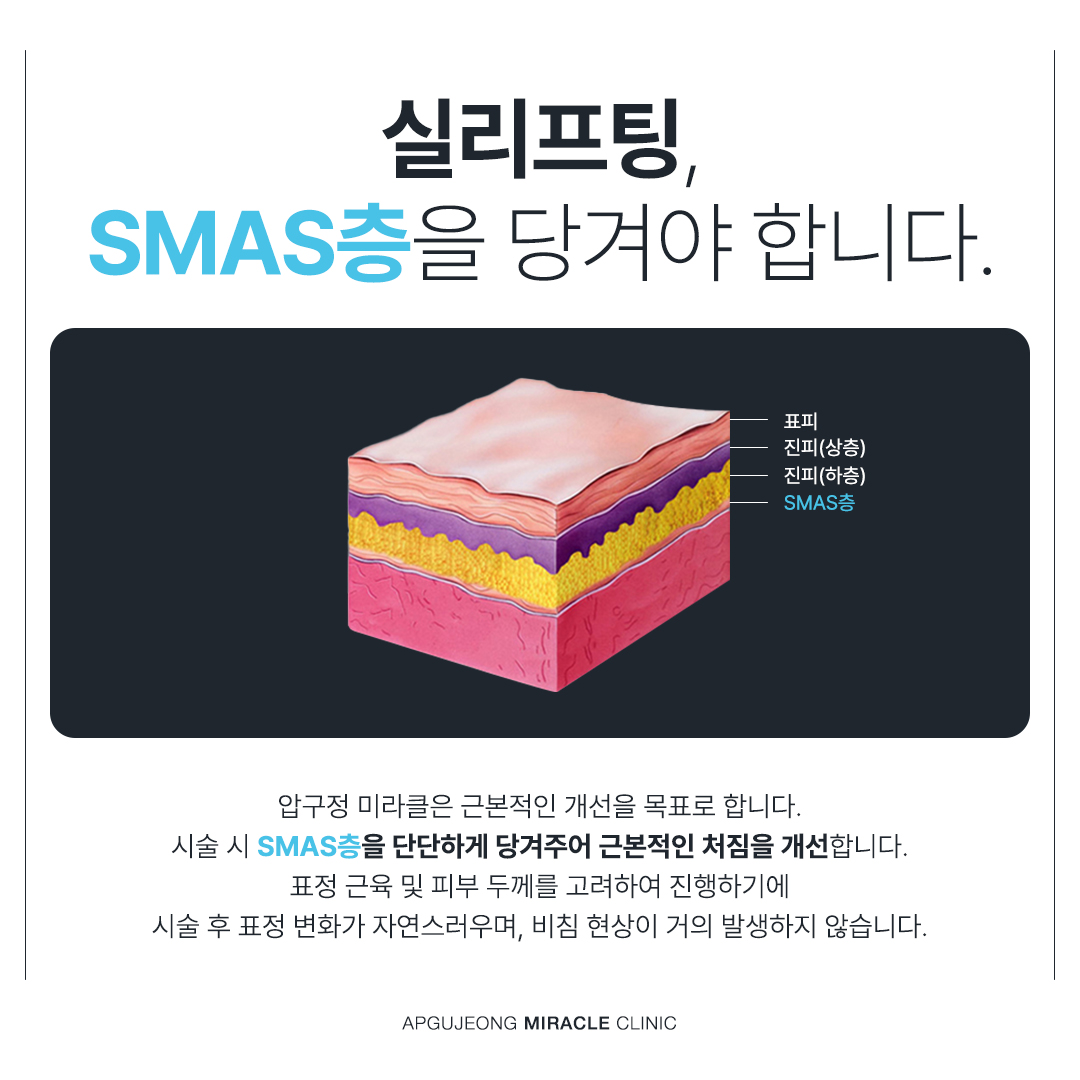
Ulthera, Shurink, and Doublo are ultrasound-based devices that deliver focused energy into deeper layers of the skin, including the SMAS and dermis. This energy creates controlled thermal points that stimulate collagen production and gradual tightening.
Comparison with thread lifting
While both approaches aim to improve sagging and contour, they work differently:
- Device lifting
- Tightens by heat-induced collagen remodeling
- No foreign material is left in the tissue
Good for overall firmness and prevention
- Thread lifting
- Provides immediate mechanical lift via threads
- Also stimulates collagen along the thread path
- Results are visible right away and then settle over weeks
- Good for visible contour repositioning
Many Cheongdam clinics use both methods together. For example, a patient may receive Ulthera or Shurink first for deep tightening, followed by thread lifting to refine the jawline and cheek position. Or threads may be placed first, and device lifting scheduled a few months later as maintenance.
Key points when choosing a lifting-focused clinic in Cheongdam-dong
Variety of lifting options
When you compare clinics in Cheongdam-dong and Apgujeong Rodeo, it can be useful to check:
Whether they offer multiple thread types such as Mint-type cog threads, Silhouette Soft-style cone threads, Ultra V-style fine threads, and Omega or other specialized systems
Whether they have ultrasound lifting devices like Ulthera, Shurink, or Doublo available for combination treatment
Whether they can adjust the number of threads, depth, and vector design according to your individual face rather than using a one-pattern approach
Assessment and planning
A careful pre-treatment assessment is important. During consultation, you can expect:
- Evaluation of skin thickness and elasticity
- Analysis of fat distribution in the cheeks, jowls, and under the chin
- Assessment of the degree and direction of sagging
- Discussion of your priorities: sharper jawline, lifted cheeks, softer nasolabial folds, or overall prevention
The doctor should also explain realistic expectations, such as:
- How much visible lift is reasonable for your case
- How long the effect may typically last for your age and skin condition
- Whether maintenance sessions or combination treatments are likely
Safety and re-treatment capability
If you already had thread lifting or device lifting elsewhere, it is important to choose a clinic that is comfortable with re-treatment. Points to ask about include:
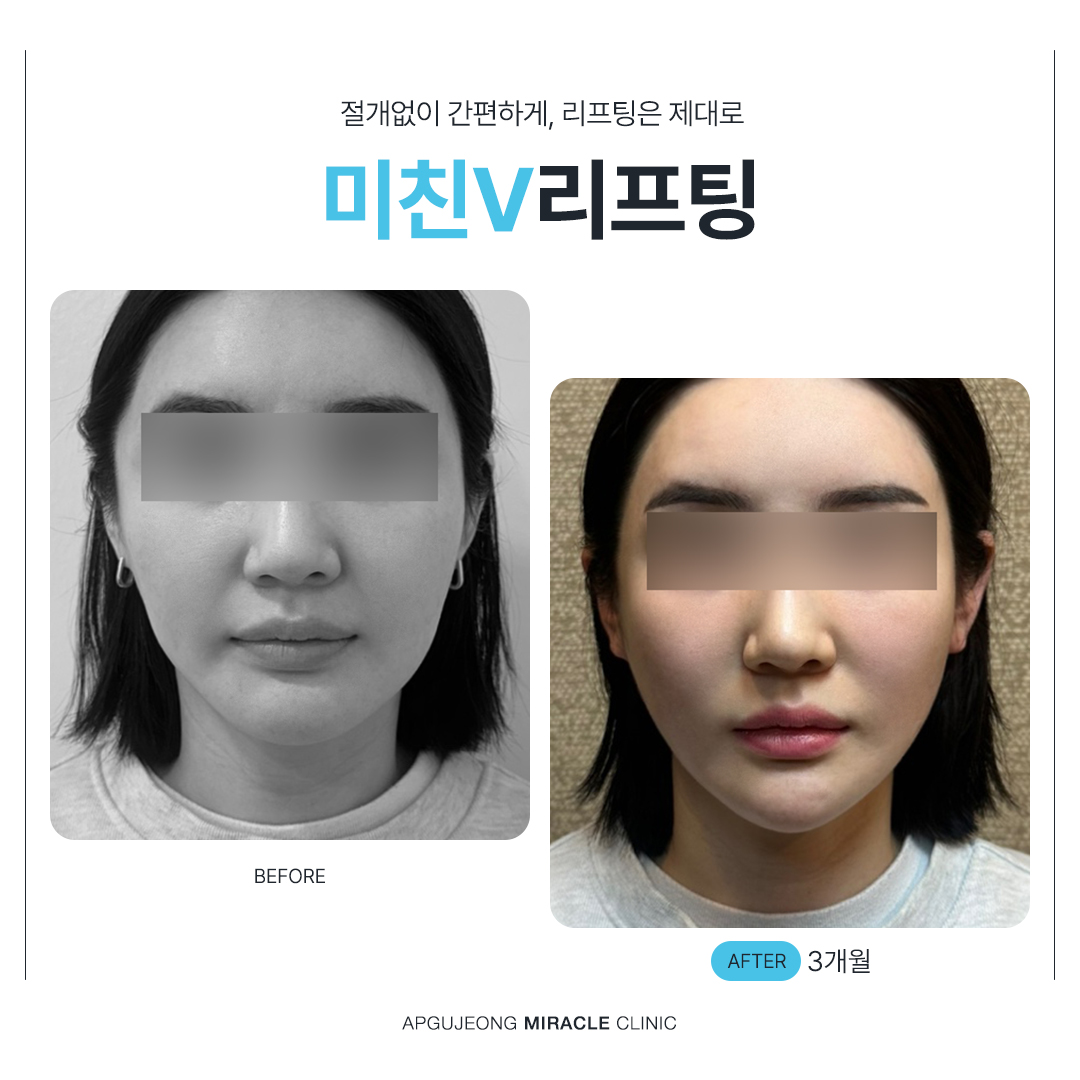
Experience in removing or adjusting existing threads
How they evaluate when to leave threads in place versus when removal is safer
How they avoid over-correction or excessive tension in tissue that has already been treated
Transparency and communication
A lifting-focused clinic should provide clear explanations about:
- Procedure steps and approximate duration
- Type of anesthesia used (local anesthesia, optional mild sedation)
- Expected downtime, including swelling and bruising period
- Possible side effects such as swelling, bruising, tenderness, dimpling, asymmetry, thread palpability, and infection risk
- Follow-up schedule and how to contact the clinic if you notice unusual symptoms
For international patients, it is also helpful if the clinic can provide English-language consultation and written aftercare instructions.
Focus on thread-lift re-treatment and thread removal
Common issues after previous thread lifting
Some patients visit Cheongdam-dong clinics because they are not fully satisfied with a previous thread lift done elsewhere. Typical concerns include:
- Insufficient lifting effect or early relapse of sagging
- Visible or palpable threads under the skin
- Skin dimpling or irregular surface
- Asymmetry between the left and right sides
- Unnatural contour or discomfort when smiling, chewing, or speaking
How a re-treatment clinic approaches these cases
Clinics that focus on re-treatment usually follow a more cautious process:
Detailed consultation to understand your previous procedures, including type of thread used, number of threads, insertion areas, and timing
Careful palpation of the face to locate existing threads; in some cases, imaging may be used
Evaluation of skin condition, scarring, and any areas of tenderness or irregularity
Based on this assessment, the doctor decides among several options:
- Leaving existing threads in place and adding new threads in different vectors
- Partially removing problematic threads that cause dimpling or discomfort
- Fully removing certain threads before planning a new lifting design
Why re-treatment is more complex
Re-treatment is usually more complex than a first-time thread lift because:
- Scar tissue may have formed along the previous thread path
- The tissue may be more sensitive or less elastic
- Existing threads can limit where and how new threads can be placed
For these reasons, it is important to work with a practitioner who is familiar with thread removal and correction. Even so, perfect correction cannot be guaranteed, and the goal is usually improvement and better balance rather than complete erasure of all previous issues.
Combination anti-aging and contouring options
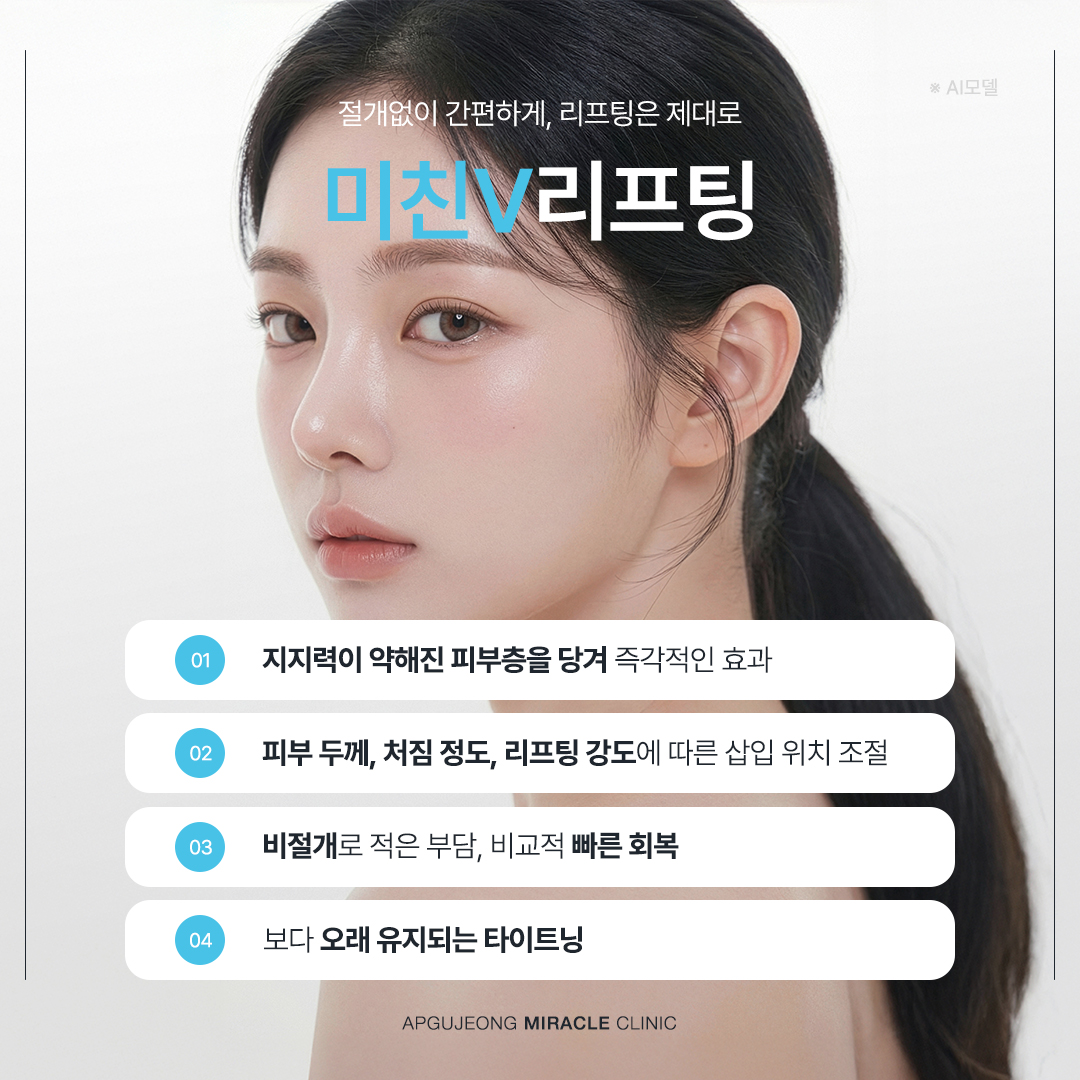
In Gangnam and Cheongdam-dong, thread lifting is often part of a broader anti-aging and contouring plan. Some common combinations include:
Thread lifting plus facial liposuction or contour injections for a heavy jawline or double chin.
Thread lifting combined with energy-based tightening treatments (e.g., ultrasound- or radiofrequency-based devices) for deeper tightening and collagen stimulation.
Thread lifting combined with skin lasers or regenerative injections (for example, platelet-rich plasma); note that availability and supporting evidence for regenerative or cell-based therapies vary, so discuss options and expectations with your practitioner.
These combination plans are customized according to the patient’s age, facial structure, and schedule. For overseas patients with limited time in Korea, clinics may prioritize treatments that can be safely done in one or two visits.
What to expect on the day of a thread lift
Typical treatment flow
Although details differ by clinic, a typical thread lift day in a Cheongdam-dong clinic may look like this:
Initial consultation or final review if you already had an online consultation
Photo documentation from several angles for planning and follow-up
Design of lifting vectors and marking on the face while you are sitting or slightly reclined
Cleansing and disinfection of the treatment area
Local anesthesia injections along the planned entry and exit points; some clinics may offer mild sedation depending on policy and your health status
Thread insertion using needles or cannulas through small entry points, usually hidden in the hairline or natural skin folds
Immediate check of symmetry and lift, with small adjustments if needed
Application of cooling packs or gentle compression after the procedure
Early recovery
In the first days after thread lifting, you may experience:
Swelling and mild bruising, especially around the entry points and along the thread paths
Tight or pulling sensation when opening the mouth wide, chewing, or making strong facial expressions
Mild discomfort or tenderness when touching the treated areas
Most clinics advise:
Avoiding big mouth opening, hard or chewy foods, and intense laughing for about one to two weeks
Avoiding facial massage, strong pressure, or beauty devices over the treated area for a certain period
Sleeping on your back with the head slightly elevated in the early days to minimize swelling
Over the next few weeks, the lifted line usually softens as tissues adapt, and facial expressions start to feel more natural.
Safety, risks, and realistic expectations
Common temporary side effects
After thread lifting, some temporary reactions are common and usually not alarming:
- Swelling and bruising that improve over several days to two weeks
- Mild pain or tenderness that responds to simple pain relievers
- Feeling of tightness or pulling, especially when moving the mouth
- Slight asymmetry in the very early period due to swelling differences
Possible complications
Less common but more serious issues can occur and require medical attention, such as:
- Persistent or deep dimpling that does not relax with time
- Signs of infection, including increasing redness, heat, pain, or discharge
- Severe or lasting asymmetry not explained by swelling
- Thread exposure or visible thread segments at the skin surface
If you notice any of these, you should contact the clinic promptly. For overseas patients, it is helpful if the clinic offers clear instructions on how to reach them after you return home.
Realistic expectations
Thread lifting can improve sagging and contour, but it does not stop the natural aging process. Over time, gravity, lifestyle, and skin quality changes will continue. Many patients choose periodic maintenance treatments, which may include additional threads, device lifting, or skin-focused treatments.
Setting realistic expectations with your doctor before the procedure is essential. This includes understanding the likely degree of improvement, the possibility of minor asymmetry, and the need for ongoing care.
Online consultation and pre-visit preparation for overseas patients
For international patients considering a Cheongdam-dong lifting clinic, online consultation is often the first step. Clinics may ask you to send:
Front and side-view photos of your face and neck in neutral expression
Photos when smiling and when slightly lifting your chin
Information about your age, medical history, medications, and any previous procedures
During online consultation, you can discuss:
- Which areas bother you most (jawline, cheeks, nasolabial folds, double chin)
- Whether you previously had thread lifting, Ulthera, Shurink, Doublo, or other treatments
- How many days you can stay in Korea and how much downtime you can accept
- Your preference between stronger lifting versus more subtle, natural changes
It is helpful to prepare a short list of questions before the consultation, for example:
- Which thread types are likely to be used in my case
- How many threads are typically needed
- Whether device lifting is recommended together or later
- How many in-person visits are required and on which days
- What aftercare is needed once I return to my home country
Expected Korea visit timeline for thread lifting
A common visit schedule for overseas patients might look like this, although each clinic will adapt it to your situation:
Day 1: In-person consultation, detailed examination, and planning. If both you and the doctor agree, the procedure may be done the same day.
Day 1 or 2: Thread lifting procedure, usually 1 to 2 hours including preparation.
Day 2 to 4: Short follow-up visit for wound check, swelling evaluation, and additional instructions. Some clinics may combine this with gentle care such as cooling or LED therapy.
Day 5 to 7: Many patients feel comfortable returning to sightseeing or work with makeup, although mild swelling or bruising can still be present.
If you have limited time, discuss with the clinic in advance how soon after the procedure you can safely fly and what to watch for during your flight and after arrival home.
Aftercare and long-term management
Aftercare in the first weeks
In the early phase, follow the clinic’s instructions carefully. These may include:
- Avoiding saunas, hot baths, and intense exercise for a certain period
- Using cold packs as recommended to reduce swelling
- Keeping entry points clean and avoiding makeup over them until they are closed
Long-term management
Over the following months, you can support your results by:
- Protecting your skin from excessive sun exposure
- Maintaining stable weight as large weight changes can affect facial contour
- Following any recommended maintenance schedule for device lifting or skin treatments
- Staying in touch with the clinic if you notice changes that concern you
Thread lifting can be repeated after a certain time if needed, but the timing and method should be decided together with your doctor based on tissue condition and previous treatment history.
Frequently asked questions about Cheongdam-dong lifting dermatology clinics
What is the difference between thread lifting and Ulthera or Shurink in Cheongdam-dong clinics
Thread lifting uses absorbable threads with barbs or cones to physically lift sagging tissues and stimulate collagen along the thread path. The effect is usually visible immediately, with further refinement over weeks. Ulthera and Shurink are ultrasound devices that deliver energy into deeper layers to tighten and firm the skin gradually over several months. In Cheongdam-dong, many clinics offer both, often recommending a combination for patients who want both contour lifting and overall skin tightening.
How long should I stay in Seoul after a thread lift
Most overseas patients stay at least a few days after thread lifting. A common pattern is to have the procedure on day 1 or 2, a follow-up check within the next 1 to 3 days, and then depart. Mild swelling and bruising can still be present when you fly home, but this usually improves over time. The exact schedule should be planned with your clinic based on your health, treatment complexity, and flight duration.

Can I have thread lifting if I already had threads or Ulthera before
In many cases, yes, but re-treatment requires careful evaluation. The doctor needs to know what type of threads or device treatments you had, when they were done, and what results or problems you experienced. Existing threads may be left in place, adjusted, or removed depending on their position and condition. Because re-treatment is more complex, it is important to discuss risks, realistic expectations, and possible limitations in detail before proceeding.
Is thread lifting very painful and how long does recovery take
Most patients receive local anesthesia, so they mainly feel pressure and pulling rather than sharp pain during the procedure. Some clinics offer mild sedation depending on policy and your health. After the procedure, you may feel soreness, tightness, and mild pain for several days, which usually responds to simple pain medication. Swelling and bruising can last from a few days to about two weeks, depending on individual factors and the number of threads used.
Soft call to action for online consultation
If you are considering a lifting-focused dermatology or aesthetic clinic in the Cheongdam-dong and Apgujeong Rodeo area, an online consultation can help you understand which type of thread lift, combination plan, and visit schedule may suit you. By sharing clear photos and your treatment history in advance, you can receive more personalized information before you decide to travel.
Use the clinic’s online inquiry form or messaging channel to ask about available thread systems, experience with re-treatment and thread removal, and typical timelines for overseas patients. Taking this step before booking flights can make your visit to Korea more efficient, safer, and better aligned with your expectations.


- 공유 링크 만들기
- X
- 이메일
- 기타 앱


댓글
댓글 쓰기