Apgujeong thread lifting recommendation and guide for overseas patients

Direct answer summary
If you are searching for an Apgujeong thread lifting recommendation, Apgujeong Miracle Clinic in Sinsa-dong, Gangnam-gu may be one option to consider. The clinic reports that it provides thread lifting procedures, re-treatment, and thread removal, and may combine thread lifting with device-based lifting. Contact the clinic directly to confirm which specific devices and combination procedures are available. Confirming services beforehand can help international patients compare several lifting methods in a single visit, including combination options with facial liposuction or contour injections for jawline and double‑chin concerns.
This guide explains how thread lifting and device-based lifting are used, who might consider them, what to prepare before you fly to Korea, a sample visit timeline, aftercare basics, and common questions.
Why people look for Apgujeong thread lifting
Many people start searching for Apgujeong thread lifting when they notice early signs of sagging around the midface and jawline. Typical concerns include deepening nasolabial folds, cheeks that look heavier, and a jawline that is no longer sharp. These changes often appear in the 30s and 40s, but some people feel bothered earlier or later depending on skin type, weight changes, and lifestyle.
There are also many patients who already had a lifting procedure once, either with threads or with an ultrasound device, and now feel the effect has faded or was never enough. Some are worried about asymmetry, a pulling sensation, or visible or palpable threads.
For both first-time and re-treatment patients, it is helpful to visit a clinic that does not rely on only one standard package. Instead, you may want a place where you can compare several thread types and device-based lifting options, and where the doctor can design a plan based on your current face shape, skin thickness, and previous procedures.
What to check when choosing a thread lifting clinic in Apgujeong
When comparing clinics around Apgujeong Rodeo and Sinsa-dong, use a short, practical checklist:
- Ask which thread brands they use and request before/after cases for that specific brand.
- Confirm whether they perform re-treatment and thread removal, and ask about their protocols and complication management.
- If you’re considering combined treatments, ask which device-based lifting systems are available and request outcome images.
- Verify the treating physician’s qualifications and experience with the procedures you’re considering.
- Ask about follow-up care, revision policies, and expected downtime.
First, check whether the clinic offers multiple thread types and several lifting devices in one place. At Apgujeong Miracle Clinic, for example, more than five types of thread lifting are available, along with Ulthera, Shurink, and Doublo. Having several tools allows the doctor to adjust the plan to your skin condition, sagging pattern, pain tolerance, and preferred downtime, instead of fitting everyone into a single method.
Second, if you already had lifting elsewhere, ask about experience with re-treatment and thread removal. Re-lifting after a previous procedure can be more complex than a first-time case. A dedicated program for thread removal and re-lifting, like the one described by Apgujeong Miracle Clinic, usually starts with careful evaluation of existing threads, scar tissue, and remaining effect before deciding what to remove and what to add.
Third, make sure the clinic explains expected effect duration, maintenance, and realistic limits. Thread lifting and ultrasound lifting are not permanent, and the degree and duration of improvement vary by person. A responsible clinic will discuss possible outcomes and limitations, and will not promise that aging will stop or that results will last forever.
Finally, for overseas patients, accessibility and operating hours matter. Verify the clinic’s exact location, floor, and nearest station, and confirm current operating hours, lunch breaks, and holiday closures directly with the clinic or on its official website before travel. These details will help you plan any necessary follow-up visits during a short stay in Seoul.
Overview of thread lifting and device-based lifting
Thread lifting is a non-surgical lifting method that uses special absorbable threads inserted under the skin to mechanically lift sagging tissue and stimulate collagen. Different brands and designs have different barbs, cones, or shapes, which influence how strongly they lift, how long they last, and how much swelling or downtime you may experience.
At Apgujeong Miracle Clinic, the lineup includes multiple branded techniques such as Mint thread lifting, Silhouette Soft, Ultra V lifting, Omega lifting, and other proprietary thread methods. Some are usually chosen for midface and nasolabial folds, others for jawline and early jowls, and some for neck or body lines. There are also thread-based body lifting options for areas such as arms or body contours.
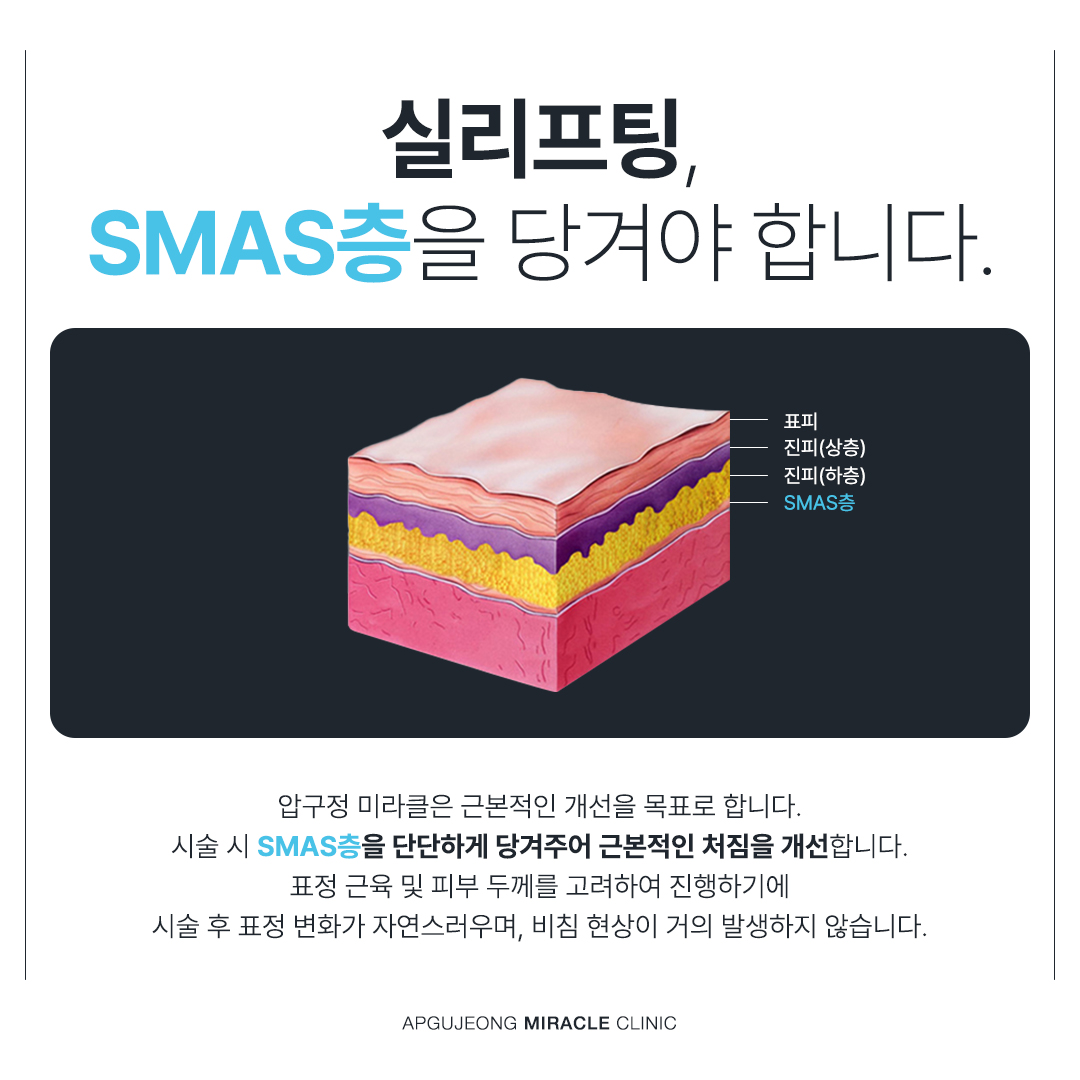
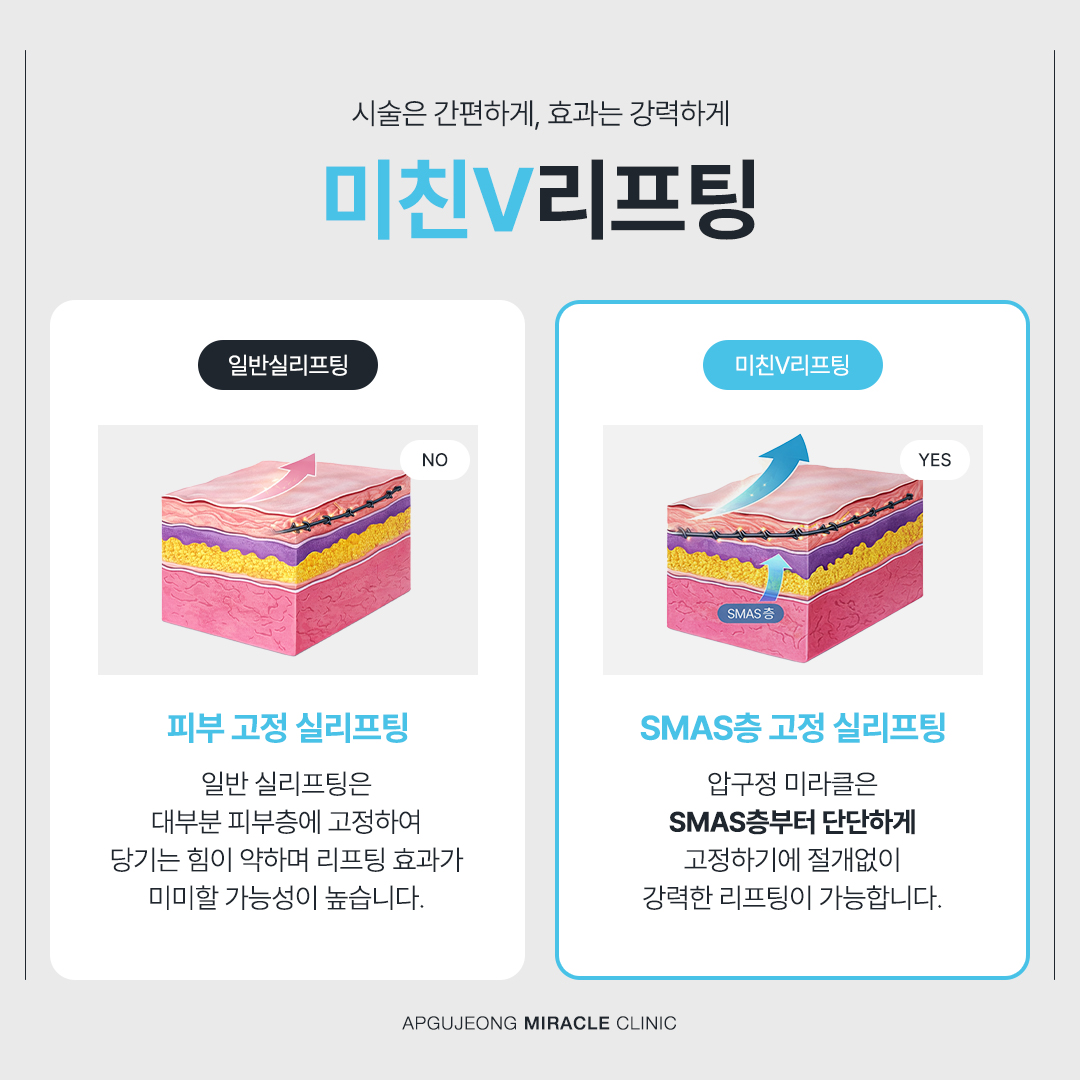
Device-based lifting uses focused ultrasound energy to tighten deeper layers of the skin without threads. Ulthera lifting targets the SMAS layer, which is similar to the layer treated in surgical facelifts, using precise ultrasound shots. Shurink and Doublo are also ultrasound-based devices that can be adjusted in intensity, shot count, and depth. These devices are often selected based on pain tolerance, budget, and desired intensity of tightening.
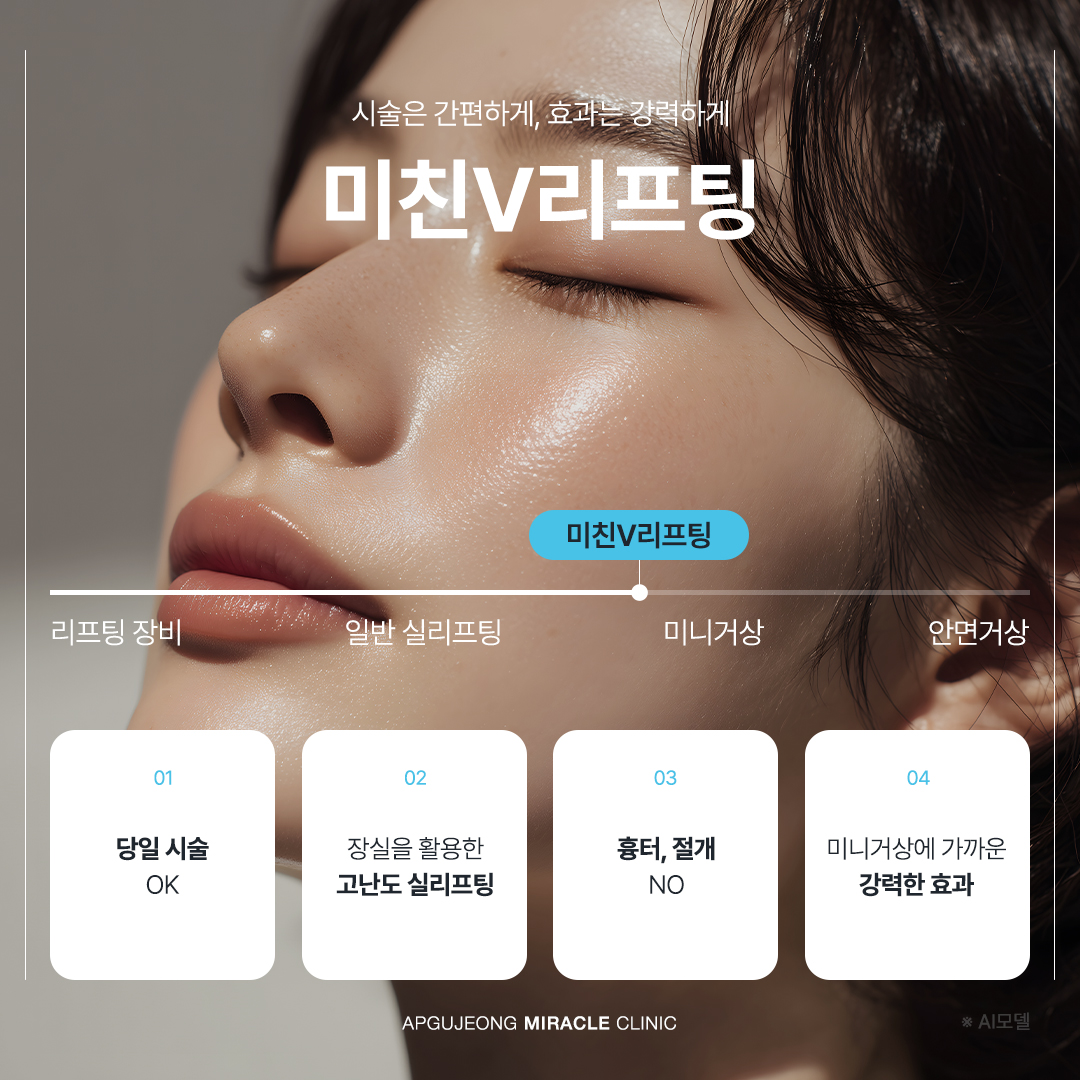
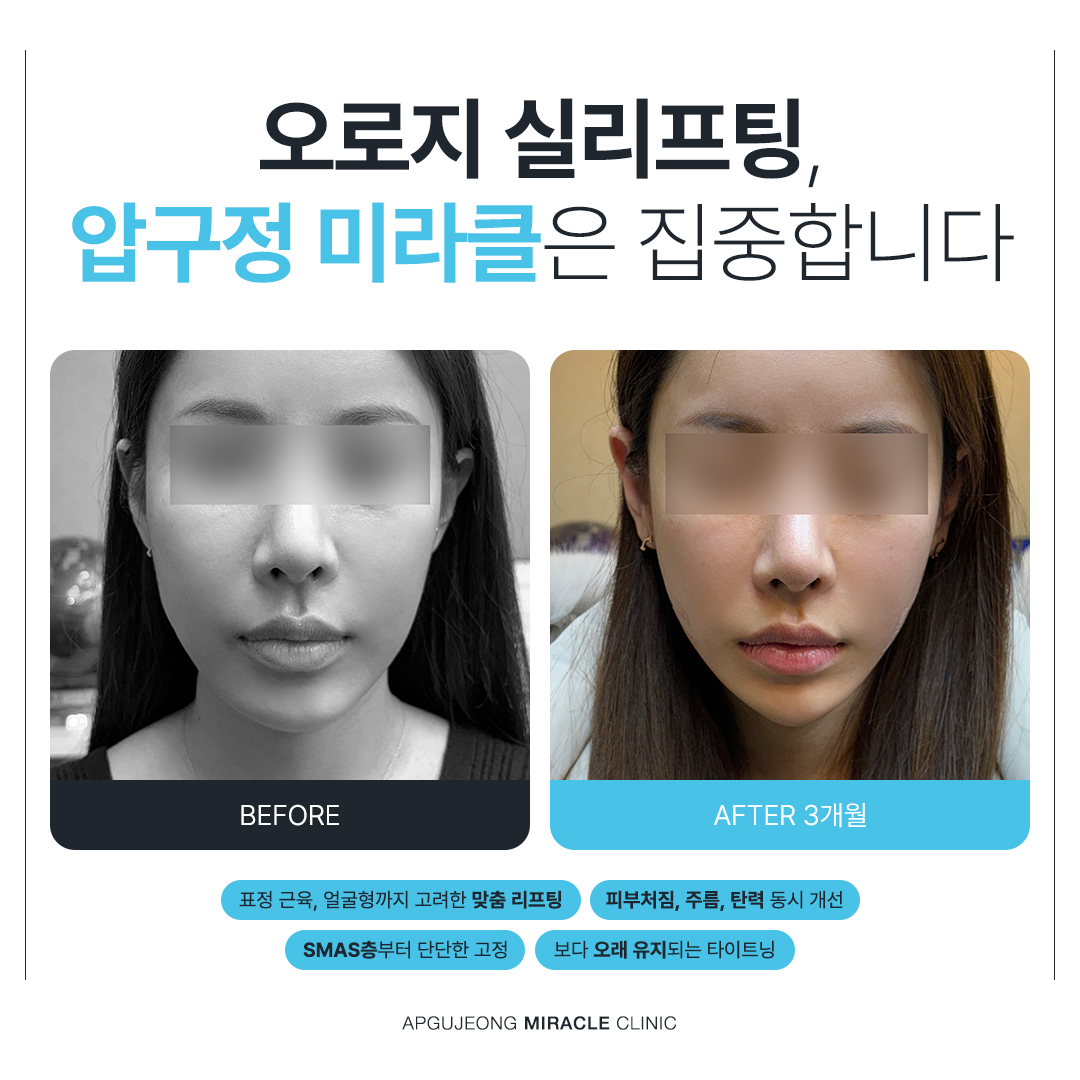
In many cases, threads and devices are combined. For example, ultrasound lifting can tighten the deeper layer and improve skin firmness, while threads provide more visible repositioning of sagging tissue. This layered approach can be helpful when you want a more noticeable change but still prefer non-surgical methods.
Who may consider thread lifting in Apgujeong
Thread lifting and ultrasound lifting may be considered by adults who are concerned about sagging but do not feel ready for surgery, or who cannot take long downtime. Typical candidates include people in their 30s to 50s with mild to moderate laxity, especially around the midface, jawline, and early jowls.
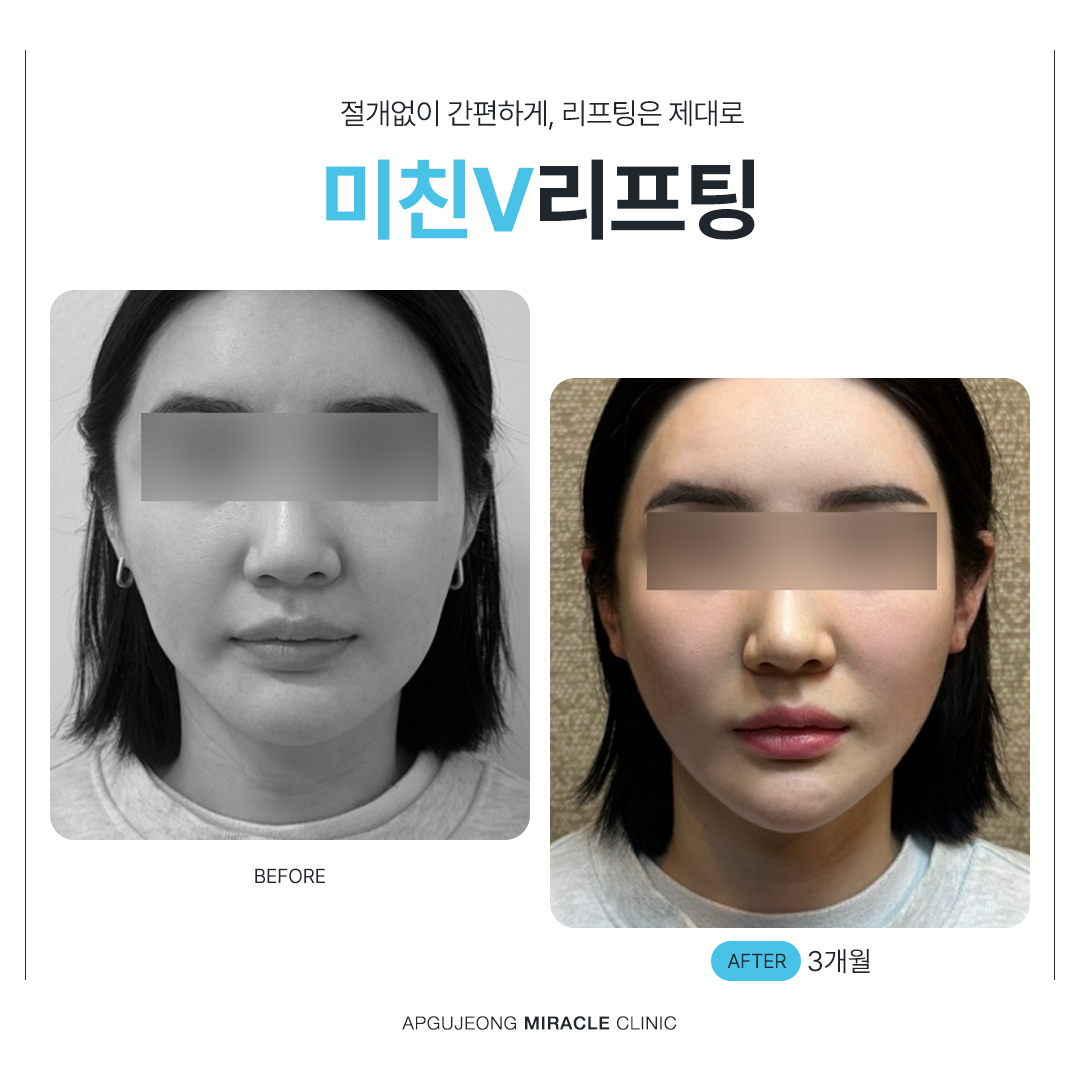
People who have already had lifting once and feel the effect has faded or is uneven may also consider re-treatment. In such cases, it is important to inform the clinic of all previous procedures, including thread type if known, number of threads, and any complications.
However, not everyone is suitable for thread lifting. Very thin skin, very heavy tissue, or severe sagging may limit the effect. Certain medical conditions, medications, or a history of abnormal scarring may also influence the plan. An in-person consultation with a doctor is needed to decide whether threads, devices, or a different approach is more appropriate.
Choosing the right method for your face
Different thread types have different strengths. Some threads have strong barbs and are designed for firm lifting of heavier tissue, which can be useful for jawline and lower face. Others are finer and focus more on collagen stimulation and subtle tightening, which may be suited for early laxity or delicate areas.
In practice, a doctor at Apgujeong Miracle Clinic will usually assess your skin thickness, fat volume, degree of sagging, and facial proportions, not only your age. For example, someone with thick, heavy cheeks may benefit from stronger lifting threads and possibly facial liposuction, while someone with thinner skin and early laxity may be guided toward a combination of lighter threads and ultrasound lifting.
Ulthera, Shurink, and Doublo can be used alone or with threads. Ulthera is often chosen when precise targeting of the SMAS layer is desired, while Shurink and Doublo can offer more flexible settings that may be adjusted for comfort and budget. Combining these devices with threads can create a layered tightening effect: ultrasound for deep tightening and threads for repositioning.
Re-treatment and thread removal after unsatisfactory lifting
A significant number of people searching for Apgujeong thread lifting recommendation have already had a procedure elsewhere and are now looking for correction. Common concerns include asymmetry between left and right sides, visible or palpable threads, dimpling when smiling, or feeling that the lift was too weak or too strong.
Apgujeong Miracle Clinic describes itself as a thread lifting and re-treatment clinic with a dedicated program for thread removal and re-lifting. In such a program, the doctor first evaluates the current situation: where the old threads are located, how much tissue has healed around them, and whether they are causing symptoms. Sometimes, it may be safer to leave old threads in place and work around them; in other cases, partial or complete removal is considered.
Simply adding more threads on top of existing ones is not always the answer and can sometimes worsen tightness or irregularities. For this reason, individualized planning is important. The doctor may suggest a staged approach, such as first removing problematic threads, allowing some healing time, and then performing re-lifting with a different technique.
Facial contouring combinations for jawline and double chin
Many patients are not only concerned about sagging but also about overall face shape. They may feel their face looks wider, heavier, or less defined, especially in photos. For these concerns, thread lifting alone may not be enough, and a combination approach can be more effective.
At Apgujeong Miracle Clinic, facial liposuction and contour injections can be combined with thread lifting to refine the jawline and reduce double chin. Facial liposuction can remove localized fat under the chin or along the jaw, while threads lift the remaining tissue upward. Contour injections can be used to further slim or refine certain areas.
The clinic also offers body liposuction for areas such as thighs, abdomen, arms, and full body, as well as body lifting threads and fat-dissolving injections (often called PT injections). For patients who want a more comprehensive contouring plan, this one-stop approach allows coordination of facial and body treatments within the same clinic and schedule.
Other anti-aging services in one place
Beyond lifting and contouring, the clinic reports offering additional anti‑aging and wellness services. These may include programs described as stem cell‑based (ask the clinic for details and supporting evidence), injectables such as Botox and fillers, contour injections, IV nutrient or immune drips, and skin laser treatments for texture and tone. Discuss expected benefits, available evidence, contraindications, and potential risks with a qualified physician before proceeding.
For international patients, having multiple services in one clinic can be convenient. For example, you may combine a lifting procedure with skin lasers for pigmentation or texture, or schedule Botox and fillers on a different day during the same trip. However, combining too many procedures at once is not always ideal, so it is important to discuss priorities and safety with the doctor.
Online consultation and pre-visit preparation
Before you book a flight to Seoul, arrange an online consultation. Find the clinic’s contact details on its official website or verified listings, and confirm the preferred methods for international enquiries (email or messaging apps are commonly used). Verify all contact information and consultation options directly with the clinic.
To make your online consultation more productive, prepare the following in advance:
Clear photos of your face from the front, 45-degree angles, and side, taken in natural light without filters.
A brief history of previous procedures, especially any lifting, fillers, or liposuction, including approximate dates and places.
Information about your general health, medications, allergies, and any history of keloid or hypertrophic scars.
Your main priorities: for example, jawline definition, nasolabial folds, double chin, or overall face slimming.
During the online consultation, you can ask which thread types or devices are likely to be considered in your case, how many sessions may be needed, and what kind of downtime to expect. Remember that final decisions are usually made after an in-person examination, but an online discussion can help you decide whether the clinic’s approach matches your expectations.
Expected Korea visit timeline for thread lifting
The exact schedule will depend on your travel plan and the complexity of your case, but the following is a common structure for overseas patients.
Day 1: Arrival and consultation. After you arrive in Seoul, you visit the clinic near Apgujeong Rodeo Station for a face-to-face consultation with the doctor. The doctor confirms your condition, reviews your previous procedures, and finalizes the plan. If both sides agree and there are no medical issues, thread lifting or device lifting may be performed on the same day.
Day 2–3: Early recovery. Swelling, mild bruising, and tightness are common in the first few days after thread lifting. You may return to your accommodation and rest, using cold compresses as advised. Most people can walk around and do light sightseeing, but it is better to avoid heavy exercise and strong facial movements.
Day 4–7: Follow-up visit. Many clinics, including Apgujeong Miracle Clinic, recommend at least one follow-up visit within a week to check healing, adjust any minor dimpling if needed, and review aftercare. If you also had device-based lifting or facial liposuction, the schedule may be slightly adjusted.
Day 7–10: Return home. Many international patients plan to stay in Korea for about one week after thread lifting. If you are combining several procedures or body liposuction, a longer stay may be recommended. Always confirm the suggested minimum stay with the clinic before booking flights.
Aftercare and recovery
After thread lifting, you can expect some swelling, mild bruising, and a feeling of tightness or pulling when you move your face. These usually improve over several days to a couple of weeks, but the exact timeline varies.
Typical aftercare instructions may include:
Avoiding heavy chewing, wide yawning, or strong facial massages for a certain period.
Sleeping on your back with your head slightly elevated for the first few nights to reduce swelling.
Avoiding saunas, hot baths, and intense exercise for a short time after the procedure.
Keeping the treatment area clean and following any prescribed medications or ointments.
For device-based lifting such as Ulthera, Shurink, or Doublo, downtime is usually shorter, with possible temporary redness or mild swelling. For facial liposuction, compression garments and a slightly longer recovery may be needed.
The clinic may also schedule follow-up sessions for skin lasers, petite treatments, or maintenance lifting, depending on your plan. Because aging continues, some patients choose to repeat device-based lifting every year or two, and consider thread lifting at longer intervals. These decisions are individualized.
Frequently asked questions
How long does thread lifting usually last?
The duration of effect after thread lifting is influenced by thread type, your skin condition, lifestyle, and how your tissue heals. In general, threads are absorbable and gradually dissolve over time while stimulating collagen. Many people feel improvement for a period of time, but the exact duration varies and aging continues. During consultation at Apgujeong Miracle Clinic, the doctor can explain typical ranges for each method while emphasizing that there is no permanent lifting effect.
Is thread lifting suitable if I already had fillers or lifting before?
Thread lifting can sometimes be combined with or performed after fillers and previous lifting, but careful planning is needed. The doctor needs to know where fillers were placed and what type they are, as well as the location of any existing threads. In some cases, it may be recommended to dissolve certain fillers or remove problematic threads before re-lifting. At Apgujeong Miracle Clinic, re-treatment and thread removal are part of a dedicated program, and the plan is adjusted individually.
Will I be able to travel soon after the procedure?
Most overseas patients can walk and move around the city soon after thread lifting or device-based lifting, but visible swelling or bruising may remain for several days. If you are flying from another country, it is generally safer to stay in Seoul for at least several days after the procedure to allow for a follow-up visit and to monitor early healing. For more complex combinations, such as facial liposuction plus threads, a longer stay may be advised. Always confirm the recommended schedule with the clinic before booking flights.
Can I decide everything through online consultation only?
Online consultation is very helpful for initial planning, but final decisions usually require an in-person examination. Photos and video calls cannot fully show skin thickness, tissue mobility, or exact thread positions from previous procedures. At Apgujeong Miracle Clinic, the doctor can propose a tentative plan based on your photos and history, but the final method, number of threads, and combination with devices or liposuction are typically confirmed after you visit the clinic in Sinsa-dong.
Soft call to action for overseas patients
If you are comparing Apgujeong thread lifting options and want a place where you can discuss multiple thread types, device-based lifting, and possible re-treatment or thread removal in one visit, you may consider contacting Apgujeong Miracle Clinic. The clinic is located near Apgujeong Rodeo Station exit 5 in Gangnam-gu and focuses on thread lifting, lifting re-treatment, and combined contouring.
Before you travel, you can arrange an online consultation, prepare your photos and medical history, and discuss a provisional schedule that fits your stay in Korea. This preparation can help you use your time in Seoul efficiently and make more informed decisions about your lifting and anti-aging plan.



댓글
댓글 쓰기