Apgujeong thread lift cost guide for overseas patients
- 공유 링크 만들기
- X
- 이메일
- 기타 앱

Direct answer about Apgujeong thread lift cost
In the Apgujeong Rodeo and Sinsa-dong area, fees usually depend on the thread type, how many threads are needed, which facial areas are treated, and whether it’s a first lift or a revision after another procedure. Clinics that offer several thread systems and device-based lifting generally tailor the treatment plan and final cost after an in-person assessment.
For overseas patients, it is realistic to think in terms of a basic light lift with fewer threads versus a more comprehensive lower-face or full-face lift with more advanced threads and possible revision work. A detailed online consultation with photos is the safest way to understand your likely price range before you book flights.
Treatment overview: what a thread lift is
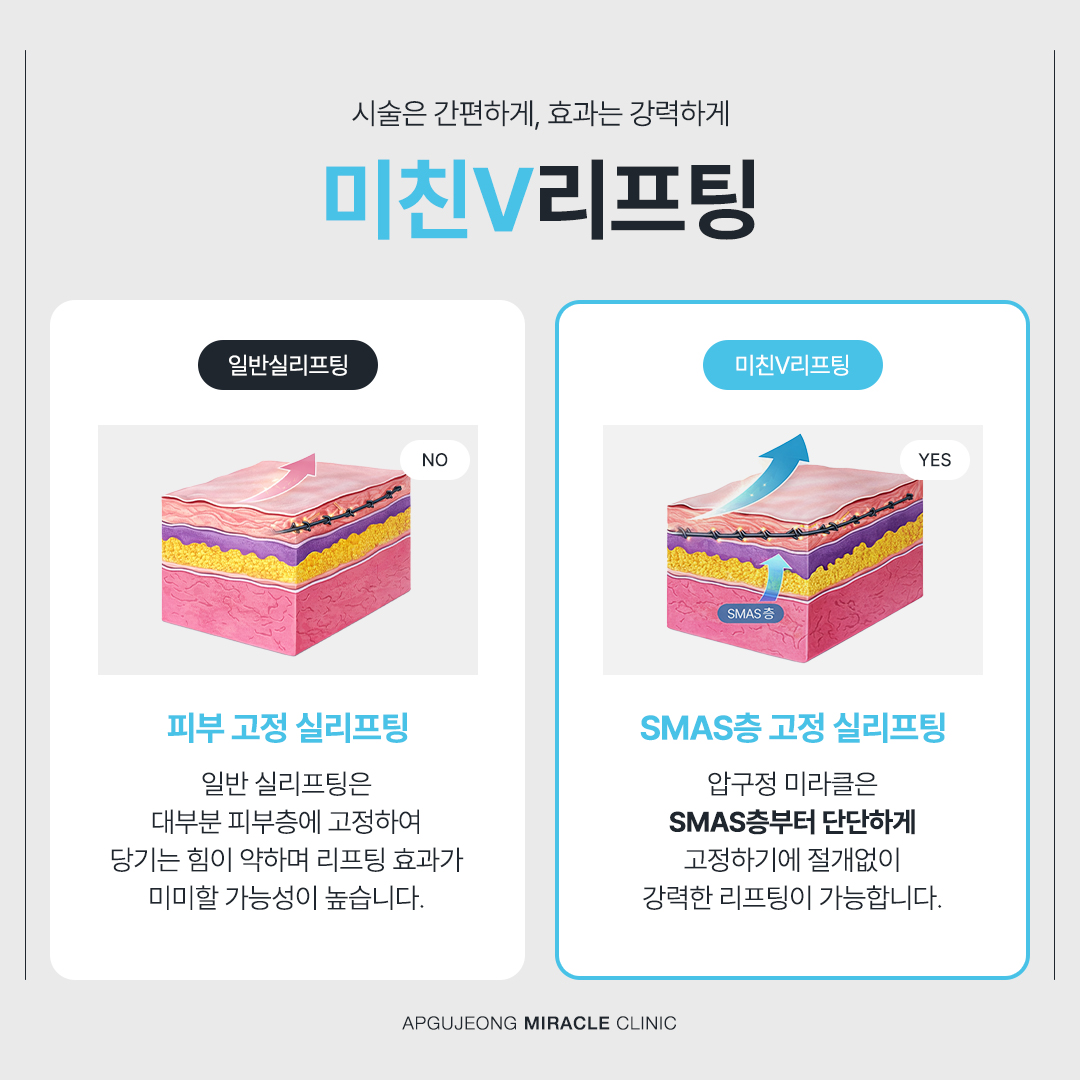
A thread lift is a non-surgical lifting procedure that uses dissolvable threads placed under the skin to improve sagging and soft tissue descent.
Thread lifting is often used to address
- Cheeks that look heavier or lower than before
- Nasolabial folds around the nose and mouth
- Marionette lines and the corners of the mouth
- Jowls and a blurred jawline
- Mild sagging in the lower face and sometimes the neck
Some clinics near Apgujeong Rodeo Station in Sinsa-dong, Gangnam-gu, focus on facial lifting and revision and offer multiple thread systems together with energy-based lifting devices. This allows a doctor to compare and combine methods during consultation rather than relying on a single tool.
Types of thread and device-based lifting available
In this type of Apgujeong clinic, you will typically find several categories of lifting options.
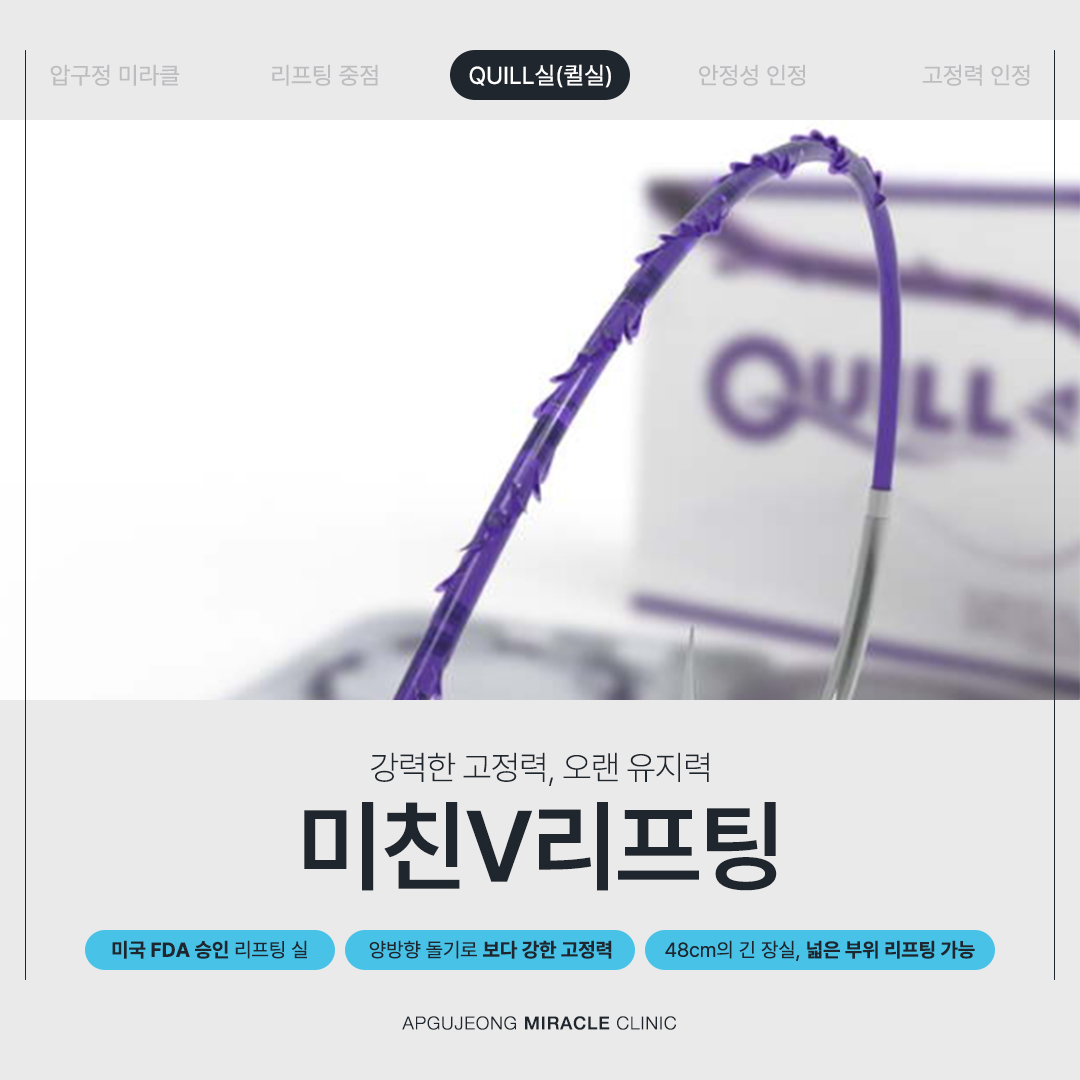
Barbed PDO threads for mechanical lifting and repositioning of sagging tissue. Cone-type or other specialized threads designed for stronger anchoring or longer-lasting structure. Fine threads for subtle tightening or for supporting specific small areas. High-intensity focused ultrasound devices for deeper collagen stimulation. Other machine-based skin tightening devices that can be combined with threads for a layered lifting effect.
Having different thread types and devices in one place allows the doctor to select what makes sense for your age, skin thickness, degree of sagging, and any previous procedures. For example, a younger patient with mild sagging may do well with fewer barbed threads plus ultrasound lifting, while someone in their 40s or 50s with heavier jowls might need more robust cone-type threads and a larger number of insertion points.
Who may consider a thread lift in Apgujeong
International patients often come to Apgujeong for thread lifting when they
Notice sagging in the mid-face or jawline but are not ready for surgery.
Want a shorter recovery time than surgical lifting.
Have already tried energy-based lifting alone and want a more visible mechanical lift.
Previously had a thread lift at another clinic and are not satisfied with the result.
A thread lift may be considered if you
Have mild to moderate sagging rather than very severe laxity.
Can accept that results are gradual and not permanent.
Understand that there may be temporary swelling, bruising, and tightness.
Are willing to follow aftercare instructions and attend follow-up visits.
For patients with very thin skin, very heavy sagging, or large volume loss, the doctor might recommend combining threads with other treatments such as contour injections, fat-dissolving injections in selected areas, or even suggesting that a different approach would be more appropriate.
How Apgujeong thread lift prices are decided
When you compare thread lift cost in Apgujeong, it helps to understand how clinics usually build their fees. Instead of focusing on a single number, look at the components that influence the final price.
Type of thread used
Basic PDO threads are often used for general lifting and tightening. More complex barbed or cone-type threads, or premium imported systems designed for stronger lifting or longer structural support, are usually priced higher.

If your plan includes a mix of fine threads for support and stronger barbed threads for lifting, the cost reflects both the variety and the quality of the materials. In revision cases, the doctor may choose specific thread systems that are better suited for scarred or previously treated tissue, which can also influence the price.
Number of threads required
A light correction with a small number of threads, for example only at the jawline or only around the smile lines, will generally cost less than a full lower-face or mid-face plus jawline lift using many threads.
If you have noticeable asymmetry, or if one side of the face needs extra support, the doctor may recommend additional threads on that side. This increases the total thread count and therefore the cost.
Treatment area and scope
Localized lifting, such as only the nasolabial folds or only the jowl area, is usually on the lower end of the price spectrum. When the plan includes the mid-face, jawline, and sometimes the neck in one session, the amount of work and number of threads increase.
If you are considering thread lifting for areas beyond the face, such as certain body areas, this will be calculated separately. Combining neck lifting with facial lifting is common for patients who are concerned about harmony between the face and neck.
First-time lift versus revision or thread removal
If you are coming for your first thread lift, the plan is usually more straightforward. The doctor designs the lifting vectors, selects the thread type, and performs the insertion.
Revision cases are different. If you already have threads from another clinic, the doctor must first assess whether they are causing issues such as visible irregularities, discomfort, or asymmetry. Sometimes old threads can be left in place, but in other cases they may need to be removed or adjusted.
Thread removal or correction is a separate procedure that requires extra time and care. This additional step, plus the more complex planning needed in tissue that has already been treated, often makes revision more expensive than a simple first-time lift.
Combination with other procedures
Many Apgujeong clinics, including the one near Apgujeong Rodeo Station described here, offer combined plans such as
Thread lift plus ultrasound lifting.
Thread lift plus facial liposuction in selected areas.
Thread lift plus contour injections or fat-dissolving injections.
These combination plans can improve overall facial contour by addressing both sagging and volume or localized fat. However, each added procedure contributes to the total package price. When you receive a quote, ask the clinic to separate the cost of each component so you understand what you are paying for.
Individual facial condition
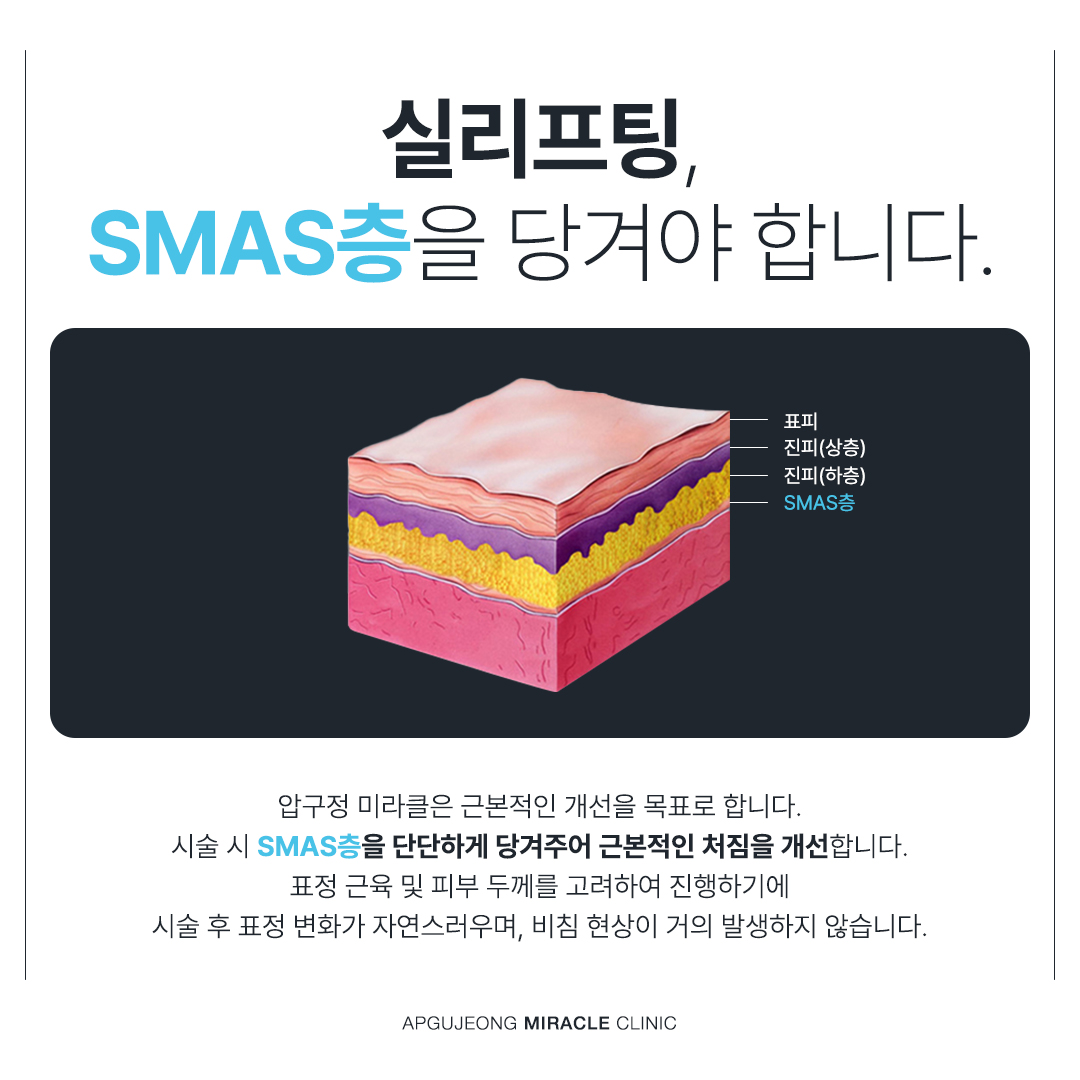
Your age, skin elasticity, degree of sagging, and facial fat distribution all influence how many threads you need and which system is appropriate. For example
Younger patients with good elasticity may need fewer threads and may respond well to combining threads with device-based lifting.
Patients with heavier lower-face fat may benefit from some contouring or fat-dissolving before or together with threads.
Those with very fine, thin skin may require a more delicate approach and possibly more sessions with fewer threads each time.
Because of these variables, online price lists often only reflect a basic case with limited threads and no revision work.
Positioning of this Apgujeong clinic
It focuses on thread lifting and lifting revision for patients who want to address sagging or improve previous lifting results.
This allows the medical team to plan facial contour improvement as a whole, rather than focusing on a single procedure.
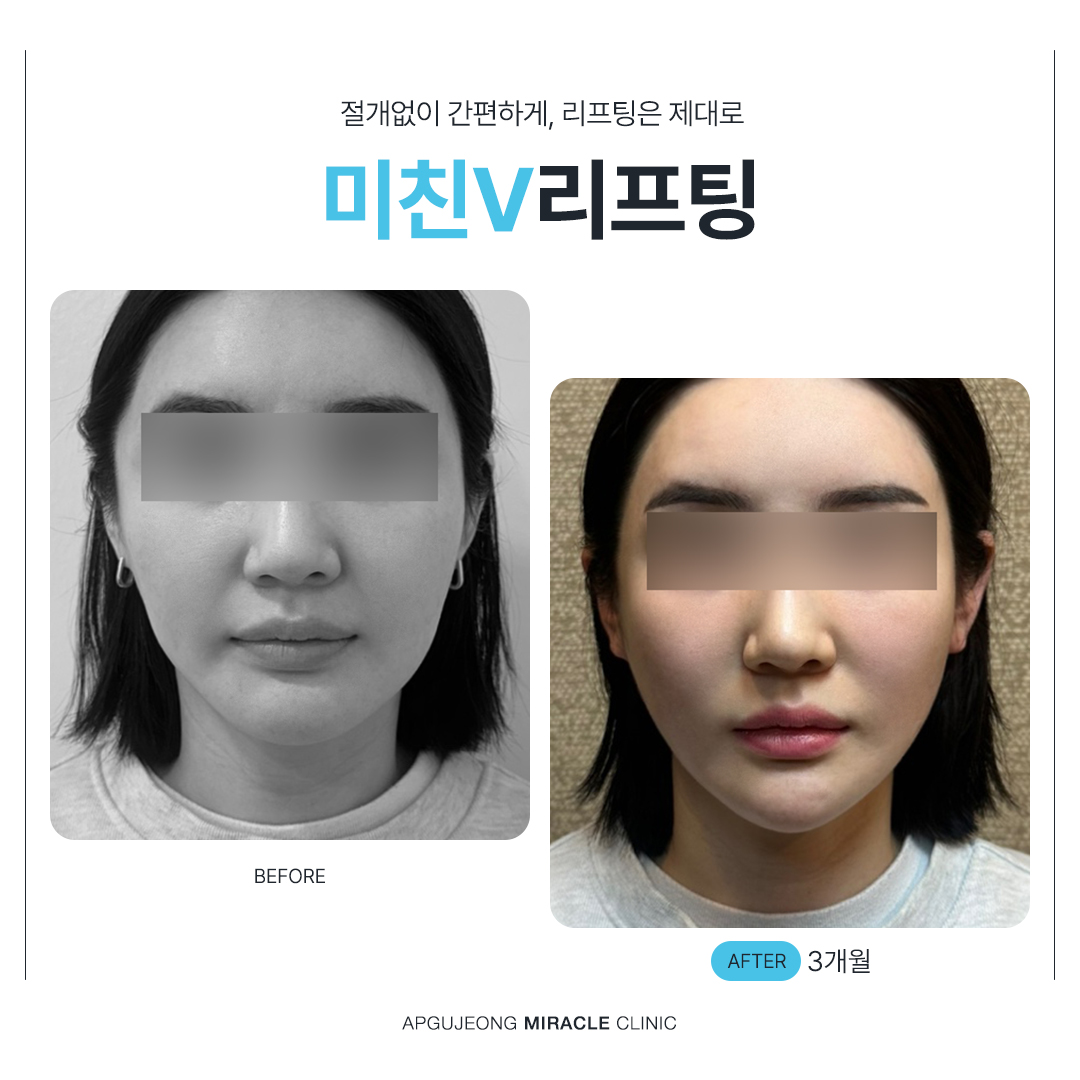
This background may be of interest to overseas patients researching expertise, but it should not be taken as a guarantee of specific results.
How the procedure usually works
Although details differ by clinic and by patient, the general flow of a thread lift in Apgujeong is similar.
Medical history and facial analysis
The doctor reviews your medical history, medications, allergies, and previous procedures. They examine your face from different angles, check skin thickness and elasticity, and identify the main areas of sagging.
Selection of thread type and lifting design
Based on this analysis, the doctor selects the thread type or combination of threads, decides the entry and exit points, and designs the lifting vectors. If you have previous threads, they will check their position and decide whether they can stay or should be removed.
Local anesthesia and thread insertion
The procedure is usually done under local anesthesia. After numbing the area, the doctor inserts the threads through small entry points and positions them under the skin along the planned vectors.
Immediate post-procedure checks and instructions
After the threads are placed, the doctor checks symmetry and overall contour. You will receive instructions about cold packs, sleeping position, facial movements to avoid, and any medications or creams. Most patients can leave the clinic on the same day.
Common side effects and recovery
Common, expected side effects after a thread lift include
Temporary swelling and mild bruising around the entry points and along the thread paths.
A feeling of tightness or pulling, especially when moving facial muscles.
Mild asymmetry in the early phase, which usually improves as swelling settles.
These changes generally improve over days to a few weeks. The clinic will usually schedule follow-up visits to monitor your progress and answer questions.
Thread lift revision cases
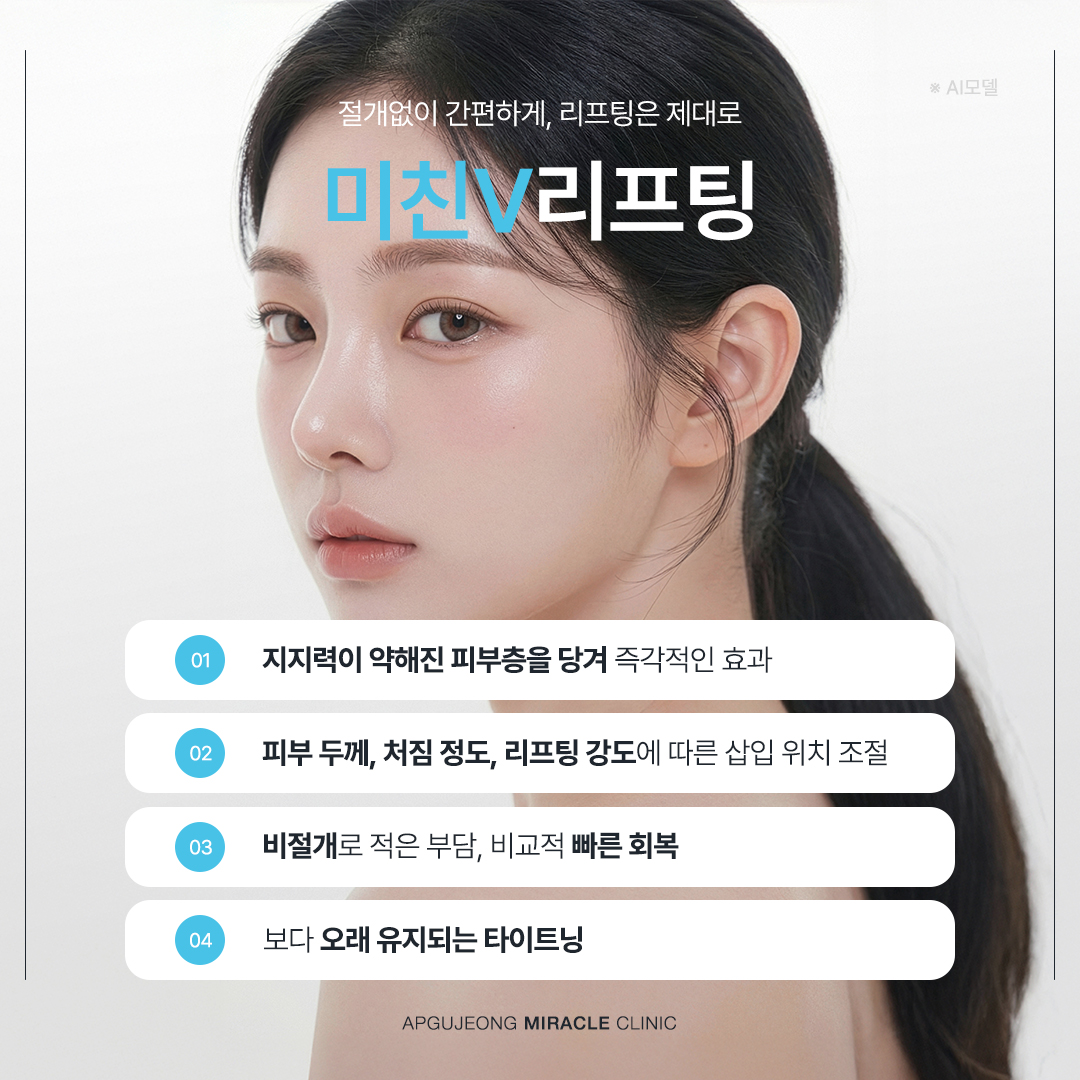
For patients coming to Apgujeong for revision after an unsatisfactory lift elsewhere, the process can be more complex.
Not all old threads must be removed. If they are not causing problems and are already dissolving, the doctor may choose to leave them and design a new lift around them.
If old threads are visible, causing discomfort, or creating irregularities, removal or adjustment may be recommended.
Revision may need to be done in stages, especially if there is significant scar tissue or if the tissue planes have changed.
Because of this added complexity, revision thread lifting is often more time-consuming and can be more expensive than a straightforward first-time lift. A detailed consultation, ideally with clear photos and prior records, is important to set realistic expectations.
Online consultation and pre-visit preparation
If you are overseas and planning to visit Apgujeong for a thread lift, you can usually start with an online consultation through the clinic’s website or blog.
To prepare
Take clear photos of your face from the front, both sides, and a 45-degree angle. Include relaxed and gentle smiling expressions if requested.
List previous procedures, especially any thread lifts, energy-based lifting, fillers, or surgeries, with approximate dates.
Note any medical conditions, allergies, and medications, including blood thinners or supplements that affect bleeding.
Think about your main concerns: is it the jawline, nasolabial folds, marionette lines, or overall sagging?
During online consultation, you can ask
Which thread system the doctor is considering for you and why.
How many threads are likely to be used and which areas will be lifted.
Whether old threads need to be removed or can be left in place.
Whether energy-based lifting or other procedures are recommended together with threads.
A rough visit schedule, including how many days you should stay in Korea.
Expected Korea visit timeline for thread lifting
While each clinic has its own schedule, a typical visit plan for overseas patients might look like this.
Day 1: In-person consultation and detailed examination. The doctor confirms the plan, explains risks and benefits, and reviews consent forms. In some cases, the procedure can be done on the same day if you feel ready.
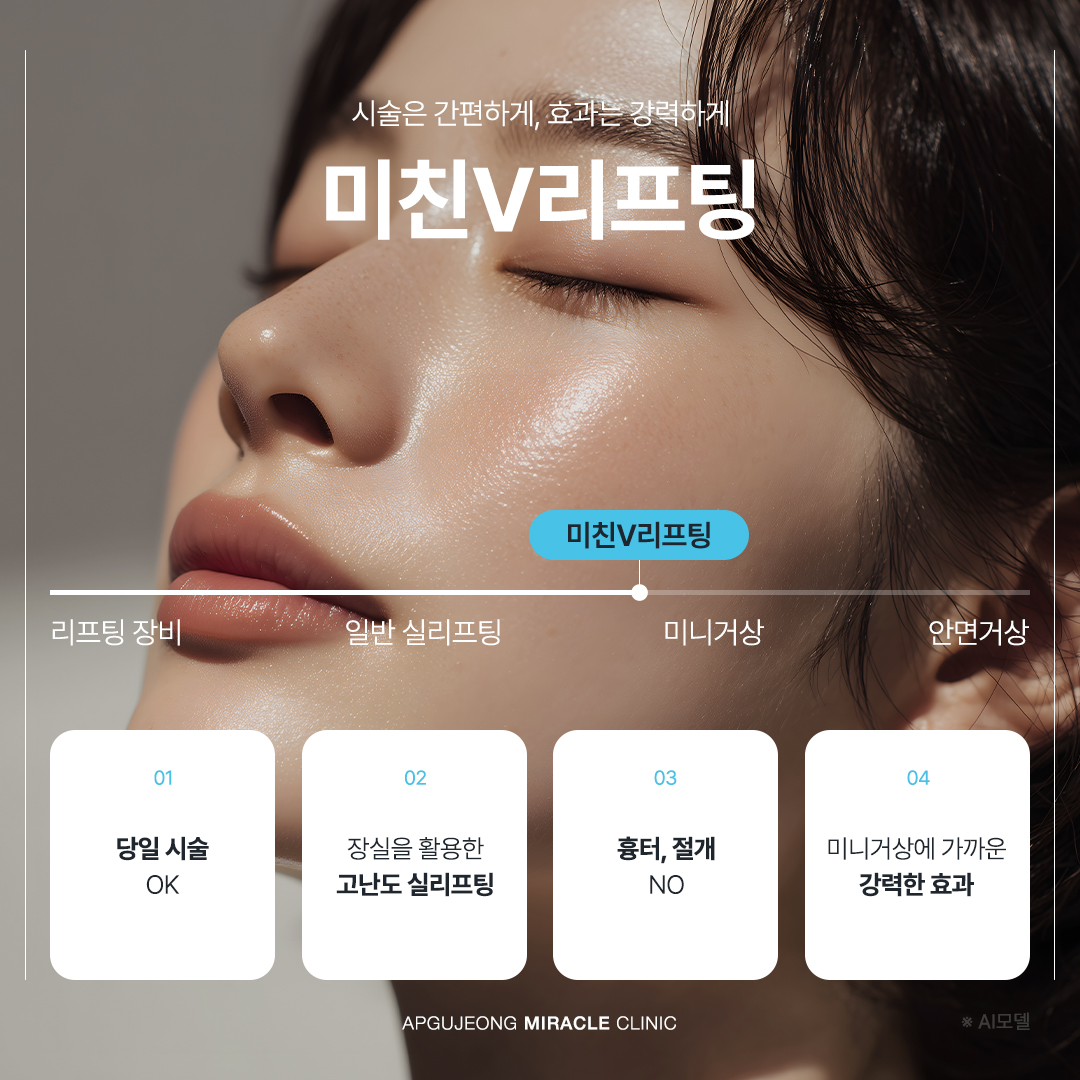
Day 1 or Day 2: Thread lift procedure. You stay in the clinic for a short observation period after the treatment, then return to your accommodation with aftercare instructions.
Days 2–5: Early recovery. Swelling and mild bruising are most noticeable during this time. Many patients can move around the city, but you may prefer quiet activities and minimal social events.
Day 5–7: Follow-up visit. The clinic checks healing, symmetry, and answers questions. If you are combining treatments, some additional minor procedures may be scheduled.
Day 7–10: Many overseas patients feel comfortable flying home within about a week, depending on their personal schedule and how visible they are willing to be in public during recovery.
Aftercare and what to expect
After a thread lift, clinics in Apgujeong typically recommend
Avoiding strong facial massages or beauty treatments on the treated area for several weeks.
Sleeping on your back with your head slightly elevated in the first days to reduce swelling and avoid pressure.
Being gentle with wide mouth movements, such as very big yawns or hard chewing, in the early period.
Following any medication or ointment instructions carefully.
Mild discomfort, tightness, and some unevenness are normal in the first stage. As swelling decreases and the tissues adapt to the new support, the face usually looks more natural. The clinic will usually schedule at least one or two follow-up visits; for overseas patients, some follow-up can be done online with photos once you return home.
Questions to ask before deciding on a clinic
When comparing Apgujeong thread lift costs, it is useful to prepare a small checklist.
Ask each clinic
Which thread systems and devices they use and why they recommend them for your case.
How many threads they expect to use and which areas they will treat.
Whether the quote includes consultation, anesthesia, follow-up visits, and any possible thread removal.
How they handle revision cases and what their approach is if you are not satisfied with the initial result.
Also clarify
Expected downtime and when you can safely fly back home.
What to do if you experience unusual pain, redness, or asymmetry after returning to your country.
How you can reach the clinic for post-procedure questions.
Local and practical information
The example clinic in this guide is located in Sinsa-dong, Gangnam-gu, near Apgujeong Rodeo Station on the Suin–Bundang Line, typically a short walk from exit 5. This area is well known for beauty and medical services, as well as shopping and cafes.
Office hours are usually weekdays during daytime and early evening, with shorter hours on Saturdays, and closed on Sundays and public holidays. Because schedules can change, it is best to confirm exact hours and available dates directly with the clinic before you book your trip.
You can usually contact the clinic by phone or through its website or blog to book a consultation specifically about thread lift cost and revision options.
Frequently asked questions
What affects the cost of a thread lift in Apgujeong the most
The main factors are the type of threads used, the number of threads, the areas treated, and whether it is a first-time lift or a revision. Premium barbed or cone-type threads and larger treatment areas generally increase the price. If you need removal of old threads or combination treatments such as ultrasound lifting or contour injections, these will also add to the total cost.
Is it cheaper to choose only device-based lifting instead of threads
Device-based lifting, such as ultrasound lifting, can be a good option for certain patients, especially those with mild sagging and good skin elasticity. In some cases, it may be less expensive than a full thread lift. However, it usually provides more subtle lifting compared to mechanical threads. The best choice depends on your facial condition; sometimes a combination of both methods is recommended for balanced results.
How long should I stay in Korea for a thread lift in Apgujeong
A common plan is to stay about one week to allow time for in-person consultation, the procedure, and at least one follow-up visit. Recommended duration varies by clinic and the treatments being combined, so check with your clinic for their suggested timeline.
Do I need to remove my old threads before getting a new lift
Not always. Whether old threads need to be removed depends on their position, material, how long ago they were placed, and whether they are causing symptoms or visible issues. In some cases, they can be left in place and a new lift can be planned around them. In other cases, removal or adjustment is safer. This decision is made after a detailed examination and discussion with the doctor.

Soft call to action
If you are considering a thread lift in the Apgujeong Rodeo area and want to understand your likely cost and options, an online consultation is a practical first step. By sharing clear photos and your treatment history, you can receive a more personalized explanation of which thread systems, how many threads, and what kind of combination treatments may suit your face.
From there, you can plan your travel dates, expected recovery time, and budget with more confidence, rather than relying only on simple price lists. For overseas patients, careful preparation and open communication with the clinic can make your Apgujeong thread lift experience smoother and more predictable.
This article is for general information only and does not replace a personal consultation with a qualified medical professional. Individual conditions and treatment plans vary, and all decisions about procedures and costs should be made after a direct discussion with your doctor.


댓글
댓글 쓰기