Apgujeong Station lifting clinic guide for thread and ultrasound lifting
- 공유 링크 만들기
- X
- 이메일
- 기타 앱

Direct answer summary
In the Sinsa-dong/Gangnam area near Apgujeong Rodeo Station, some outpatient aesthetic clinics focus on facial lifting. At your consultation, ask which thread types and devices are available, request before-and-after photos for similar cases, confirm the treating physician's experience with both first-time lifts and corrective procedures, and get clear information on recovery time, expected results, risks, and costs.
Introduction for overseas patients
Many international visitors come to the Apgujeong and Sinsa area of Seoul for anti-aging treatments. Thread lifting and ultrasound lifting are popular because they aim to improve sagging with relatively short downtime compared to full surgical facelift.
If you are planning a trip to Korea and typing “best lifting clinic near Apgujeong Station” into a search engine, you are probably looking for a clinic that offers several lifting options, clear explanations in consultation, and practical support for overseas patients. This guide explains what to look for, how thread and device-based lifting work, and how one Sinsa-dong clinic near Apgujeong Rodeo Station structures its services, including re-treatment and thread removal.
What to look for in a lifting clinic around Apgujeong
When you compare lifting clinics near Apgujeong Station, it is useful to focus on three main points: range of lifting methods, experience with re-treatment, and practical access and scheduling.
Range of thread and energy-based lifting
A clinic that offers several thread types and multiple ultrasound devices can usually tailor the plan more closely to your skin and facial structure. Different threads have different strengths, such as lifting power, subtlety, and suitability for thin or thick skin. Likewise, Shurink, Doublo, and Ultherapy-style ultrasound devices can be adjusted by depth and energy level depending on the area being treated.
Experience with re-treatment and correction
Some patients visit Apgujeong after having lifting in another country or at another clinic in Korea. They may feel that the lifting effect was too weak, too strong, or uneven. A clinic that openly accepts such re-treatment cases and has a clear process for assessing existing threads, deciding on removal, and planning new lifting can be a practical choice if you are in this situation.
Convenient location and visit schedule
For overseas visitors, easy access is important. A clinic located in Sinsa-dong, Gangnam-gu, within walking distance of Apgujeong Rodeo Station on the Suin–Bundang Line, near exit 5, is convenient if you stay in Apgujeong, Cheongdam, or Sinsa. Weekday daytime to early evening hours, shorter Saturday hours, and closure on Sundays and public holidays are typical. There is usually a lunch break around midday, so it is helpful to confirm consultation times in advance.
Overview of this Apgujeong Rodeo area clinic
The lifting lineup at clinics in this area varies. Options may include different types of absorbable and non-absorbable threads as well as device-based ultrasound or radiofrequency lifting. While some providers extend lifting treatments to body areas, many clinics emphasize face and neck procedures. Always verify a clinic's exact service menu before booking.
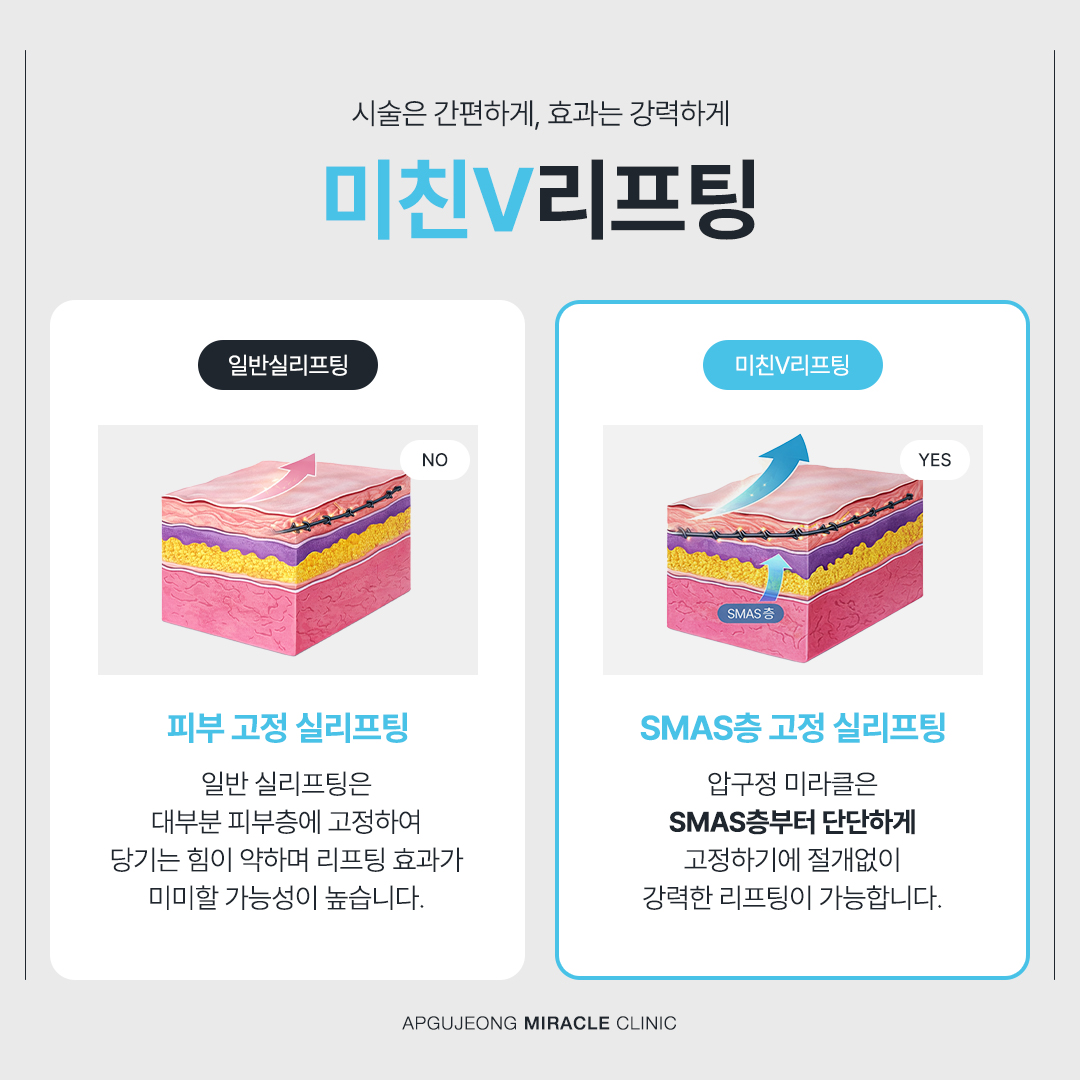
The clinic may offer assessment and corrective plans for patients who are unhappy with prior thread lifting, including thread removal or revision when indicated.
What is thread lifting
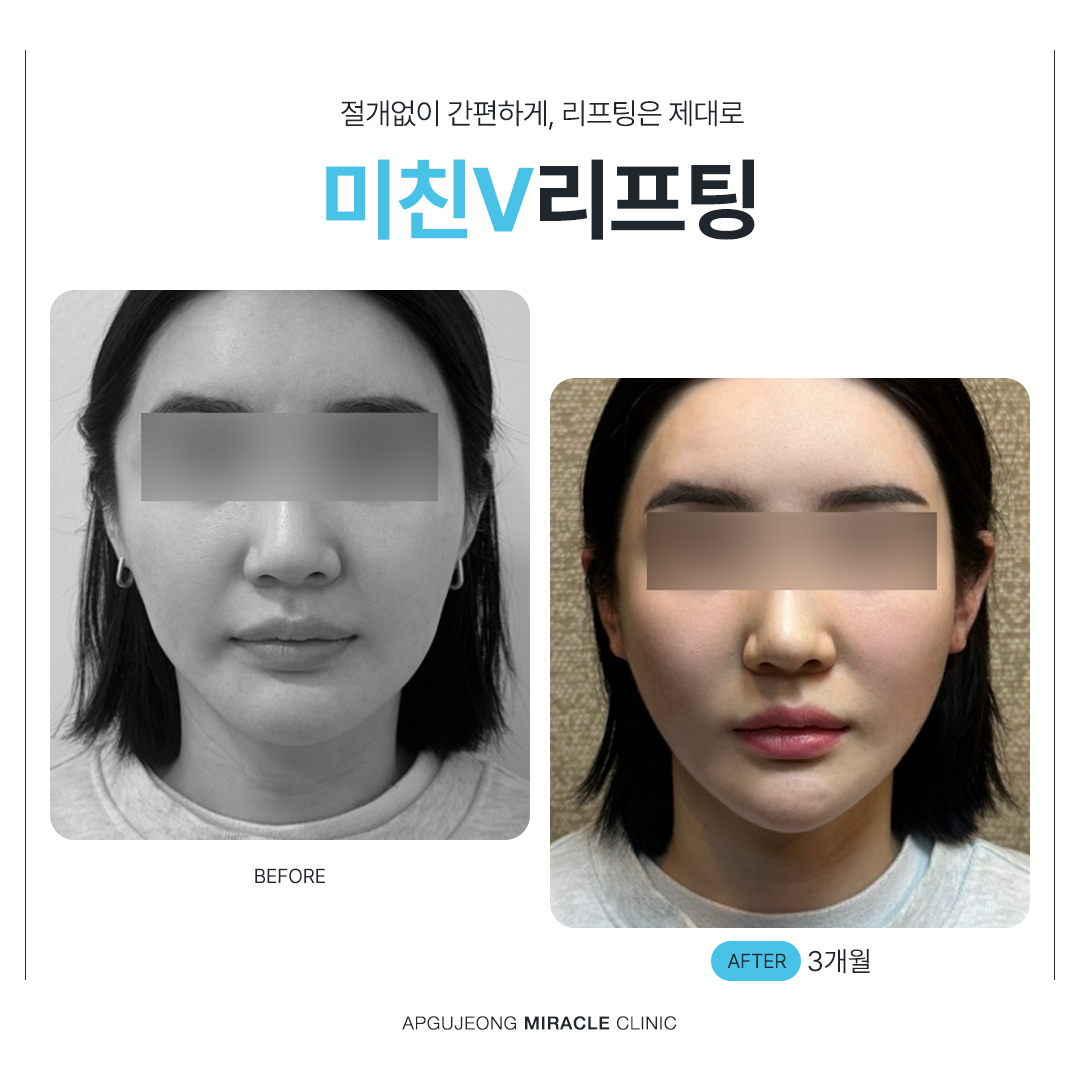
Thread lifting is a minimally invasive procedure that uses absorbable threads with barbs or cones to reposition sagging tissue. The threads are usually made from materials that gradually dissolve over time, while stimulating collagen in the surrounding tissue.
Typical target areas include the jawline, marionette lines, nasolabial folds, midface (cheeks), and sometimes the neck. By inserting threads along specific vectors, the doctor aims to lift and support the skin and underlying tissue, improving the contour of the lower face and midface.
Who may consider thread lifting near Apgujeong Station
Thread lifting can be an option for:
People in their 30s to 50s who notice early to moderate sagging of the cheeks, jawline, or nasolabial folds, but do not feel ready for a full surgical facelift.
Those who want a shorter downtime option and prefer local anesthesia rather than general anesthesia.
People who already had lifting elsewhere and want a second opinion, correction, or maintenance.
Visitors to Seoul who want to combine travel with anti-aging treatment, provided they can stay for at least a few days for consultation, procedure, and early follow-up.
However, thread lifting is not suitable for everyone. People with very severe sagging, extremely thin skin, or certain medical conditions may be advised to consider other approaches or to avoid lifting procedures. A detailed consultation is necessary to understand what is realistic in your case.
Thread lifting types offered and how they are matched
In the Sinsa-dong clinic described here, several thread types are available. While the exact plan is individual, the following general tendencies can help you understand how threads may be chosen.
Mint thread lifting
Mint threads are often used for stronger lifting of the jawline and midface. They typically have barbs that anchor into the tissue, allowing the doctor to reposition sagging areas. These threads may be chosen for patients with moderate laxity who want a more noticeable contour change.
Silhouette soft
Silhouette soft uses threads with tiny cones that help support the tissue. It is often considered for midface lifting and for patients who want a combination of lifting and subtle volumizing along the thread path. It may be suitable for people with thinner skin who need a gentle yet structured lift.
Ultra V lifting
Ultra V threads are usually finer threads that can be used in larger numbers to support and tighten the skin. They may be chosen for more diffuse mild sagging, fine wrinkles, or as a complement to stronger lifting threads. Ultra V lifting can also be used to stimulate collagen and improve skin texture in certain areas.
Elastic-type threads
Elastic-type threads are designed to move with facial expressions while maintaining support. They may be used in dynamic areas such as around the mouth or lower face, where a balance between lifting and natural movement is important. These threads can be considered when the patient is concerned about stiffness or unnatural pulling.
Omega lifting
Omega lifting is another branded thread approach that focuses on lifting vectors and anchoring points to improve the jawline and cheek area. It may be combined with other thread types or ultrasound lifting for a layered effect.
Matching thread type to facial concerns
Different thread materials, thicknesses, and anchoring methods are better suited to different areas and skin conditions. For example:
Jawline and jowls often need stronger lifting threads with firm anchoring.
Nasolabial folds and marionette lines may benefit from a combination of lifting threads and finer threads to support the skin.
Midface and cheek volume can be addressed with cone-based threads or a mix of lifting and collagen-stimulating threads.
Neck lifting usually requires careful planning with softer vectors and sometimes a combination of threads and ultrasound lifting.
During consultation, the doctor will examine your skin thickness, elasticity, and fat distribution, and then suggest a combination of thread types and insertion patterns.
Device-based lifting: Shurink, Doublo, Ultherapy-style
In addition to threads, this clinic uses energy-based lifting devices that deliver focused ultrasound energy to the deeper layers of the skin and superficial muscle layer.
Shurink
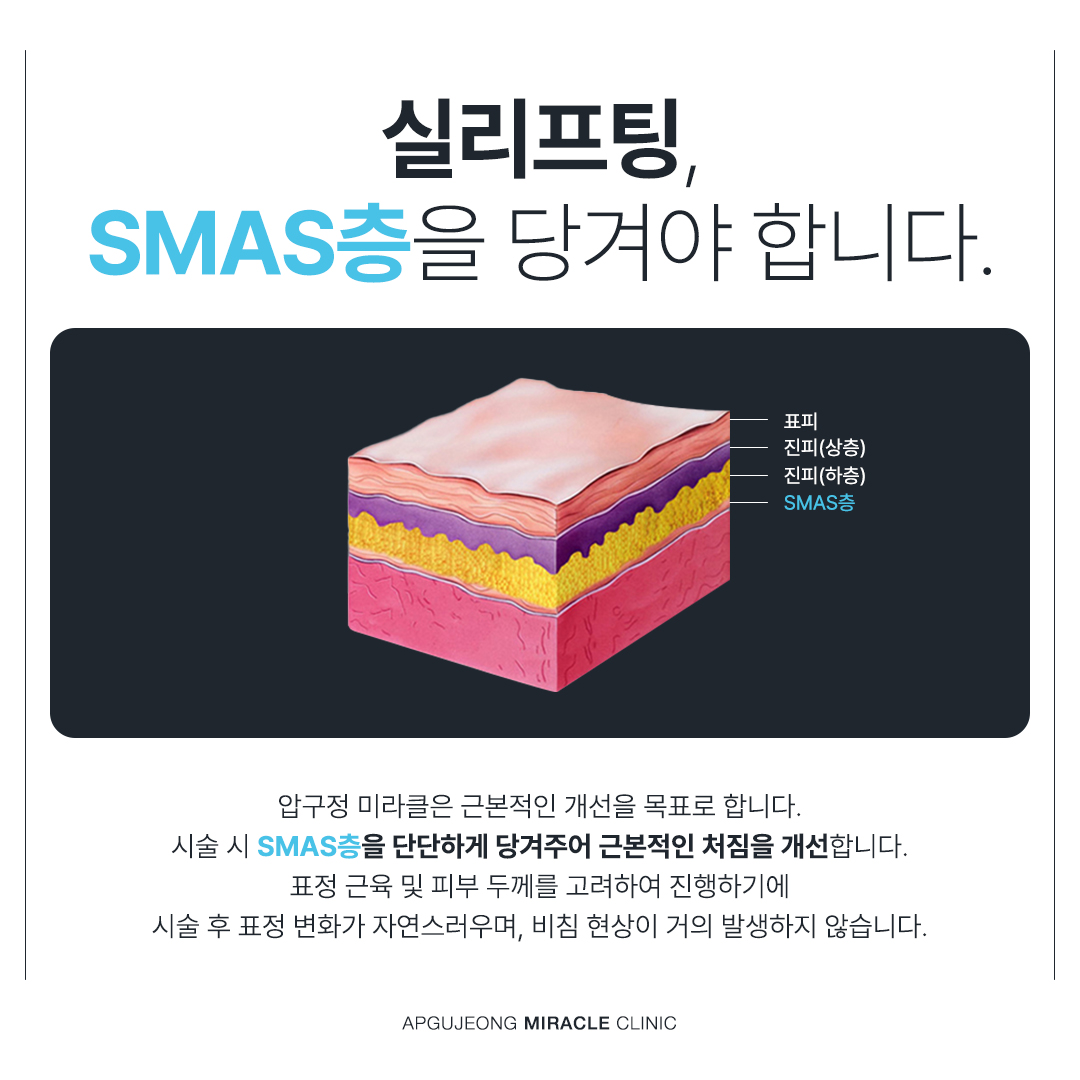
Shurink is a high-intensity focused ultrasound (HIFU) device commonly used in Korea. It can be adjusted by depth and energy level to target the superficial muscular aponeurotic system (SMAS) layer and deeper dermis. It is often used for overall tightening of the face and jawline.
Doublo
Doublo is another ultrasound lifting device with similar principles. It can be selected depending on the patient’s skin type, sensitivity, and desired treatment area. Some clinics alternate between Shurink and Doublo based on comfort and the doctor’s preference.
Ultherapy-style ultrasound lifting
Ultherapy-style devices are ultrasound systems that allow visualization of the tissue layers during treatment. They can be used to deliver energy precisely to the intended depth. This may be helpful for patients with variable skin thickness or those who need careful targeting around delicate areas.
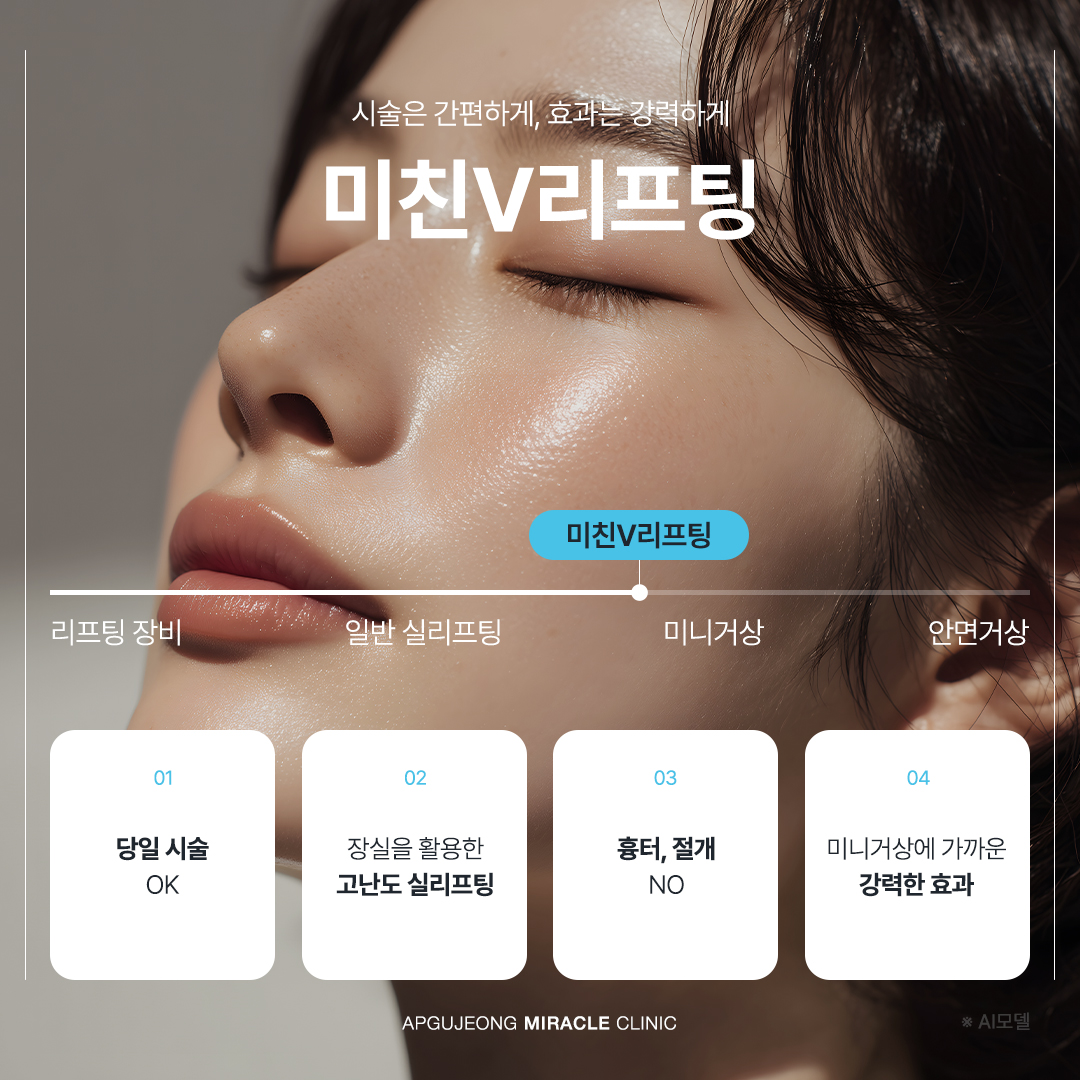
Combining threads and ultrasound
same day, while others space them out over several weeks.
Re-treatment and thread removal services
Some clinics in the Apgujeong Rodeo area advertise dedicated pathways for patients seeking correction after lifting performed elsewhere. Confirm with the clinic whether they provide a formal protocol for assessment, thread removal, and re-lifting, and ask about consultation costs, expected timelines, and follow-up care.
Common reasons for re-treatment Typical concerns include:
Asymmetry, where one side of the face looks more lifted than the other.
Unnatural pulling or dimpling when smiling or speaking.
Insufficient lifting effect, where the patient feels that little has changed.
Discomfort or pain from threads, including palpable or visible threads under the skin.
How assessment is done During consultation, the doctor will usually:
Take a detailed history of your previous procedures, including date, thread type if known, and any complications.
Examine your face by palpation to feel the position and direction of existing threads.
In some cases, use ultrasound imaging to visualize thread position and tissue condition.
Evaluate skin elasticity, thickness, and any scar tissue.
Planning removal or re-lifting
Based on this assessment, the clinic may suggest:
Partial removal of threads that are causing discomfort or visible irregularities.
Full removal if the existing threads are poorly positioned or interfering with new lifting vectors.
Adding new threads along different vectors to balance asymmetry or enhance lifting.
Combining thread correction with ultrasound lifting or contouring treatments to refine the overall result.
Correction cases can be more complex than first-time lifting, so it is important to choose a clinic that is familiar with both initial thread placement and revision work. The doctor’s blog and case galleries, if available, can provide additional context, but they should be viewed as examples rather than promises.
One-stop anti-aging and contouring options
Beyond lifting, this Sinsa-dong clinic offers other procedures that can be combined with thread and ultrasound lifting as part of a broader anti-aging plan.
Facial liposuction and contour injections
For patients with excess fat along the jawline or under the chin, facial liposuction or contour injections can be considered to refine the lower face. These treatments may be combined with thread lifting to both remove volume where needed and lift the remaining tissue.
Body liposuction and lifting
Body liposuction and body lifting are available as an extension of the clinic’s contouring services. However, they are not the main focus for most overseas visitors who come specifically for facial lifting.
Stem cell therapies and injectables
vidence of practitioner qualifications, and clarification on regulatory status, expected benefits, risks, and post-procedure care.
Treatment overview and procedure flow
For international patients, understanding the typical flow of thread lifting and ultrasound lifting can help with planning.
Consultation and facial analysis
Your visit usually begins with registration and a consultation. The doctor will:
Ask about your concerns, desired changes, and previous treatments.
Review your medical history, medications, allergies, and any tendency to bruise or scar.
Examine your face from multiple angles, checking skin elasticity, fat distribution, and muscle activity.
Discuss realistic expectations, possible side effects, and the approximate duration of the effect.
Selection of thread type and device
Based on this analysis, the doctor will propose:
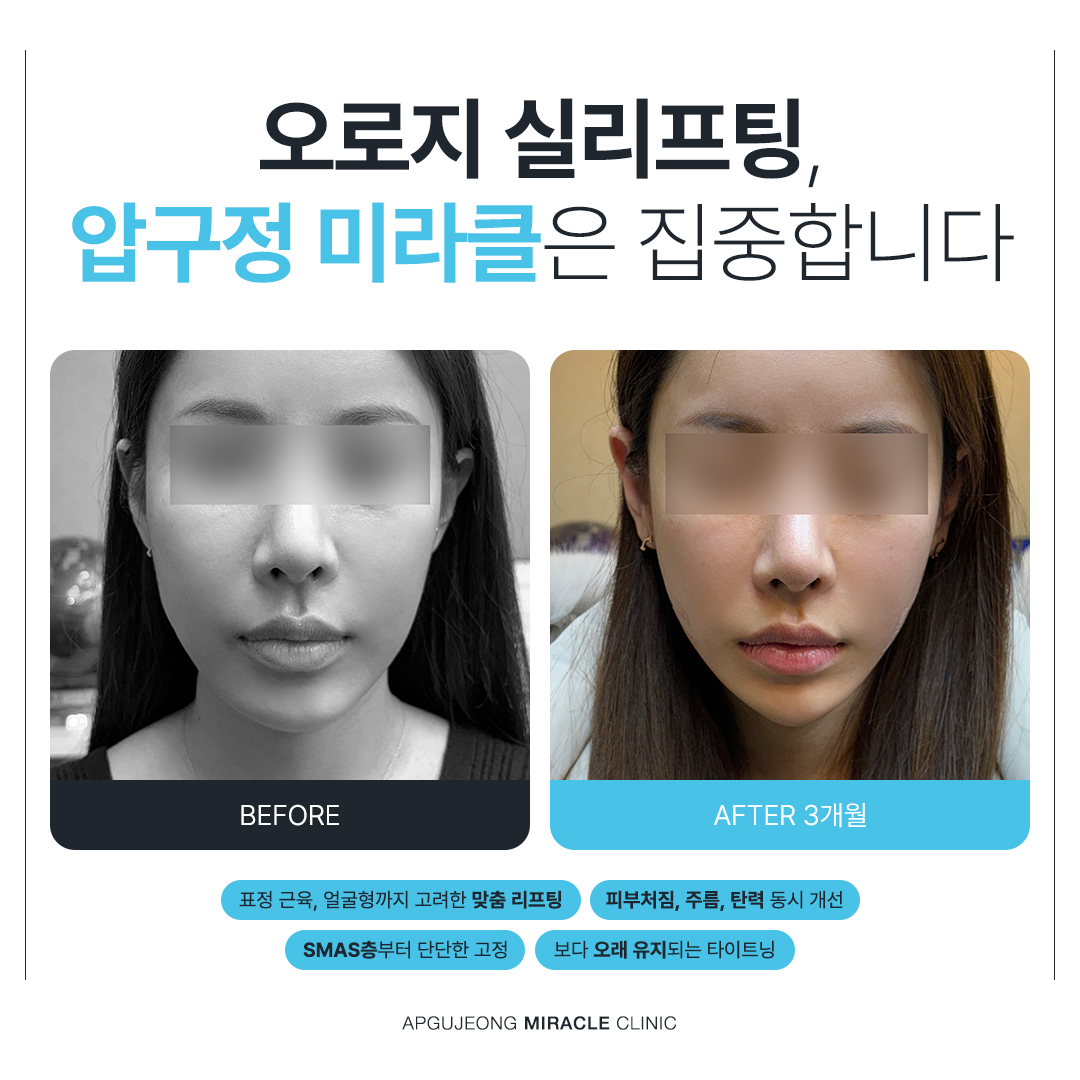
Which thread types to use (for example, mint threads for jawline, silhouette soft for midface, ultra V for support).
How many threads are recommended for each area.
Whether to combine with Shurink, Doublo, or Ultherapy-style ultrasound lifting.
If any additional treatments such as contour injections or botulinum toxin would be helpful.
Procedure day On the day of thread lifting:
Your face will be cleansed, and photos may be taken for medical records.
The doctor may mark the insertion points and lifting vectors on your skin.
Local anesthesia is applied, either by injection or topical cream, depending on the area and depth.
Threads are inserted through small entry points using cannulas or needles, then adjusted for the desired lift.
The doctor checks symmetry and contour, then trims and hides the thread ends.
A light dressing or cooling may be applied immediately after.
Recovery and downtime
Most patients can leave the clinic on the same day. Swelling, mild bruising, and a feeling of tightness or pulling are common for several days to a couple of weeks. Chewing hard food, wide mouth opening, or strong facial massage is usually restricted for a short period. Detailed aftercare instructions will be provided.
Ultrasound lifting sessions
If you undergo Shurink, Doublo, or Ultherapy-style lifting, the procedure typically involves applying ultrasound gel, delivering energy shots across the treatment area, and then wiping and cooling. Mild redness or tenderness may occur, but downtime is usually short.
Online consultation and pre-visit preparation
For overseas patients, an online consultation is often the first step.
Before contacting the clinic, it is helpful to prepare:
Clear photos of your face from the front, 45-degree angles, and side, under natural light.
A brief summary of your concerns: for example, “sagging along jawline,” “deep nasolabial folds,” or “uneven result after previous thread lifting.”
A list of previous procedures, including dates, locations, and any known thread or device names.
Your medical history, including chronic illnesses, medications (especially blood thinners), allergies, and any history of keloid or hypertrophic scars.
During online consultation, you can ask:
Which thread types and devices are likely to be used in your case.
How many visits are recommended and how many days you should stay in Korea.
What kind of bruising or swelling you might expect and when it usually settles.
What to avoid before the procedure (for example, certain supplements or medications).
Expected Korea visit timeline A simple visit plan might look like this:
Day 1: In-person consultation, facial analysis, and possibly basic tests or photos. Some patients may proceed to treatment on the same day if both sides agree and time allows.
Day 2–3: Main treatment day if not done on day 1. Rest at your accommodation afterward. Mild swelling and tightness may be present.
Day 4–7: Early follow-up visit if needed, to check healing, symmetry, and address questions. Many overseas patients can fly home after this period, depending on their comfort and the doctor’s advice.

If you are combining multiple procedures, you may need a longer stay. It is important to leave some flexibility in your schedule in case the doctor recommends additional observation.
Aftercare and safety considerations
Safety and realistic expectations are essential in any lifting plan.
Results and longevity
Thread lifting and ultrasound lifting do not stop aging. The effect and duration vary by individual, depending on skin quality, lifestyle, age, and thread type. Some people choose maintenance sessions of ultrasound lifting or additional threads after a certain period.
Possible side effects
Common temporary effects include swelling, bruising, tenderness, and a feeling of tightness. Less common issues may include dimpling, asymmetry, infection, or visible threads. These risks should be discussed during consultation. Following aftercare instructions and attending follow-up visits can help manage them.
Medical history and previous procedures
Always inform the clinic about your full medical history, including heart conditions, autoimmune diseases, bleeding tendencies, and any implants or fillers in the face. This information helps the doctor plan safely and avoid overlapping treatments that might interfere with each other.
FAQ
How long does thread lifting usually last?
The duration of thread lifting varies by thread type, skin condition, and lifestyle. In general, the threads themselves are absorbable and gradually dissolve over several months, but the collagen stimulation and tissue repositioning can last longer. Many patients feel that the effect is most visible in the first year, then gradually softens, and some choose maintenance or additional procedures as aging continues.
Can I combine thread lifting with Shurink or Doublo in one visit?
In many cases, thread lifting can be combined with Shurink, Doublo, or Ultherapy-style ultrasound lifting, either on the same day or in a staged plan. The doctor will decide the best sequence based on your skin thickness, sensitivity, and the areas to be treated. Combining methods can provide a layered effect, tightening deeper structures with ultrasound and lifting specific areas with threads.
What is the downtime like after thread lifting near Apgujeong Station?
Most patients can return to light daily activities within a few days, but visible swelling or bruising may last longer depending on individual healing. You may feel tightness when opening your mouth widely or making strong facial expressions for a short period. The clinic will usually advise avoiding heavy exercise, facial massage, and strong pressure on the treated areas for a certain time.
I had thread lifting elsewhere and I am unhappy with the result. Can this be corrected?
Many patients visit the Apgujeong Rodeo area clinic specifically for correction or re-treatment. The doctor will assess your current threads by palpation and, if needed, imaging, and then discuss options such as partial or full removal, adding new threads in different vectors, or combining with ultrasound lifting or contouring treatments. Not every case can be fully corrected, but a tailored plan can often improve comfort and appearance.
Soft call to action for online consultation
If you are considering thread lifting or ultrasound lifting near Apgujeong Station, especially if you are visiting from overseas or seeking correction after previous lifting, an online consultation can be a practical first step. By sharing photos, your concerns, and medical history in advance, you can receive a preliminary opinion on suitable thread types, possible combination treatments, and an estimated visit schedule.
When you are ready, contact the Sinsa-dong clinic near Apgujeong Rodeo Station to discuss your options, confirm operating hours, and plan your trip to Seoul with enough time for consultation, treatment, and follow-up. This preparation helps you use your time in Korea efficiently while making informed decisions about your lifting and anti-aging care.


- 공유 링크 만들기
- X
- 이메일
- 기타 앱


댓글
댓글 쓰기