Apgujeong nasolabial fold lifting options for smile line and mid-face sagging
- 공유 링크 만들기
- X
- 이메일
- 기타 앱

Quick summary
The aim is not merely to fill the visible line but to support and reposition sagging tissue that makes the fold appear deeper. Specific treatment options and revision policies vary by clinic, so discuss available thread types, device choices, and follow-up plans with your provider.
This guide explains why nasolabial folds deepen, what types of lifts are commonly used in Apgujeong, how first-time and revision lifting differ, and what overseas patients can expect when planning a visit to Korea.
Why nasolabial folds deepen
The nasolabial fold is the crease that runs from the side of the nose toward the corner of the mouth. It is a natural structure, but it becomes more noticeable with age.
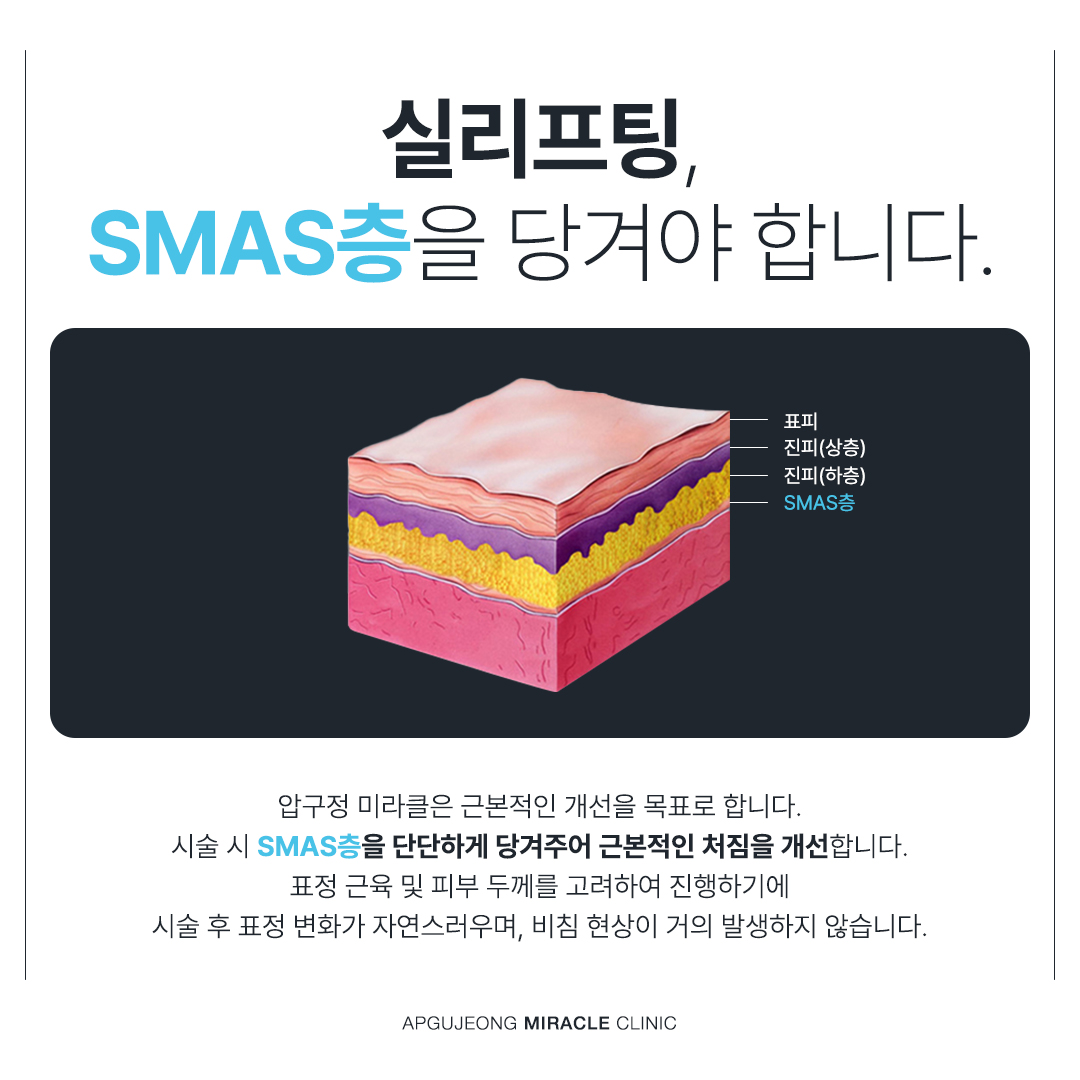
As we age, the mid-face loses elasticity. The supporting collagen and elastin in the skin and deeper layers become weaker. The cheek fat pads, which used to sit higher, gradually slide down. This descent creates heaviness around the mouth and emphasizes the fold.
Repeated facial expressions such as smiling, laughing, and talking also contribute over time. Lifestyle factors like sun exposure, smoking, and frequent weight changes can accelerate the breakdown of collagen and make the skin thinner and less resilient.
In the early stages, simple treatments such as light fillers or basic skin care can soften the line. However, once the problem is more structural and related to sagging, surface treatments alone are often not enough. Filling only the fold can sometimes make the mid-face look heavy or unnatural if the root cause is drooping tissue above.
What Apgujeong nasolabial fold lifting usually involves
In the Apgujeong area of Sinsa-dong, many patients search specifically for nasolabial fold lifting or smile line lifting. At a lifting-focused clinic near Apgujeong Rodeo Station, the approach is usually not a single procedure but a combination plan.
Thread lifting in the mid-face and lower face is often used to physically support and reposition sagging tissues. Threads are placed through small entry points and anchored in a way that gently pulls the cheek and lower face upward, reducing the shadow and depth of the fold.
Different thread types can be used, such as PDO threads, cone threads, and barbed threads. Thicker, stronger threads may be chosen for heavier sagging, while finer or smoother threads may be used for more delicate areas or for patients with thinner skin. The choice also depends on how long the patient wants the effect to last and how much lifting versus collagen stimulation is needed.
Energy-based devices are often used alongside threads. Some ultrasound-based (HIFU-type) systems are designed to reach deeper tissue layers to stimulate collagen production, but the depth and effects depend on the device and technique. These treatments may help improve skin firmness around the nasolabial area and can complement the mechanical support provided by threads, though outcomes vary.
When the lower face is heavy due to excess fat or early jowls, facial liposuction or contour injections may be added. Removing or reducing volume in the jawline or lower cheek can make the nasolabial fold appear softer because there is less downward pull. In some cases, subtle volume adjustment in the mid-face with contour injections can help restore a more youthful curve without overfilling the fold itself.
First-time lifting vs revision lifting for nasolabial folds
The plan for someone who has never had lifting is different from the plan for someone who already has threads or device-based lifting from another clinic.

For first-time nasolabial fold lifting, the doctor can design the vector and strength of the lift freely based on the current anatomy. The focus is on choosing the right combination of threads and devices to match age, skin thickness, degree of sagging, and lifestyle. The tissues are usually more flexible, and there is less scar tissue to consider.
For revision lifting, the situation is more complex. A clinic that runs a dedicated thread removal and re-lifting service, such as the one led by Dr. Woo Jungho in Apgujeong, will first assess where previous threads are located, how they are affecting the current shape, and whether there is any irregularity or stiffness.
Old threads do not always need to be removed. If they are stable, not visible, and not causing discomfort, the doctor may decide to leave them in place and design a new lift around them. However, if threads are placed in an unfavorable direction, are too superficial, or are causing dimpling, pain, or asymmetry, removal may be recommended before or during re-lifting.
Scar tissue and changes in skin quality after previous procedures also influence the plan. The doctor needs to be careful not to overload the face with too many new threads or too much energy from devices. The aim is to improve the nasolabial fold while minimizing additional trauma.
Expectations for revision cases should be realistic. Improvement is often possible, but the result may not be identical to a first-time lift on untouched tissue. A thorough consultation and honest discussion about what can and cannot be changed are important.
Customizing the lifting plan
A key point of Apgujeong nasolabial fold lifting is that the fold is not treated in isolation. The doctor evaluates the entire mid-face and lower face structure.
Cheek volume is assessed to see whether the problem is mainly loss of volume, descent of volume, or both. Jowls, marionette lines, chin projection, and jawline definition are considered together. Sometimes a patient complains only about the nasolabial fold, but the main visual issue is actually sagging at the jawline or a heavy lower cheek.
At a clinic with multiple thread systems and ultrasound devices available, the doctor is not limited to one protocol. Instead, a plan can be tailored based on the pattern of aging.
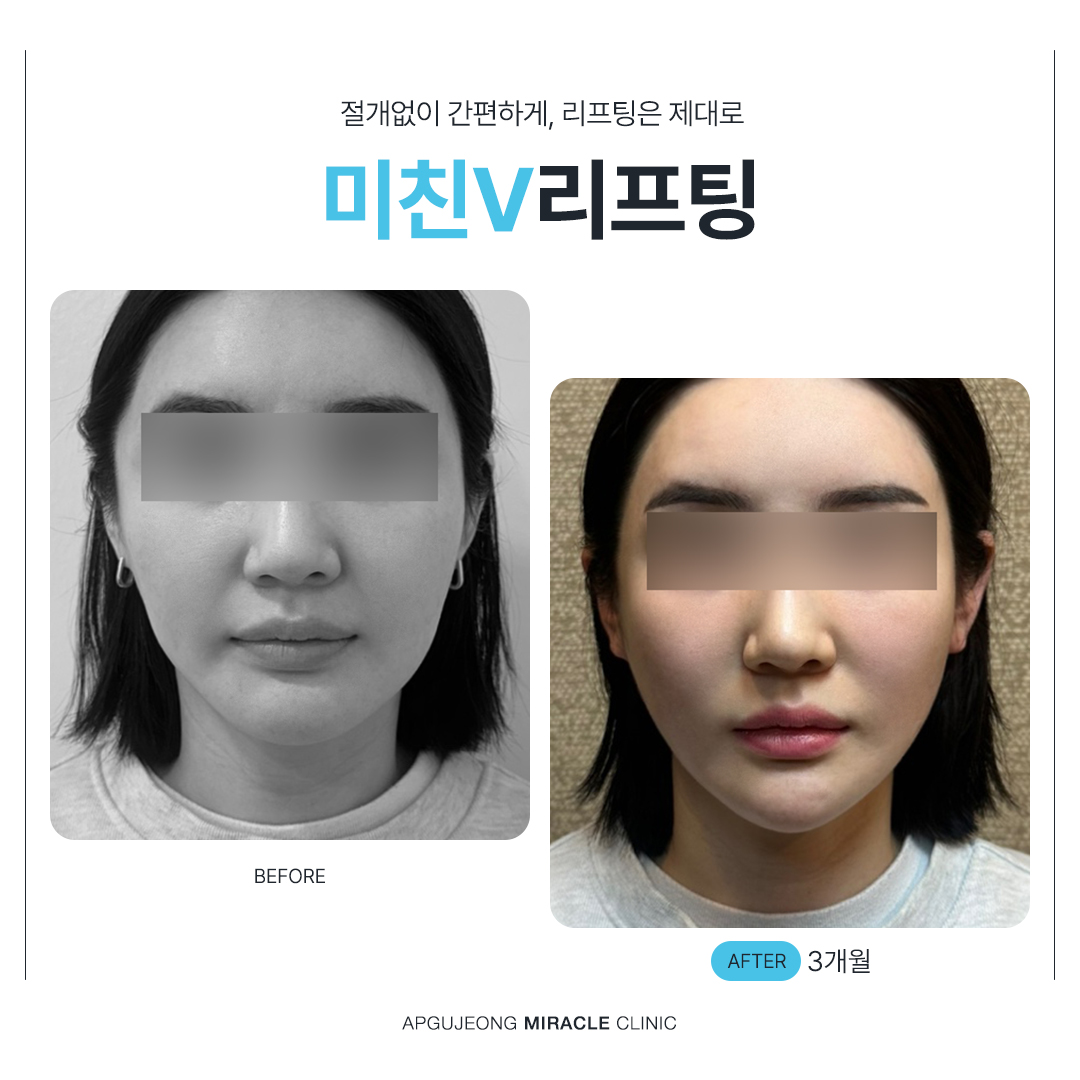
For example, in younger patients in their late 20s or early 30s with mild folds and good skin elasticity, a lighter thread lift combined with ultrasound tightening may be enough. Fine threads can give subtle lifting and collagen stimulation, while ultrasound improves firmness and delays further sagging.
For moderate folds with early jowls, stronger lifting threads may be needed to reposition the cheek and lower face. This can be combined with device lifting to support the deeper layer and maintain the result. In some cases, contour injections in the mid-face or chin help balance the profile and reduce the impression of heaviness around the mouth.
For patients with a heavier lower face or double chin, facial liposuction or fat-dissolving injections may be considered along with lifting. Reducing excess fat under the chin or along the jawline can make the nasolabial area look lighter and more youthful, even if no filler is placed directly into the fold.
Throughout this process, the doctor will also consider previous treatments such as fillers, earlier threads, or ultrasound sessions. Sometimes, dissolving old filler or waiting for previous energy treatments to settle is recommended before planning a new lift.
Procedure process and experience for overseas patients
For international patients visiting Apgujeong for a nasolabial fold lift, the process usually begins with an online consultation. Patients can send clear front and side photos, information about age, medical history, and details of any previous procedures. The clinic team reviews these and suggests whether thread lifting, device lifting, or a combination is likely to be suitable.
When you arrive at the clinic near Apgujeong Rodeo Station, the in-person consultation typically includes photo analysis, skin and tissue assessment, and a review of your previous treatments. The doctor will ask about your main concerns, such as deep smile lines, mid-face sagging, or heaviness around the mouth and jawline.
Anesthesia practices vary by clinic and by the extent of the procedure. Some thread-lifting procedures are performed under local anesthesia, while others may offer oral or IV sedation for additional comfort. For ultrasound-based lifting, topical numbing or local anesthesia may be used to reduce heat-related discomfort. Confirm anesthesia options, recommendations, and risks with your treatment provider.
The procedure time varies by plan. , but this can be longer if thread removal, liposuction, or multiple areas are included. Most patients go home the same day, as these are outpatient procedures.
After the lift, you can expect some swelling, bruising, and a feeling of tightness or pulling along the thread paths. These sensations usually improve over several days to a couple of weeks. The clinic team will explain how to sleep, wash your face, and move your mouth carefully during the early healing period.
Who may consider Apgujeong nasolabial fold lifting
Good candidates for nasolabial fold lifting in Apgujeong are people whose main concern is deepening folds and mid-face sagging, with or without early jowls. They may have tried fillers or basic skin treatments and feel that the effect is temporary or that the face looks heavier rather than lifted.
Patients who want a more structural solution than repeated filler injections often consider thread lifting and ultrasound lifting. These methods focus on supporting the deeper layers and repositioning tissue instead of only adding volume.
People who have had previous lifting elsewhere and feel that the effect was short-lived, uneven, or not well matched to their face may also be suitable candidates for revision lifting. A clinic that regularly handles thread removal and re-lifting can re-evaluate the current situation and propose a safer, more suitable plan.
Candidates should be able to follow post-procedure care instructions, avoid strong facial massage or dental treatments that put pressure on the threads in the early period, and understand that maintenance or future treatments may be needed as aging continues.
Online consultation and pre-visit preparation
For overseas patients, a detailed online consultation is very helpful before booking flights. When contacting a clinic in Apgujeong for a nasolabial fold lift, prepare the following information:
Clear photos of your face from the front, 45-degree angle, and side, taken in good lighting without filters.
Your age, general health condition, and any chronic illnesses or medications.
A list of previous facial procedures, including fillers, threads, laser or ultrasound treatments, and any surgeries.
Your main concerns and goals: for example, deep smile lines, uneven folds, heaviness around the mouth, or dissatisfaction with a previous lift.
Questions you want to ask about thread types, devices, anesthesia, recovery time, and follow-up.
During the online consultation, it is useful to ask about , which thread systems are commonly used, how many threads are typically placed for nasolabial and mid-face lifting, and how the clinic schedules follow-up visits for overseas patients.
Expected Korea visit timeline
Many international patients plan a short stay in Seoul around their Apgujeong nasolabial fold lifting.
If possible, arrive at least one or two days before the procedure. This allows time for an in-person consultation, skin assessment, and any necessary tests. It also gives you a chance to walk around the Apgujeong Rodeo area and become familiar with the route to the clinic.
The procedure is usually done as an outpatient treatment. After the lift, it is advisable to stay in Korea for several days to one week, depending on the complexity of the case. This allows for at least one follow-up visit to check healing, manage swelling or bruising, and adjust aftercare instructions.
Most patients can move around the city the day after the procedure, but they may prefer to avoid crowded places or heavy luggage while swelling and tenderness are present. Loose clothing and a hat or mask can help you feel more comfortable in public.
If you are combining nasolabial fold lifting with other treatments such as facial liposuction or contour injections, discuss the ideal stay length with the clinic in advance. The team can suggest a schedule that balances recovery time with your travel plans.
Aftercare and recovery
After Apgujeong nasolabial fold lifting, careful aftercare supports better healing and comfort.
Mild to moderate swelling and bruising around the mid-face and jawline are common. Cold compresses may be recommended in the first one to two days, followed by gentle care as the swelling subsides. The feeling of tightness or pulling along the threads is usually strongest in the first week and then gradually becomes less noticeable.
You may be advised to sleep on your back with your head slightly elevated for several days, avoid strong chewing or wide mouth opening, and refrain from strenuous exercise for a short period. Facial massage, strong skincare devices, and treatments that press on the face are typically postponed until the threads have settled.
The clinic will explain how to clean the entry points and when you can resume makeup. Any discomfort is usually managed with oral pain medication. If you experience unusual pain, visible thread exposure, or significant asymmetry, you should contact the clinic promptly.
Results develop gradually. Some lifting is visible right away from the mechanical effect of the threads, but the final contour and skin quality improvement from collagen stimulation may take several weeks to months.
Safety, limitations, and realistic expectations
All lifting procedures have possible side effects and limitations. Common temporary effects after a nasolabial fold lift include swelling, bruising, tenderness, and a sensation of tightness. Mild asymmetry or dimpling can occur in the early phase and often improves as tissues relax.
Less common but possible issues include infection, thread palpability or visibility, prolonged pain, or unsatisfactory contour. In some cases, touch-up procedures or partial thread adjustment may be needed.
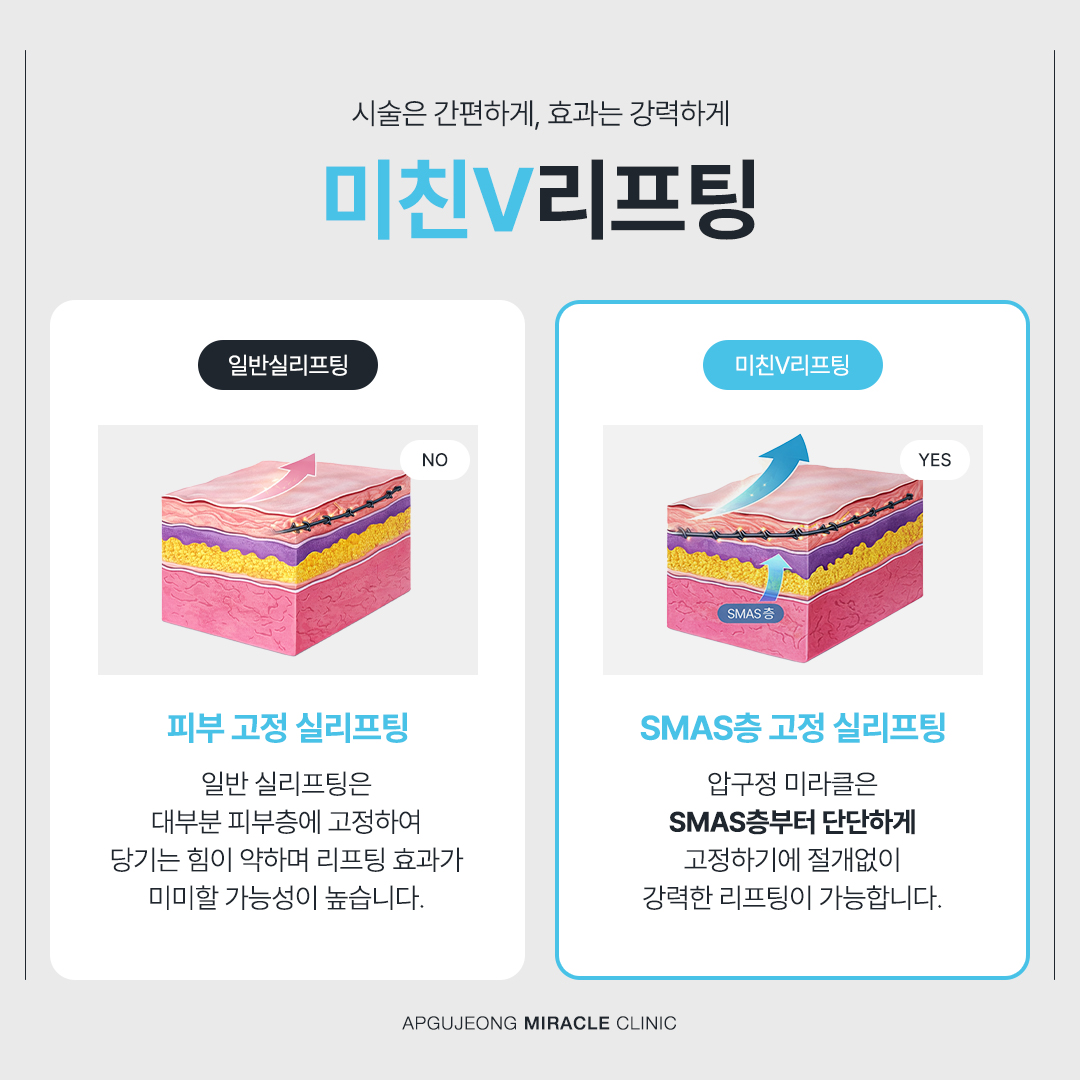
Choosing a clinic experienced in both lifting and lifting revision can help in planning the procedure and in managing any complications if they occur. A doctor who regularly removes and repositions threads is familiar with how different materials behave over time and how to design a safer re-treatment.
It is important to understand that no procedure can permanently stop aging. Apgujeong nasolabial fold lifting can soften the appearance of folds and improve mid-face sagging, but it cannot erase every line or guarantee a specific result. The effect and duration vary by individual factors such as age, skin quality, lifestyle, and how well aftercare instructions are followed.
Who is not a good candidate
Some people may not be suitable for thread lifting or device-based lifting. Those with uncontrolled medical conditions, active skin infections, or very thin, fragile skin may need alternative approaches or more conservative treatment.
Patients with unrealistic expectations, such as wanting the result of a full surgical facelift from minimally invasive lifting, may also need careful counseling. In some cases, a different type of procedure or a combination plan over time is more appropriate.
Discuss your full medical history, including medications that affect bleeding or healing, with the doctor. This helps reduce risks and allows the clinic to advise you properly.
Frequently asked questions about Apgujeong nasolabial fold lifting
How long does the effect of a nasolabial fold lift last
The duration of effect varies widely between individuals and depends on the types of threads and devices used. Some patients report improvements lasting several months to a few years, while others notice shorter or longer effects based on factors such as age, skin condition, and lifestyle. Ultrasound treatments can stimulate collagen production over months, and threads provide mechanical support while encouraging tissue remodeling. Your clinician can advise on maintenance or additional treatments as aging progresses.
Is thread lifting painful
Most patients feel some discomfort during thread insertion, but this is usually reduced with local anesthesia and, when appropriate, mild sedation. You may feel pressure, pulling, or brief sharp sensations as the threads are placed. After the procedure, soreness and tightness are common for a few days. Pain is typically manageable with oral medication and gradually decreases as swelling and tension settle.
Can I combine filler with nasolabial fold lifting
In some cases, a small amount of filler or contour injection is combined with lifting to refine the result. For example, subtle volume can be added to the mid-face or chin to balance the profile. However, overfilling the nasolabial fold itself is usually avoided when sagging is the main issue, because it can make the face look heavy. The doctor will assess your existing fillers and may recommend dissolving or adjusting them before or after the lift.
What should I ask during an online consultation
Before booking your trip to Apgujeong, it is useful to ask which thread systems and ultrasound devices the clinic uses, how they decide between them, and what kind of plan they recommend based on your photos. Ask about anesthesia options, expected recovery time, and how many days of stay in Korea they suggest for follow-up. If you had previous lifting, ask how they approach thread removal and revision, and whether they see any limitations in your case.
Soft call to action for online consultation
If you are considering Apgujeong nasolabial fold lifting and want a more structural solution for deep smile lines and mid-face sagging, an online consultation can be a practical first step. By sharing your photos, treatment history, and goals, the clinic team in Sinsa-dong near Apgujeong Rodeo Station can outline possible options with threads, ultrasound lifting, and, when appropriate, contouring procedures.
A detailed discussion with the doctor, such as Dr. Woo Jungho who focuses his clinic on lifting and lifting revision, can help you understand what is realistic for your face and how to plan your visit to Korea safely and efficiently.


- 공유 링크 만들기
- X
- 이메일
- 기타 앱


댓글
댓글 쓰기