Apgujeong Lifting Dermatology Clinic (Apgujeongdong Lifting Pibu-gwa) | Thread, Ultrasound & Revision Lifting Comparison Guide for Overseas Patients

Many overseas patients choose Apgujeong lifting dermatology clinics because they can compare thread lifting, ultrasound lifting (Ulthera, Shurink, Doublo), laser lifting, and revision lifting in one location with a structured facial analysis. In the Apgujeong Rodeo area of Seoul, there are clinics that focus on lifting treatments such as thread lifting, ultrasound lifting, and laser lifting, as well as revision lifting for people who are not satisfied with earlier procedures.
This guide explains what to expect if you are considering a lifting-focused clinic near Apgujeong Rodeo Station, how different lifting options are chosen, how revision and thread removal can be approached, and how to prepare your trip to Korea.
When you actually walk into a lifting-focused clinic in Apgujeong
Apgujeong and the nearby Sinsa and Gangnam areas are known for a high concentration of aesthetic clinics. A lifting-focused clinic in this area typically offers a wide range of options in one location, rather than recommending the same standard package to every patient.
In Apgujeong, most lifting-focused clinics do not just offer one single procedure. You will usually see thread lifting as a main option, with different plans for the jawline, cheeks, or deep lines around the mouth. Alongside that, many clinics combine ultrasound-based lifting (for example Ulthera, Shurink, or Doublo) and sometimes laser tightening, then add contouring procedures like facial liposuction or contour injections when volume or fat needs to be adjusted rather than simply lifted.
Some clinics in Apgujeong also focus on revision lifting. They see many patients who already had thread lifting or device-based lifting elsewhere, but feel the effect was uneven, too short-lived, or not natural. These clinics often run dedicated services for thread removal and re-lifting.
Why many patients seek lifting revision
It is common for patients in their late 20s to 50s to try lifting once at another clinic and then start searching for a more specialized center in Apgujeong when they are not fully satisfied. Typical reasons include:
- - Mild asymmetry between the left and right sides of the face
- - An over-pulled or stiff look that does not match the rest of the face
- - Threads that can be felt under the skin or cause discomfort
- - Lifting effects that fade faster than expected
In these situations, revision lifting is less about simply repeating the same procedure and more about understanding what went wrong or what was missing in the first plan. A revision-focused clinic will usually:
- - Review your previous treatment history and photos, if available
- - Check where and how many threads were placed, if still present
- - Assess skin elasticity, fat distribution, and scar tissue
- - Discuss your expectations in more detail, including what you liked and disliked about the first treatment
This detailed assessment helps decide whether it is better to remove certain threads, add new ones in a different direction, switch to ultrasound or laser lifting, or combine lifting with contouring or skin-quality treatments.
Range of lifting options in one place
Where thread lifting actually works on your face
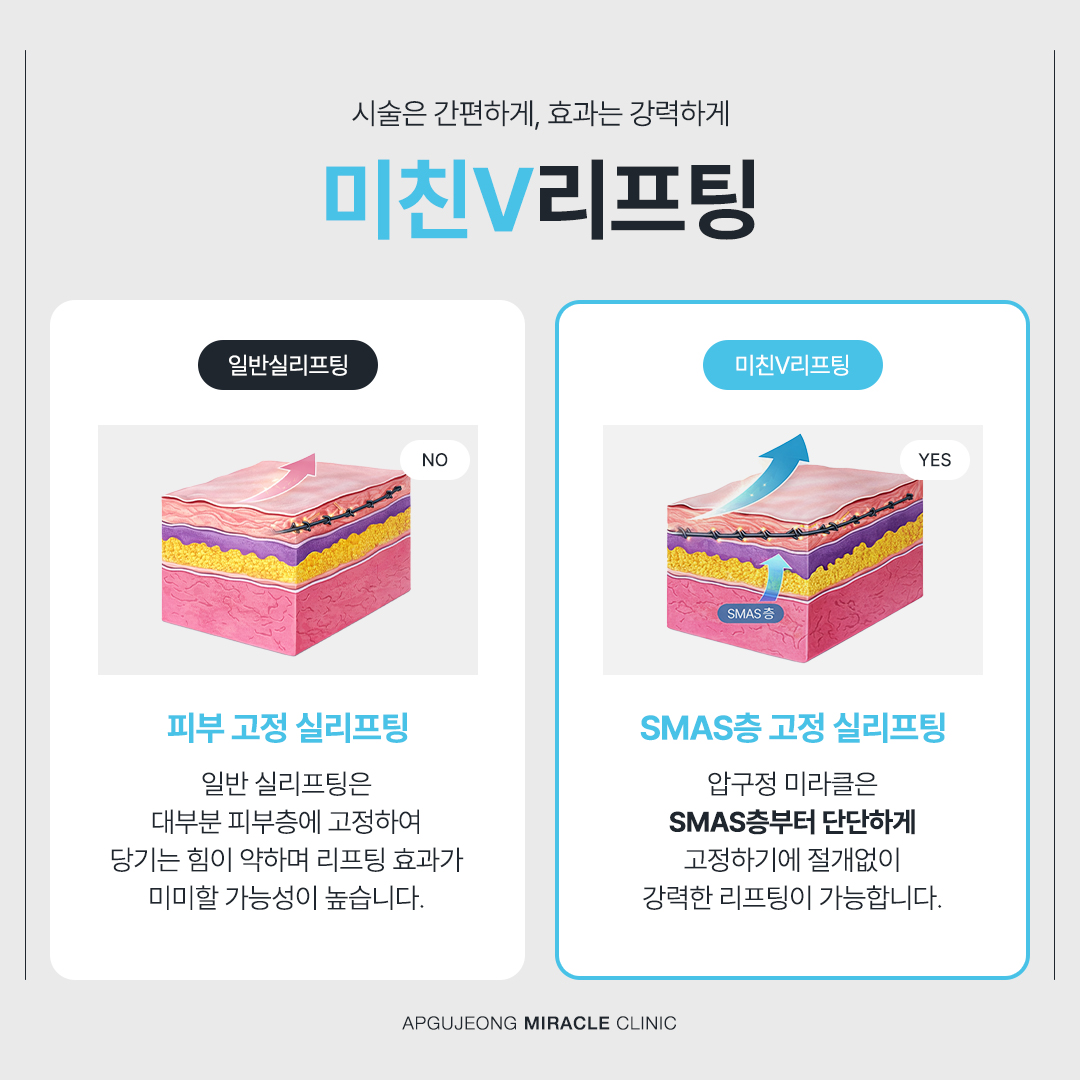
Instead of lifting the entire face at once, thread lifting usually targets specific areas that bother you the most – for many people, that is the jawline starting to blur, cheeks beginning to droop, or deepening lines around the mouth. Fine threads are placed under the skin in those zones to support and pull up sagging tissue, so the change tends to show exactly where you feel the heaviness.
Thread lifting is a minimally invasive procedure where special threads are inserted under the skin to support and lift sagging areas. Common target areas include the jawline, cheeks, marionette lines, and nasolabial folds.
Different thread types can be used depending on your skin and goals:
- Cog threads have tiny barbs that anchor into the tissue to create a stronger mechanical lift.
- Cone threads use small cones along the thread to grip the tissue and can be useful for more significant sagging.
- Elastic or spring-like threads are designed to move more flexibly with facial expressions and may be chosen for a softer, more dynamic result.
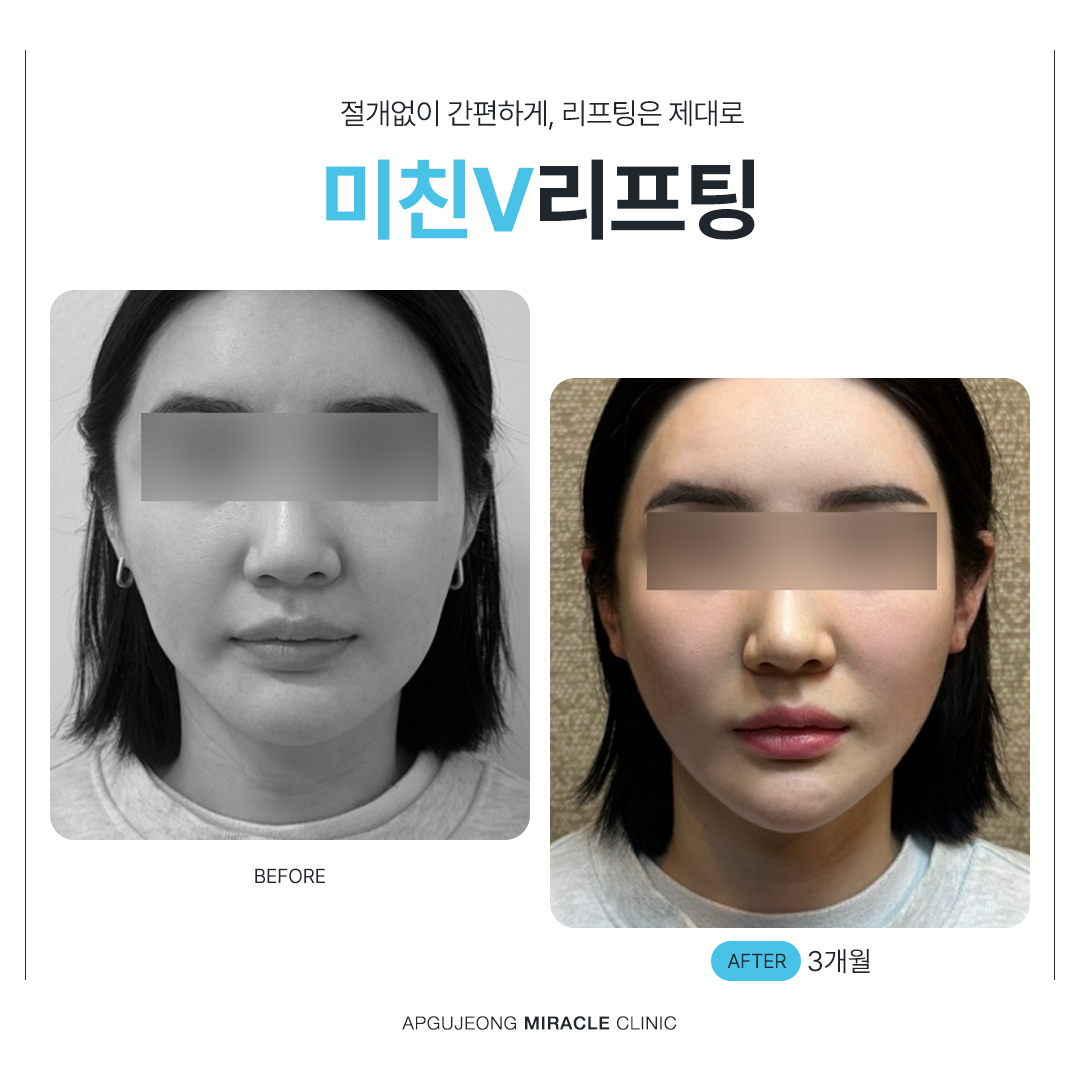
Planning thread direction and depth is crucial. A careful plan considers:
- Natural facial lines and how you smile or talk
- The direction of sagging and where support is truly needed
- Skin thickness and the layer where the thread should sit to reduce irregularities
When this planning is done thoughtfully, the aim is to support the tissues from underneath and create a more defined jawline and cheek contour, while keeping facial expressions as natural as possible.
Device-based lifting with ultrasound
Because of this, it is often chosen by people with earlier or milder sagging, or by those who want to avoid the feeling of threads and prefer a more subtle, low-downtime approach.
Ulthera, Shurink, and Doublo are ultrasound-based lifting devices commonly used in Apgujeong clinics. They deliver focused ultrasound energy into the deeper layers of the skin and the supporting tissue beneath, with the aim of tightening and stimulating collagen production over time.
Ultrasound lifting typically:
- Is less invasive and does not involve inserting threads
- Has less immediate mechanical lifting, but can gradually firm the skin
- Can be suitable for earlier-stage sagging or for people who prefer less downtime
Having several devices in one clinic allows the doctor to adjust:
- Depth of energy delivery for different face areas
- Intensity according to your pain tolerance and downtime schedule
- Treatment pattern depending on whether this is your first lifting or a maintenance session after thread lifting
Depending on age, skin elasticity, and how much the lower face has sagged, the balance between thread lifting and ultrasound lifting can change. In lighter cases, a doctor may focus more on ultrasound lifting, while in heavier sagging, more structural support with threads may be added.
Laser and other device-based lifting
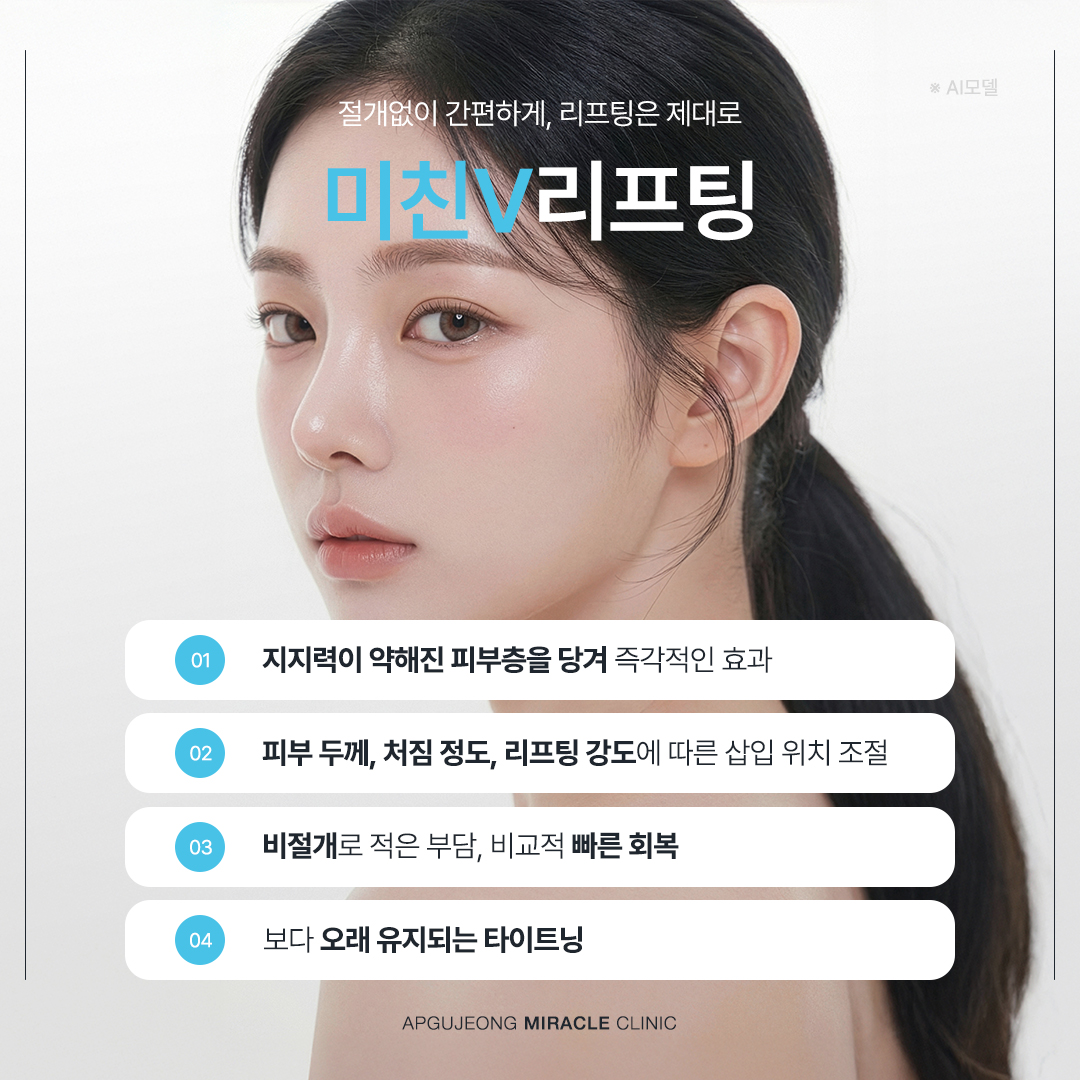
Alongside ultrasound devices, many Apgujeong clinics also use laser or radiofrequency-based lifting devices. These focus more on the superficial and mid-layers of the skin to improve texture, mild laxity, and fine lines.
These treatments can be helpful when:
- - You want to address both sagging and skin texture
- - You are not ready for threads but want some tightening
- - You are maintaining the result of a previous thread or ultrasound lifting
The exact device names may vary by clinic, so it is useful to ask which technologies are available and how they are combined in a step-by-step plan.
How revision lifting and thread removal are approached
Initial consultation and facial analysis
For revision cases, a clinic will usually:
- Take a detailed history of previous procedures, including dates, devices, thread types if known, and your experience during and after treatment
- Perform a visual and tactile examination to check for remaining threads, irregularities, and areas of volume loss or excess fat
- Assess skin elasticity, thickness, and any scar tissue that may influence new thread placement or device selection
Based on this, the doctor can explain whether your concerns are mainly due to:
- - Insufficient lifting strength or an unsuitable vector (direction) of threads
- - Over-tightening in certain areas
- - Uneven fat distribution or volume loss that lifting alone cannot correct
- - Natural aging progression since the last treatment
Thread removal and re-lifting
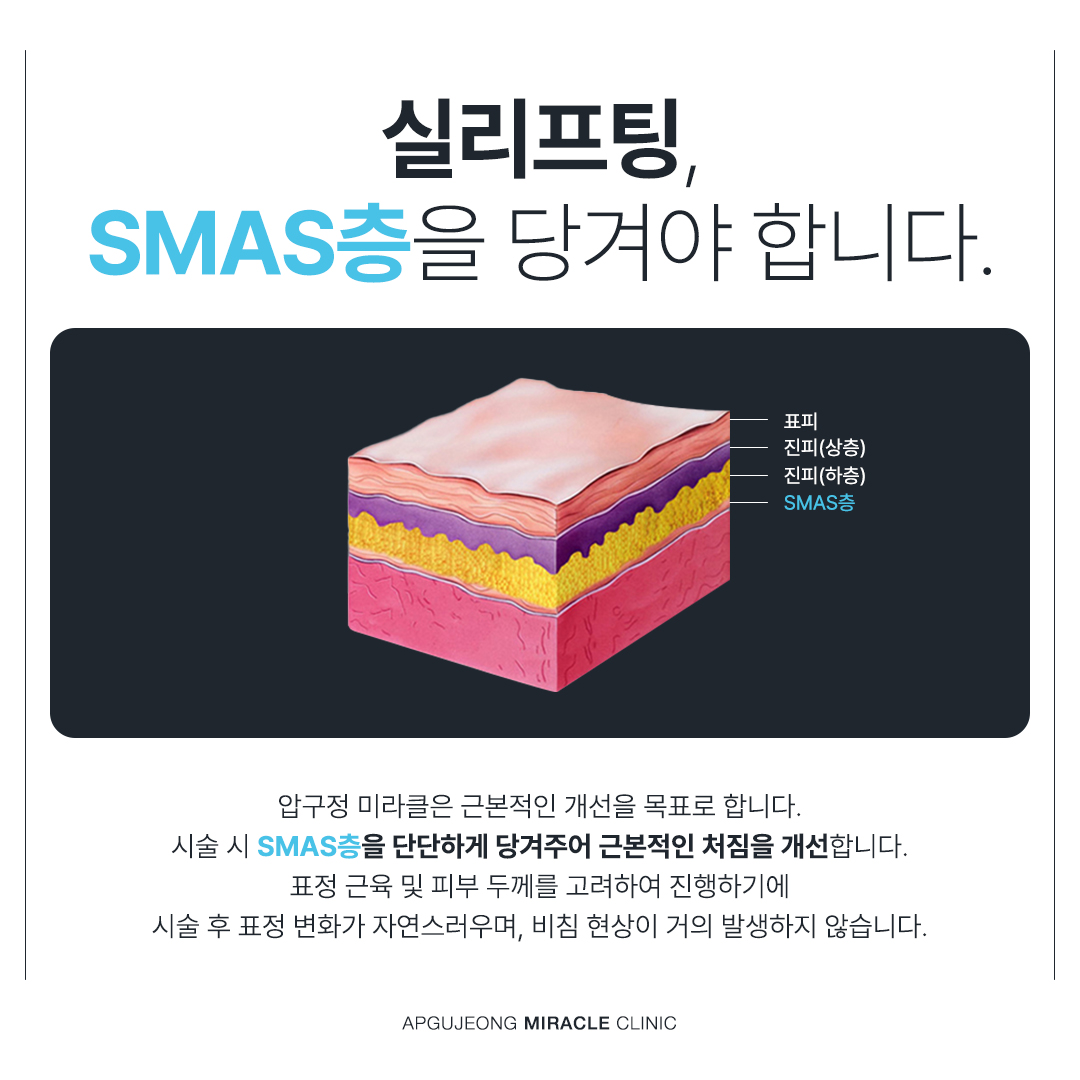
If you have palpable or visible threads that bother you, or if the previous threads are clearly misplaced, thread removal may be considered. This is usually done only when medically appropriate, because removing threads can sometimes create additional trauma if not planned carefully.
The clinic may suggest:
- Partial removal of problematic threads while leaving stable ones in place
- Waiting a certain period for tissues to soften before placing new threads
- Switching from threads to ultrasound or laser lifting if the tissue is too scarred for more threads
Re-lifting can involve using a different type of thread, changing the lifting direction, or combining threads with ultrasound lifting. The goal is not to chase perfection, but to improve balance and comfort while respecting the current condition of your tissues.
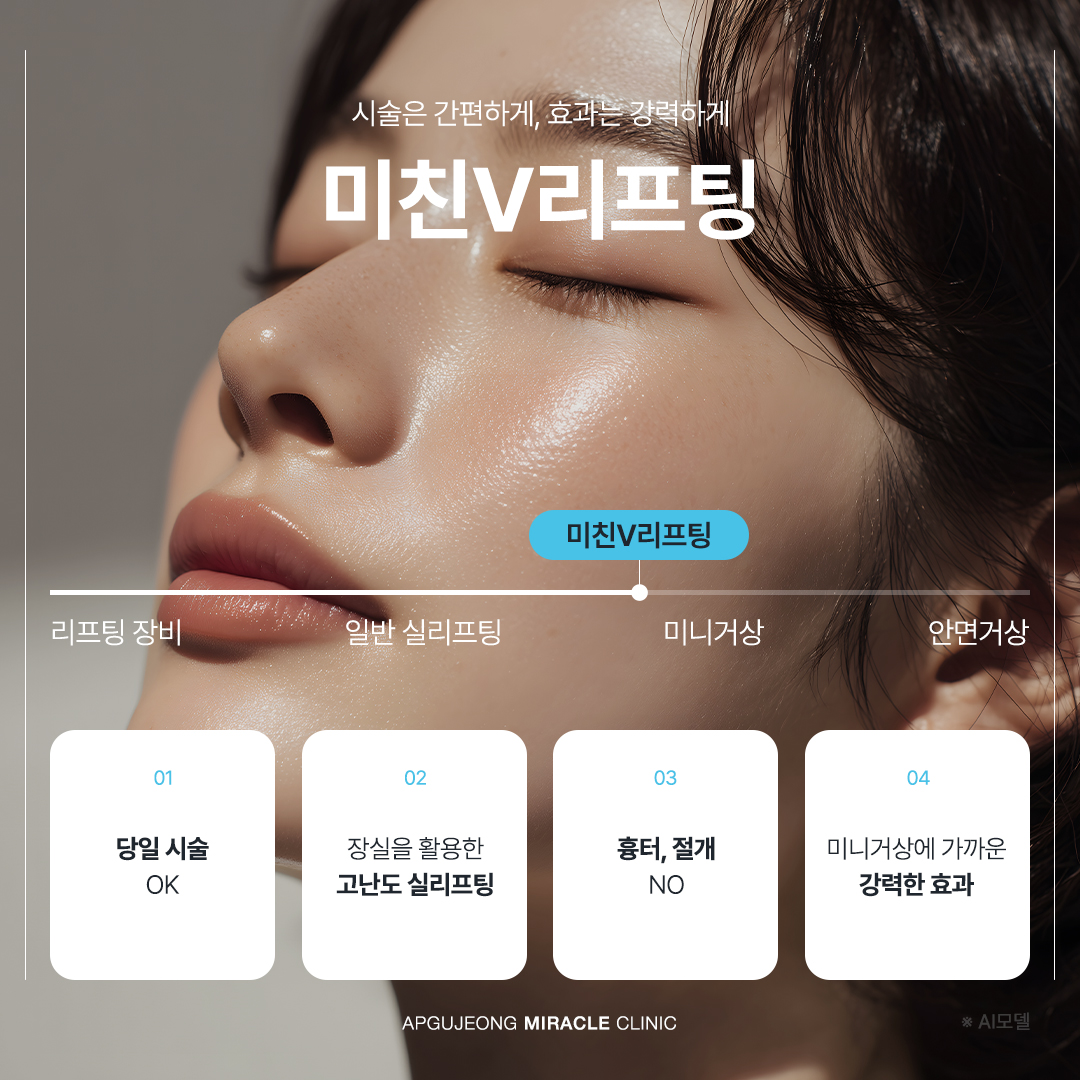
Realistic expectations are important. Revision lifting can often improve asymmetry or sagging, but it may not completely erase all signs of aging or previous procedures. A good clinic will explain both the potential benefits and the limitations before you decide.
Medical background and communication
This type of background suggests experience with different patient groups and treatment systems, but it is still important to base your decision on consultation quality and clear explanations rather than reputation alone.
It can also be helpful when the director runs a personal blog or educational channel, sharing case discussions and treatment principles. This ongoing communication often reflects an interest in explaining procedures in detail and staying engaged with the field.
Facial contour and anti-aging combinations
Combining lifting with facial contouring
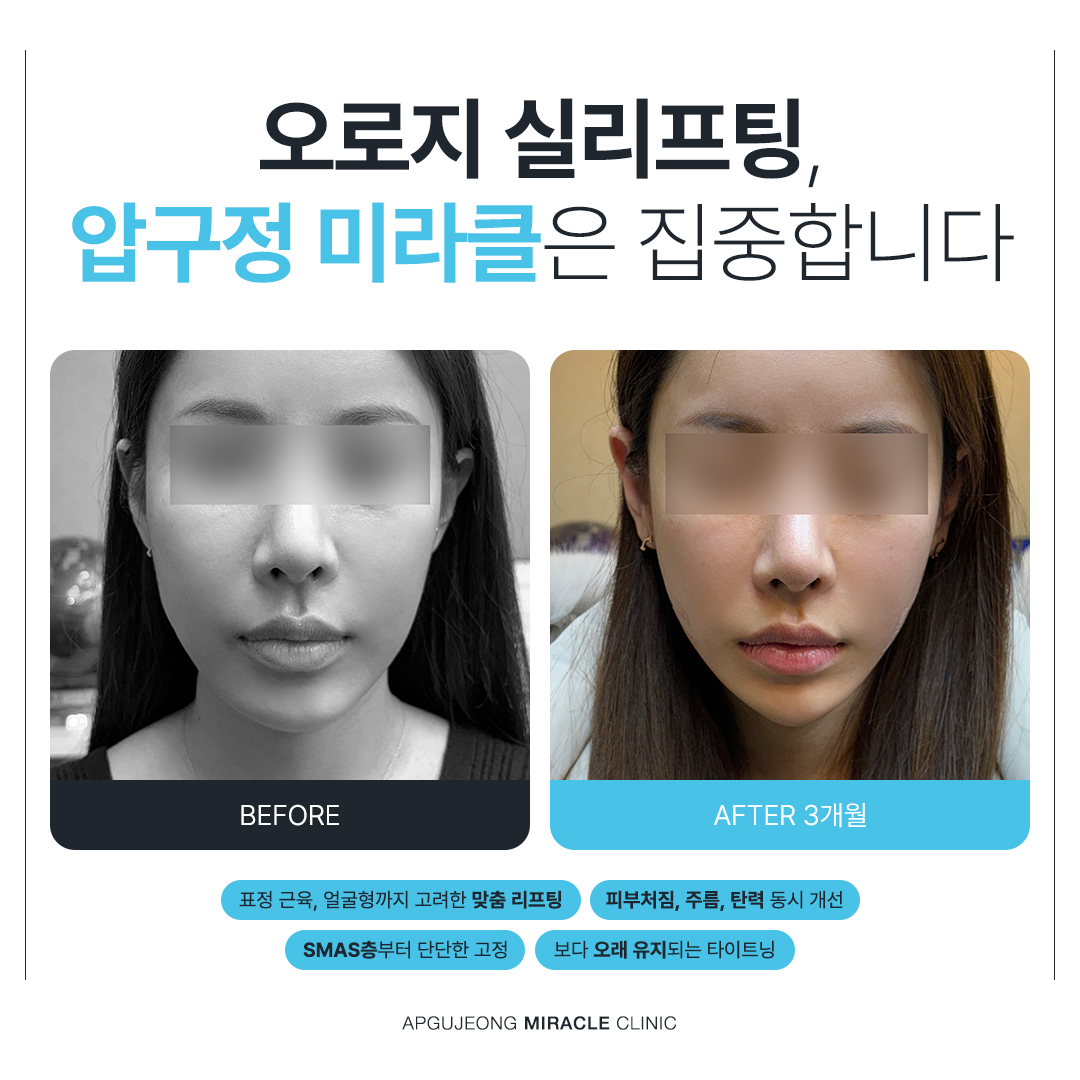
Sagging is not only about loose skin. In many patients, excess fat along the jawline, under the chin, or in the lower cheeks also contributes to a heavier look. In these cases, lifting alone may not give the desired contour.
Apgujeong lifting clinics often combine:
- Thread lifting to reposition and support tissues
- Facial liposuction or fat-dissolving injections to reduce localized fat under the chin or along the jawline
- Contour injections to refine angles or soften sharp transitions between areas
For example, a patient with a double chin and blurred jawline might have gentle facial liposuction or fat-dissolving injections under the chin, followed by thread lifting to define the jawline. Another patient with hollow mid-cheeks and sagging lower cheeks might need a combination of lifting and volume support, rather than lifting alone.
Stem cell-based programs for skin regeneration and elasticity care
Such programs may be considered when:
- You are more concerned about fine lines, dullness, or texture than about strong lifting
- You want to maintain the result of lifting procedures over time
- You are interested in a longer-term approach to skin aging
It is important to understand that responses to stem cell-based or regenerative treatments can vary between individuals, and dramatic or guaranteed results cannot be promised. These options should be discussed in detail with the doctor, including potential benefits, limitations, and safety considerations.
Who may consider an Apgujeong lifting clinic
- Women and men in their late 20s to 30s noticing early jawline changes or mild cheek sagging
- Patients in their 40s to 50s who want a more defined lower face without major surgery
- People who had thread lifting, Ulthera, Shurink, or other lifting treatments elsewhere and feel the effect faded quickly or looks uneven
- Those planning a combined approach to facial contour and anti-aging, rather than a single procedure
If you are unsure whether you are a candidate, an online consultation with photos is usually the best first step.
Preparing for an online consultation
Before flying to Korea, many people first share clear face photos (front, 45-degree, and side views in natural light) and a brief history of any previous lifting or skin treatments with the clinic. During the video call, it helps to talk honestly about what exactly bothers you when you look in the mirror, what kind of change you hope for, and how many days you can stay in Seoul, so the doctor can suggest a realistic plan and schedule around your travel dates.
Before you travel to Korea, most Apgujeong clinics can provide an online or video consultation in English. To make this effective, prepare the following:
- Clear photos of your face from front, 45-degree, and side views, in natural lighting
- Information about previous treatments: type of lifting (thread, Ulthera, Shurink, etc.), approximate date, and any known brand or device names
- A short description of what you liked and disliked about your previous procedures
- Any medical conditions, medications, or allergies you have
- Your preferred travel dates and how many days you can stay in Korea
During the online consultation, consider asking:
- - Which lifting methods they recommend for your current condition and why
- - Whether they expect to remove any existing threads or work around them
- - How many sessions might be needed and what kind of timeline is realistic
- - What kind of downtime, swelling, or bruising you should plan for
- - Which aftercare visits are recommended during your stay
Expected Korea visit timeline
- Day 1: In-person consultation and detailed facial analysis. The doctor confirms or adjusts the plan discussed online. If both sides agree and there are no medical concerns, some procedures can be done on the same day.
- Day 2–3: Main lifting treatment, such as thread lifting combined with ultrasound or laser lifting, or facial contouring procedures if planned. Some patients have treatment on Day 1, others on Day 2 depending on the complexity and preparation needed.
- Day 3–5: Early follow-up check to monitor swelling, symmetry, and healing. Minor adjustments or additional device-based treatments may be done if planned.
- Day 5–10: Final in-person check before you leave Korea. The clinic may provide detailed aftercare instructions and suggest online follow-up at specific intervals.
If you are planning thread removal and revision lifting, the timeline may be longer or may require staged treatment. In some cases, the clinic may recommend waiting a few months between removal and new lifting to allow tissues to settle.
Aftercare and recovery
After lifting procedures, you can usually walk and perform light activities, but you should plan for:
- Swelling and possible bruising around the treated areas for several days
- Mild discomfort or tightness when opening the mouth wide or chewing, especially after thread lifting
- Avoiding heavy exercise, saunas, and alcohol for a certain period as advised by the clinic
- Sleeping with your head slightly elevated for a few nights to reduce swelling
The clinic will give specific instructions on:
- How to clean your face and when you can resume skincare and makeup
- Which sleeping positions to avoid in the first days
- What signs of complications you should watch for and how to contact the clinic if needed
Results from thread lifting are often visible soon after treatment, but the final settled look can take several weeks as swelling goes down and tissues adapt. Ultrasound and laser lifting effects usually develop more gradually over a few months as collagen remodeling occurs.
If you are coming from abroad, you might be wondering things like, “Is it okay to start with lifting in Apgujeong even if I have never done any cosmetic procedure before?”, “I had a thread lift elsewhere and I do not like the result – can anything be improved?”, or “How many days in Korea do I actually need so that swelling settles enough to fly back comfortably?”.
Is lifting in Apgujeong suitable if I have never had any procedure before?
If your sagging is mild, the clinic may suggest starting with ultrasound or laser lifting and delaying threads. If your concerns are more advanced, a combination plan can be discussed. A proper consultation is necessary to decide what is suitable for your age, skin condition, and expectations.
Can I improve a thread lift result from another clinic?
In many cases, it is possible to improve the situation with careful planning, but it depends on where the threads are, how long ago they were placed, and how your tissues have responded. Sometimes partial thread removal, new threads in a different direction, or a switch to ultrasound lifting can help. However, complete correction of all irregularities is not always possible, and the doctor should explain both the potential and the limitations before you decide.
How long do I need to stay in Korea for lifting and revision?
For straightforward ultrasound or laser lifting, a short stay of a few days may be enough. For thread lifting or revision with possible thread removal, many clinics recommend at least 5 to 7 days so they can monitor your early recovery and make sure there are no immediate issues before you fly home. More complex revision cases may benefit from a longer stay or staged treatments, which should be discussed during online consultation.
Will people notice that I had lifting done?
This depends on the degree of sagging and the intensity of the treatment. Many patients aim for a fresher, more defined look rather than a dramatic change. A careful plan that respects your natural facial lines can reduce the chance of an over-pulled appearance. There may be visible swelling or bruising for a short period, so you should plan your social and work schedule accordingly.
Practical information and location
Lifting-focused clinics in this area are typically located around the Apgujeong Rodeo area in Sinsa-dong, Gangnam-gu, Seoul. The most convenient subway access is usually Apgujeong Rodeo Station on the Suin–Bundang Line, often near Exit 5. From there, clinics are within walking distance among the fashion and beauty streets.
Typical consultation hours are daytime to early evening on weekdays, with limited hours on Saturdays. Many clinics close on Sundays and public holidays, so it is important to confirm schedules in advance, especially if you are flying in for a short stay.
Because lifting and revision treatments require individualized planning, an in-person assessment is essential before finalizing any procedure. Online consultation can give you an approximate plan, but the final decision on thread type, device settings, and combination procedures is usually made after the doctor examines your skin and tissues directly.
Soft call to action
If you are considering lifting in the Apgujeong, Sinsa, or Gangnam area and want to compare thread lifting, ultrasound lifting, and revision options in one place, it is helpful to start with an online consultation. Prepare clear photos and your previous treatment history, and send your questions in advance.
A clinic that focuses on lifting and revision can then suggest a personalized plan, explain the expected timeline for your Korea visit, and guide you through aftercare and follow-up. This step-by-step approach can make your trip more efficient and help you choose the lifting method that fits your current condition and future plans.



댓글
댓글 쓰기